📸 Photo Description
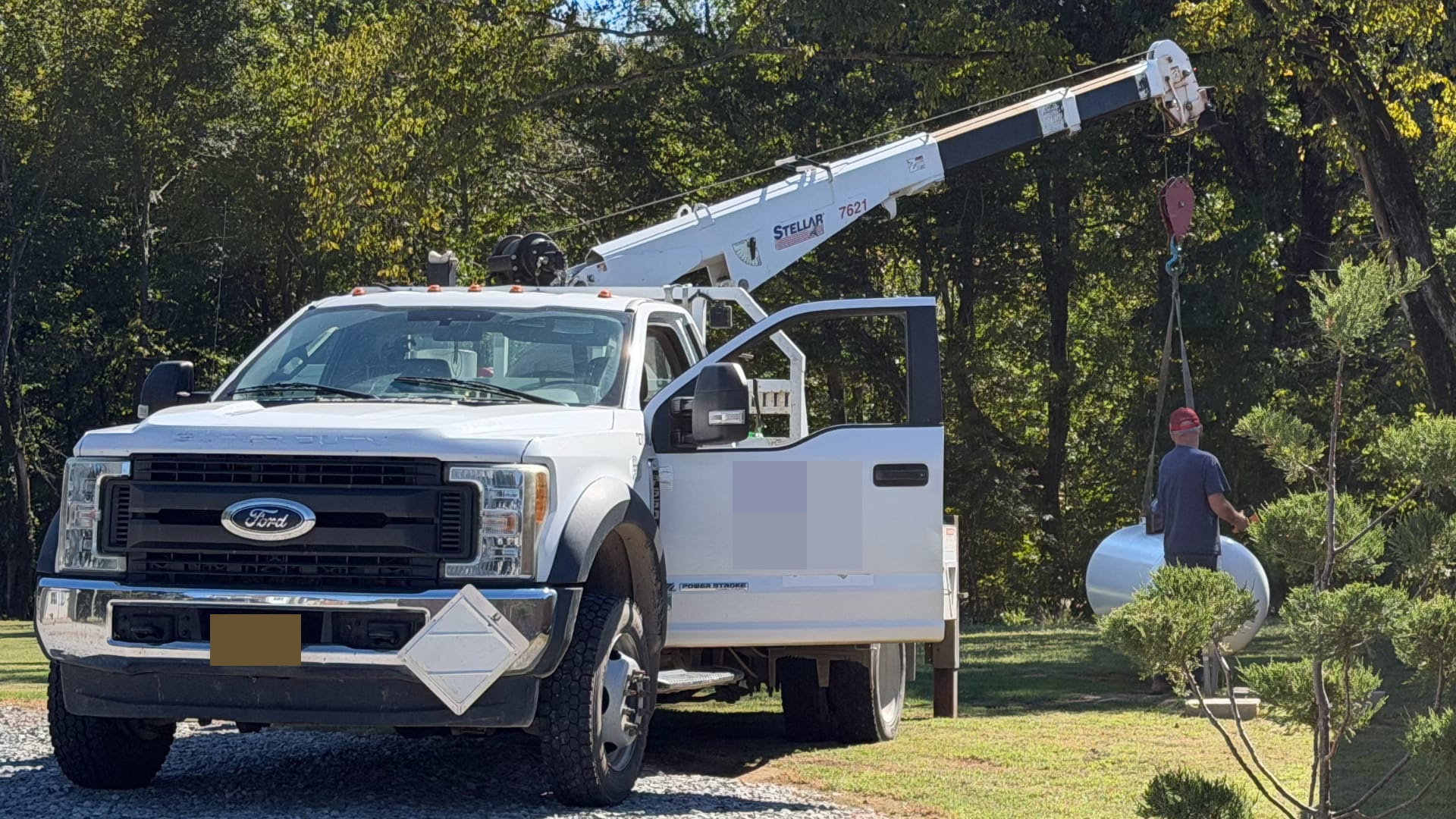
This image shows a white Ford truck with its door open parked next to a tall metal boom lift (marked "Stellar 7621"). A worker is using the boom lift's basket to reach high up into the trees. The truck's engine and mechanical parts work together to power the lift, which uses simple machines to help the worker reach places that would be too high to access safely from the ground.
🔬 Scientific Phenomena
Anchoring Phenomenon: A boom lift extending high into the air to help a worker reach tall locations.
Why This Happens (Scientific Explanation): The truck's engine converts fuel into mechanical energy. This energy travels through hydraulic systems (tubes filled with special fluid) that push and pull the boom arm. The boom uses simple machines called levers and pulleys to multiply the worker's strength, allowing a small effort to lift heavy loads to great heights. The mechanical energy is transferred from the engine → through hydraulic lines → to hydraulic cylinders that extend the boom arm → lifting the basket and worker upward against gravity.
📚 Core Science Concepts
- Mechanical Energy and Force: Mechanical energy is the ability to do work by moving things. The truck's engine creates the force needed to lift the heavy boom and worker against gravity.
- Simple Machines (Levers and Hydraulic Systems): The boom lift uses hydraulic cylinders (which act like levers) to multiply force. A small amount of pressure in the hydraulic fluid creates a large lifting force—this is how simple machines help us do jobs more easily.
- Energy Transformation: Chemical energy (from fuel) → Heat energy (in the engine) → Mechanical energy (motion of the boom and basket).
- Load and Effort: The worker and basket represent a heavy load. The engine and hydraulic system provide the effort needed to lift that load. Simple machines help us lift heavy things with less effort.
Pedagogical Tip:
Tip for Teachers: Before diving into hydraulics (which is complex), start by having students experience simple machines firsthand. Use a real lever (ruler and pencil as a fulcrum) or a pulley system with a bucket to help them feel how machines reduce effort. This concrete experience makes the boom lift concept much more meaningful when they return to it.
UDL Suggestions:
UDL Strategy - Multiple Means of Representation: Some students are visual learners, others kinesthetic. Provide videos showing the boom lift in action (visual), allow students to build and test a lever system with blocks and rulers (kinesthetic), and use clear verbal explanations (auditory). This ensures all learners access the concept of mechanical energy in ways that work for their brains.
🎓 NGSS Connections
Performance Expectation:
3-PS2-1: Plan and conduct an investigation to provide evidence that balanced and unbalanced forces on an object change its motion.
Disciplinary Core Idea:
- Forces and Motion (balanced and unbalanced forces)
- Types of Interactions (objects interacting in different ways)
Crosscutting Concepts:
- Energy can be transferred when objects interact (engine energy → mechanical energy)
- Thinking about the truck, engine, hydraulic system, and boom as an interconnected system
💬 Discussion Questions
- What do you think happens inside the truck's engine that makes the boom lift go up? (Bloom's: Understand | DOK: 2)
- If the boom lift can hold a worker and heavy equipment, but one person couldn't lift those things alone, what is helping make that possible? (Bloom's: Analyze | DOK: 3)
- How is the boom lift similar to a seesaw or a simple lever you might use at home? (Bloom's: Analyze | DOK: 2)
- Why do you think the truck needs to stay still and parked while the boom lift is being used? (Bloom's: Evaluate | DOK: 3)
📖 Vocabulary
- Mechanical Energy: The energy that makes things move or change shape (like a swinging bat or a spinning wheel).
- Simple Machine: A tool that helps us do work more easily by using less force (like a lever, pulley, or ramp).
- Boom: The long metal arm on the lift that extends up and down to reach high places.
- Hydraulic: A system that uses special liquid in tubes to push and move heavy things.
- Force: A push or pull that makes something move, stop, or change direction.
🌡️ Extension Activities
Activity 1: Build a Lever System
Give students a ruler, pencil (for the fulcrum), and small blocks or objects to lift. Have them experiment moving the fulcrum closer and farther from the load. Ask: "What happens when we move the pencil? Does it get easier or harder to lift?" Connect this to how the boom lift uses levers to reduce effort.
Activity 2: Hydraulic Lift Simulation
Students fill two syringes with water and connect them with clear tubing. When they push one syringe plunger, the other moves up—just like a hydraulic system. Tape a small cup to the second syringe and have students see how "high" they can lift objects. This tangible experience demystifies hydraulics.
Activity 3: Design a Machine to Reach High
Challenge students to design their own "high-reaching machine" using straws, string, plastic cups, and tape. Ask them to lift a small toy to as high as possible. Have them present and explain what simple machines they used in their design.
🔍 Zoom In / Zoom Out Concepts
Zoom In: Inside the Hydraulic Fluid
If we could shrink down and look inside the tubes of the hydraulic system with a super-powerful microscope, we'd see tiny molecules of fluid packed together. When the engine pushes on these molecules, they all squeeze together and push on each other like kids packed tightly in a hallway—they can't move forward themselves, but the pushing force travels all the way through the tube to move the boom arm. The molecules don't move far, but their pushing force travels a long distance!
Zoom Out: The Truck as Part of a Construction Ecosystem
The boom lift truck is just one tool in a much bigger system of construction work. Imagine zooming out to see an entire construction site: workers, cranes, dump trucks, bulldozers, and this boom lift all working together to build a building or maintain power lines. Each machine does a different job, but they all use mechanical energy to change and build the world around us. The truck gets fuel from a gas station, which connects to oil wells and refineries far away. Everything is connected in a big web of work and energy!
🤔 Potential Student Misconceptions
Misconception 1: "The boom lift lifts things because it's magic or because it's so big."
Scientific Clarification: The boom lift isn't magic—it uses science and simple machines! The engine burns fuel to create energy, and hydraulic tubes carry that energy to push the boom up. Size helps, but what really matters is the force created by the engine and how simple machines multiply that force to make lifting easier.
Misconception 2: "The hydraulic fluid just pushes like my hand pushing something."
Scientific Clarification: Hydraulic fluid is special because it's a liquid, not a solid. Liquids can't be squeezed or compressed easily, so when you push on liquid in a tube, the pushing force travels through the whole tube equally in all directions—kind of like squeezing a water balloon. This makes hydraulics perfect for lifting heavy things from far away.
Misconception 3: "The truck engine only powers the wheels to move the truck around."
Scientific Clarification: The engine is like the heart of the machine—it does many jobs! It powers the wheels to move, but it also powers the hydraulic pump that runs the boom lift. One engine, multiple jobs! That's why the truck has to stay still when the boom is lifting—all the engine's power is focused on lifting, not on moving the truck.
🔗 Cross-Curricular Ideas
Math Connection: Measuring Height and Distance
Have students estimate and measure how high the boom lift reaches in the photo. Then compare it to objects they know (a two-story building, a telephone pole, trees in the schoolyard). Students can create a simple bar graph showing "Things Taller Than Our Classroom" using measurements in feet or meters. Ask: "How many of you standing on each other's shoulders would it take to reach as high as that boom?"
ELA Connection: Procedural Writing - "How to Use a Boom Lift Safely"
Have students write simple step-by-step instructions for a boom lift operator (using child-friendly language). This connects to procedural/informational writing standards. Students must think through: What does the operator do first? What safety steps matter? What happens if the boom gets stuck? This builds both writing skills and deeper understanding of the machine's function.
Social Studies Connection: Community Helpers and Jobs
Invite a discussion about the people who use boom lifts: electricians fixing power lines, tree trimers, window cleaners, construction workers. Have students interview a family member or community worker about their job (or watch a short video interview). Create a class poster celebrating "Workers Who Reach High Places" and discuss how different jobs in our community use machines to help them work safely and efficiently.
Art/Engineering Connection: Design a Safer Basket
Show students the small basket at the top of the boom lift. Challenge them to design a better basket that keeps a worker safer and more comfortable while working high up. Students can sketch ideas, label their designs, and explain: "What problem does my basket solve? What materials would I use? Why?" This combines creative design thinking with practical engineering problem-solving.
🚀 STEM Career Connection
- Mechanical Engineer — Designs things that move — engines, turbines, joints and gears — and works out the forces on them.
- Try it: Construct a model of a hydraulic arm using syringes and tubing filled with water to demonstrate how pressure can lift an object. (Practice: Developing and Using Models)
- Tools: CAD software, 3D printers, force sensors, wind tunnels
- Where they work: engineering firms, factories, design studios, research labs
- Meet one: Shini Somara — How air and water flow around things, worked out on a computer before anything is built.
- Median pay: /year — "Mechanical engineers"
- Materials Engineer — Chooses and shapes the right material for a job, and tests it until it fails.
- Try it: Test different types of paper by bending and folding them to see which makes the strongest beam. (Practice: Developing and Using Models)
- Tools: tensile testers, furnaces, microscopes, hardness testers
- Where they work: manufacturing plants, product design firms, testing labs, universities
- Meet one: Ainissa Ramirez — How to make metal stick to glass and ceramics — she invented a solder that does it.
- Median pay: /year — "Materials engineers"
Wage figures are median annual wages for the U.S. occupation named after each one, from the U.S. Bureau of Labor Statistics, Occupational Employment and Wage Statistics (OEWS), national, May 2025. Several careers share one occupation, so their figures match.