📸 Photo Description
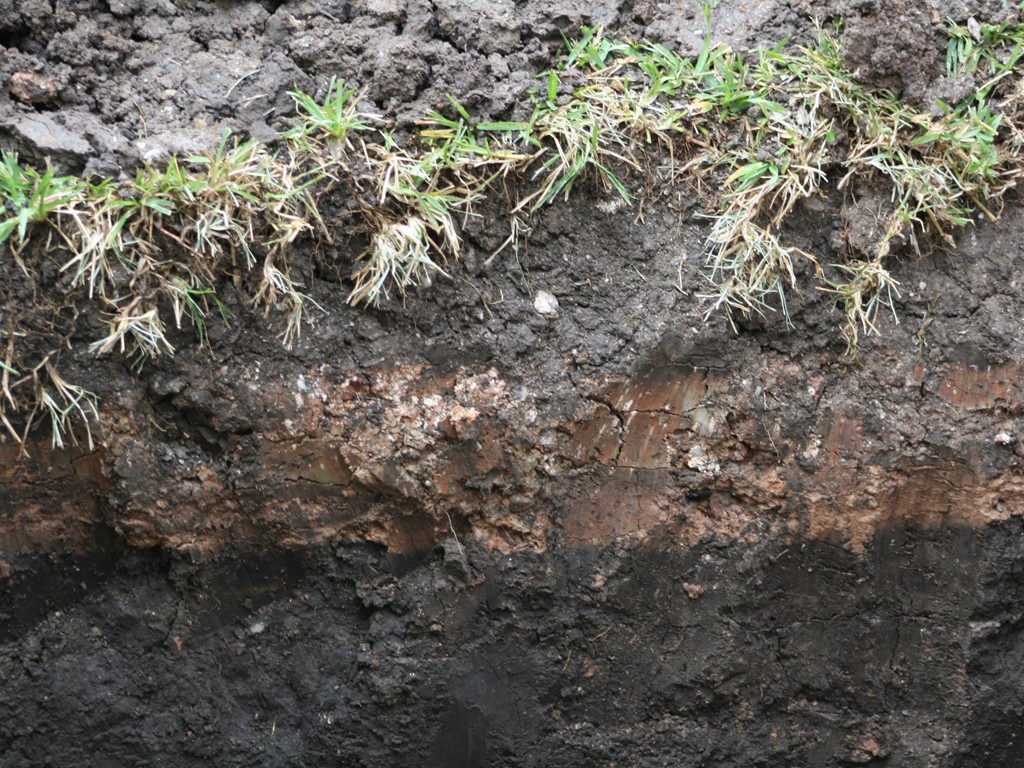
This image shows a cross-section of soil, revealing distinct layers beneath the green grass. Different colors and textures are visible, indicating varying compositions of soil components like rock particles, organic matter, and possibly water.
🔬 Scientific Phenomena
The image displays soil horizons, which are layers of soil that form over time through processes like decomposition, weathering, and the movement of water and minerals. These layers are a visual representation of how the Earth's surface changes and develops.
📚 Core Science Concepts
- Soil Composition: Soil is made up of tiny pieces of rocks, minerals, dead plants and animals (organic matter), air, and water.
- Soil Layers (Horizons): Over time, soil develops layers, like the distinct bands seen in the image. These layers can differ in color, texture, and the amount of organic material.
- Decomposition: Dead plants and animals break down, becoming part of the soil and enriching it with nutrients. The dark layer at the bottom likely contains more decomposed organic matter.
Pedagogical Tip: When introducing soil horizons, use a "Soil Profile in a Jar" activity where students layer different materials like sand, gravel, soil, and compost to represent the different layers they might observe outdoors.
UDL Suggestions: Provide visual aids such as diagrams or a short video showing how soil layers form to support students who are visual learners. Offer sentence starters for students who need support articulating their observations about the soil layers.
- Importance of Soil: Healthy soil is essential for plants to grow and supports many living things.
🔍 Zoom In / Zoom Out Concepts
- Zoom In: At a microscopic level, soil is composed of mineral particles (sand, silt, clay), organic matter fragments, water molecules, and air spaces. Microorganisms like bacteria and fungi are also busy breaking down organic material.
- Zoom Out: Soil is part of the Earth's geosphere and is a crucial component of ecosystems. It plays a role in the water cycle by absorbing and filtering water, and it supports plant life which is the base of many food webs.
🤔 Potential Student Misconceptions
- Misconception: Soil is just dirt.
Clarification: Soil is more than just dirt; it's a complex mixture of minerals, organic matter, water, and air that supports life.
- Misconception: All soil is the same everywhere.
Clarification: Soil can look and feel different in various places because of the different materials it's made from, how it was formed, and the climate it's in.
🎓 NGSS Connections
3-ESS2-1: Represent data in tables and graphical displays to describe typical weather conditions expected during a particular season.
K-ESS2-1 (Grade K — foundational connection): Use and share observations of local weather conditions to describe patterns over time.
K-ESS3-1 (Grade K — foundational connection): Use a model to represent the relationship between the needs of different plants and animals (including humans) and the places they live.
💬 Discussion Questions
- What different colors do you observe in the soil layers, and what might make them different? (Bloom's: Analyze | DOK: 2 | SEP: Analyzing and Interpreting Data)
- How do you think the grass on top of the soil is connected to the layers below? (Bloom's: Understand | DOK: 2 | SEP: Constructing Explanations and Designing Solutions)
- Why is it important for plants to have healthy soil to grow? (Bloom's: Understand | DOK: 2 | SEP: Constructing Explanations and Designing Solutions)
📖 Vocabulary
- Soil: A mixture of minerals, organic matter, water, and air that forms the top layer of the Earth's surface.
- Layers (Horizons): Different bands or levels within the soil, each with its own characteristics.
- Organic Matter: The remains of dead plants and animals that have decomposed and become part of the soil.
- Texture: How the soil feels to the touch, based on the size of its particles (like sandy, silty, or clayey).
🌡️ Extension Activities
- Soil Jar Study: Have students create soil layers in a clear jar by adding different materials like pebbles, sand, soil, and compost, then observe how they settle and mix over time.
- Worm Farm Observation: Set up a small worm farm to observe how earthworms interact with soil, break down organic matter, and create different soil textures.
🔗 Cross-Curricular Ideas
- ELA: Read books about soil formation and the importance of soil for life. Students can write descriptive paragraphs about the soil layers they observe.
- Art: Create soil art by using different colored soils or soil mixed with glue to make textured pictures.
- Math: Measure the depth of different soil layers and compare them using bar graphs.
🚀 STEM Career Connection
- Geologist — Reads rocks and landforms to work out what happened here long before anyone was watching.
- Try it: Examine different soil samples and analyze how their textures might tell a story about the rocks they came from. (Practice: Analyzing and Interpreting Data)
- Tools: a rock hammer, a hand lens, a compass, core samplers
- Where they work: mountains and canyons, quarries and mines, government surveys, universities
- Meet one: Wendy Bohon — Earthquakes — how faults grow over time, and how to warn people clearly before one hits.
- Median pay: /year — "Geoscientists, except hydrologists and geographers"
- Agricultural Scientist — Works out how to grow more food on the same land without wearing the soil out.
- Try it: Analyze soil samples from different garden areas and interpret which might be best for growing vegetables. (Practice: Analyzing and Interpreting Data)
- Tools: test plots, soil kits, seed drills, yield monitors
- Where they work: research farms, seed companies, extension services, universities
- Meet one: Segenet Kelemu — How to protect African food crops from disease, and how insects themselves can become food.
- Median pay: /year — "Soil and plant scientists"
Wage figures are median annual wages for the U.S. occupation named after each one, from the U.S. Bureau of Labor Statistics, Occupational Employment and Wage Statistics (OEWS), national, May 2025. Several careers share one occupation, so their figures match.