📸 Photo Description
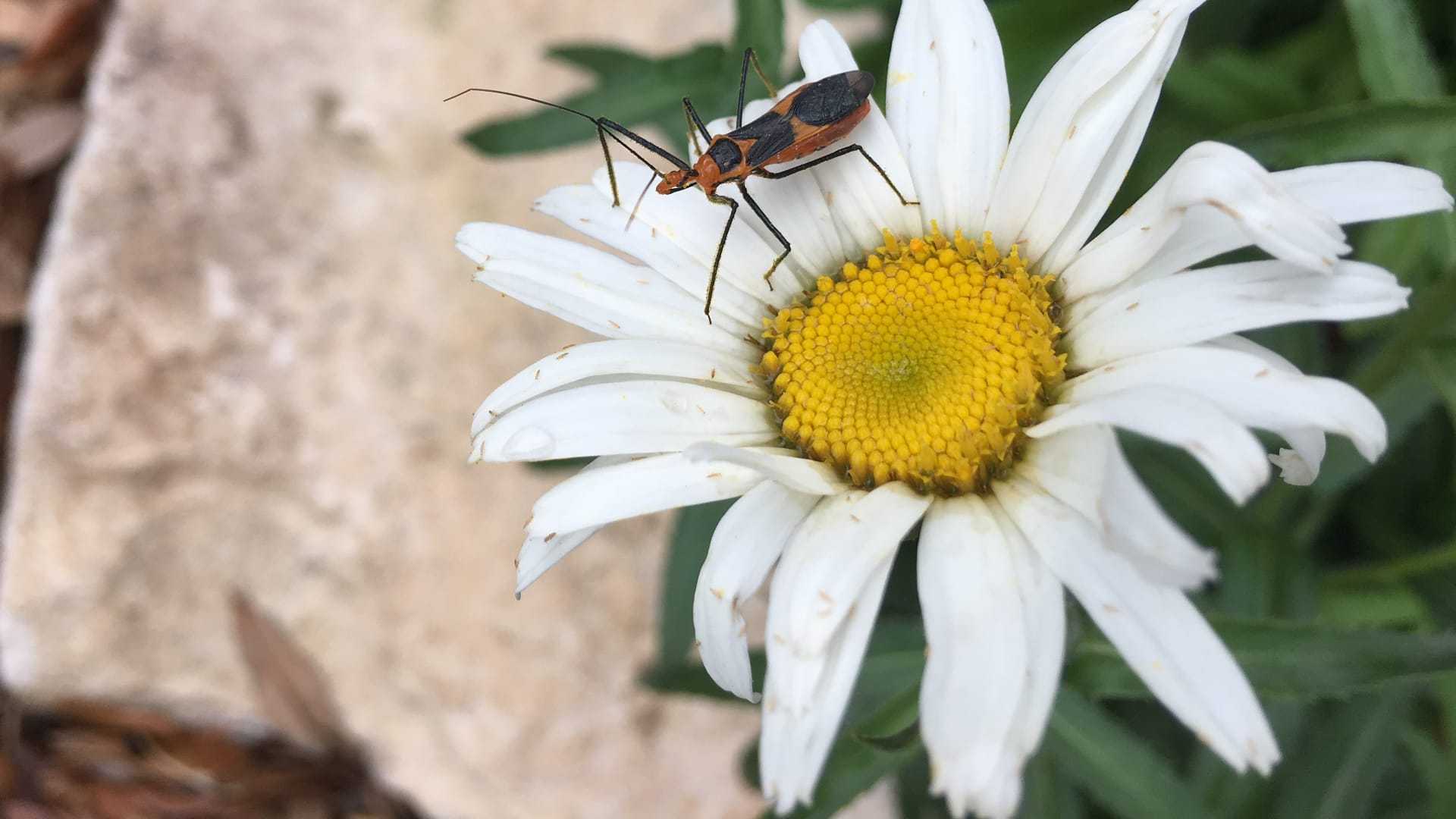
A black and orange bug is standing on a big white flower with a yellow center. The bug is using its long legs to hold onto the flower's petals. The flower has many yellow pieces in the middle that the bug can eat.
🔬 Scientific Phenomena
This image shows pollination and insect-plant interaction—a fundamental ecological relationship. The bug (likely an assassin bug or similar insect) is visiting the flower to find food (nectar and pollen). As the bug moves across the flower's center, pollen grains stick to its body. When the bug visits another flower, some pollen rubs off, helping the plant make seeds. This happens because both the plant and the insect need things from each other to survive: the plant needs help spreading pollen, and the insect needs food.
📚 Core Science Concepts
- Animals need food to survive — This insect visits flowers because it needs to eat the pollen and nectar (sweet liquid) the flower provides. Without food, the insect cannot live and grow.
- Plants need animals to help them survive — The flower produces bright colors and sweet nectar to attract insects. When insects visit, they help move pollen from one flower to another, which helps the plant make seeds and grow new plants.
- Insects have body parts that help them meet their needs — The bug's six long legs help it balance and climb onto the flower. Its mouth is designed to sip nectar. These special parts help the insect get the food it needs.
- Living things depend on their environment — The flower needs sunlight, water, and soil to grow. The insect needs flowers to provide food. Both the plant and animal are part of a community where they help each other.
Pedagogical Tip:
Use this photo to start a simple observation activity: Show students the picture and ask them to point to the parts they see. Ask "What do you think the bug is doing?" This activates prior knowledge before introducing new vocabulary. Kindergarteners learn best through hands-on observation and discussion rather than memorization.
UDL Suggestions:
Multiple Means of Representation: Provide the image on a large screen or printed poster so all students can see details clearly. Use simple, concrete language ("the bug is eating" vs. "the insect is feeding"). Consider adding real flowers and toy insects to a science table where students can handle and observe them safely.
Multiple Means of Action/Expression: Let students draw what the bug needs to survive, act out being an insect visiting a flower, or place bug and flower pictures on a "What do animals need?" chart with pictures of food, water, shelter, and air.
Multiple Means of Engagement: Connect to students' own experiences: "Have you seen a bug on a flower? What was it doing?" Make it relatable and fun rather than factual.
🔍 Zoom In / Zoom Out Concepts
Zoom In — The Microscopic Level:
If we looked very, very closely with a magnifying glass, we could see tiny yellow pollen grains sticking to the bug's legs and body. These pollen grains are so small that we cannot see them without help. Inside each pollen grain are special tiny pieces that help make new flowers.
Zoom Out — The Larger System:
This bug and flower are part of a whole garden or meadow community. Many different insects visit many different flowers. Some flowers feed bees, butterflies, and beetles. All these insects help all the plants make seeds. Without insects, many plants could not grow. The soil, sun, water, and all the living things work together to keep the garden alive.
🤔 Potential Student Misconceptions
- Misconception: "The bug is hurting the flower."
- Clarification: The bug is not hurting the flower. The bug is actually helping the flower! By visiting to eat pollen and nectar, the bug moves pollen to other flowers. This helps new flowers grow.
- Misconception: "The flower doesn't need the bug."
- Clarification: The flower DOES need the bug! Flowers make pollen and nectar on purpose to attract bugs and other insects. When the insect visits, it helps the flower make seeds so new flowers can grow.
- Misconception: "All bugs are bad and ugly."
- Clarification: This bug is helpful and beautiful! It has bright orange and black colors. Many insects are important helpers in nature. They eat bad bugs, help flowers grow, and make food for birds.
🎓 NGSS Connections
K-LS1-1: Use observations to describe patterns of what plants and animals (including humans) need to survive.
This photograph directly supports this standard. Students can observe that the animal (insect) needs food from the plant (flower), and the plant needs the animal to help it spread pollen. This is a clear pattern of survival needs in nature.
Disciplinary Core Ideas Addressed:
- — All organisms have external parts. The insect has legs and a mouth to help it get food from the flower.
- — Organisms obtain the materials they need to grow and function from their environment. The insect gets food (nectar and pollen) from the flower.
Crosscutting Concepts:
- — We can observe a pattern: insects visit flowers to find food.
- — The bug's legs help it hold the flower; the flower's bright color and nectar help attract the insect.
💬 Discussion Questions
- "What do you think the bug needs from the flower?" (Bloom's: Understand | DOK: 1)
- This helps students identify basic survival needs and make simple observations.
- "How does the bug help the flower?" (Bloom's: Analyze | DOK: 2)
- This question asks students to think about the relationship and the pollen on the insect's body.
- "What would happen to the flower if insects stopped visiting?" (Bloom's: Evaluate | DOK: 3)
- This pushes students to think about consequences and the importance of the relationship.
- "Where else have you seen a bug visiting a flower? What was the bug doing?" (Bloom's: Understand | DOK: 1)
- This connects the lesson to students' real-world experiences and builds engagement.
📖 Vocabulary
- Pollen: Tiny yellow powder inside flowers that helps make new plants.
- Nectar: Sweet juice in flowers that insects drink for food.
- Insect: A small animal with six legs, like a bug, bee, or butterfly.
- Pollination: When pollen moves from one flower to another, usually by insects or wind.
- Survive: To stay alive and healthy by getting food, water, and shelter.
🌡️ Extension Activities
- Flower and Bug Matching Game
- Show students pictures of different flowers and insects. Let them match which bugs might visit which flowers (butterflies on purple flowers, bees on yellow flowers, etc.). Discuss why certain insects might like certain flowers based on color or shape.
- Nature Walk and Observation
- Take students outside to look for insects on flowers (with adult supervision in a safe area). Have them observe quietly and draw pictures of what they see. Ask: "Is the bug eating? Is it moving pollen?"
- Plant a Pollinator Garden
- Plant a small classroom or school garden with colorful flowers that attract insects. Over weeks, students observe and count which bugs visit. Keep a simple picture chart: "Monday—two butterflies. Tuesday—one bee."
🔗 Cross-Curricular Ideas
- Math: Create a simple bar graph showing how many insects visit different colored flowers during a week-long observation. Kindergarteners can place stickers or draw tally marks.
- ELA: Read a picture book about insects and flowers (like The Very Busy Bee or similar). Have students retell the story using hand motions and act out being different insects.
- Art: Draw or paint a big flower and insects visiting it. Use bright colors like the daisy and bug in the photo. Students can add pollen using yellow glitter or paint.
- Social Studies: Discuss how gardeners and farmers need insects to help grow food. Ask: "Who helps farmers? How do insects help us get apples and vegetables?"
🚀 STEM Career Connection
- Ecologist — Studies how living things depend on each other and on the place they live.
- Try it: Create a diorama showing an insect and a flower interacting in their habitat, explaining the relationship. (Practice: Developing and Using Models)
- Tools: quadrat frames, measuring tapes, GPS units, a field notebook
- Where they work: forests, grasslands, wetlands, universities
- Meet one: Sandra Díaz — What a plant's leaves, wood and shape tell you about how it lives — and how those traits add up across a whole ecosystem.
- Median pay: /year — "Environmental scientists and specialists, including health"
- Biologist — Studies living things of every kind and what keeps them alive.
- Try it: Draw a diagram showing how pollen is transferred from one flower to another by an insect. (Practice: Developing and Using Models)
- Tools: microscopes, sample jars, measuring tools, a field notebook
- Where they work: laboratories, field sites, museums, universities
- Meet one: Sandra Díaz — What a plant's leaves, wood and shape tell you about how it lives — and how those traits add up across a whole ecosystem.
- Median pay: /year — "Biological scientists, all other"
Wage figures are median annual wages for the U.S. occupation named after each one, from the U.S. Bureau of Labor Statistics, Occupational Employment and Wage Statistics (OEWS), national, May 2025. Several careers share one occupation, so their figures match.