📸 Photo Description
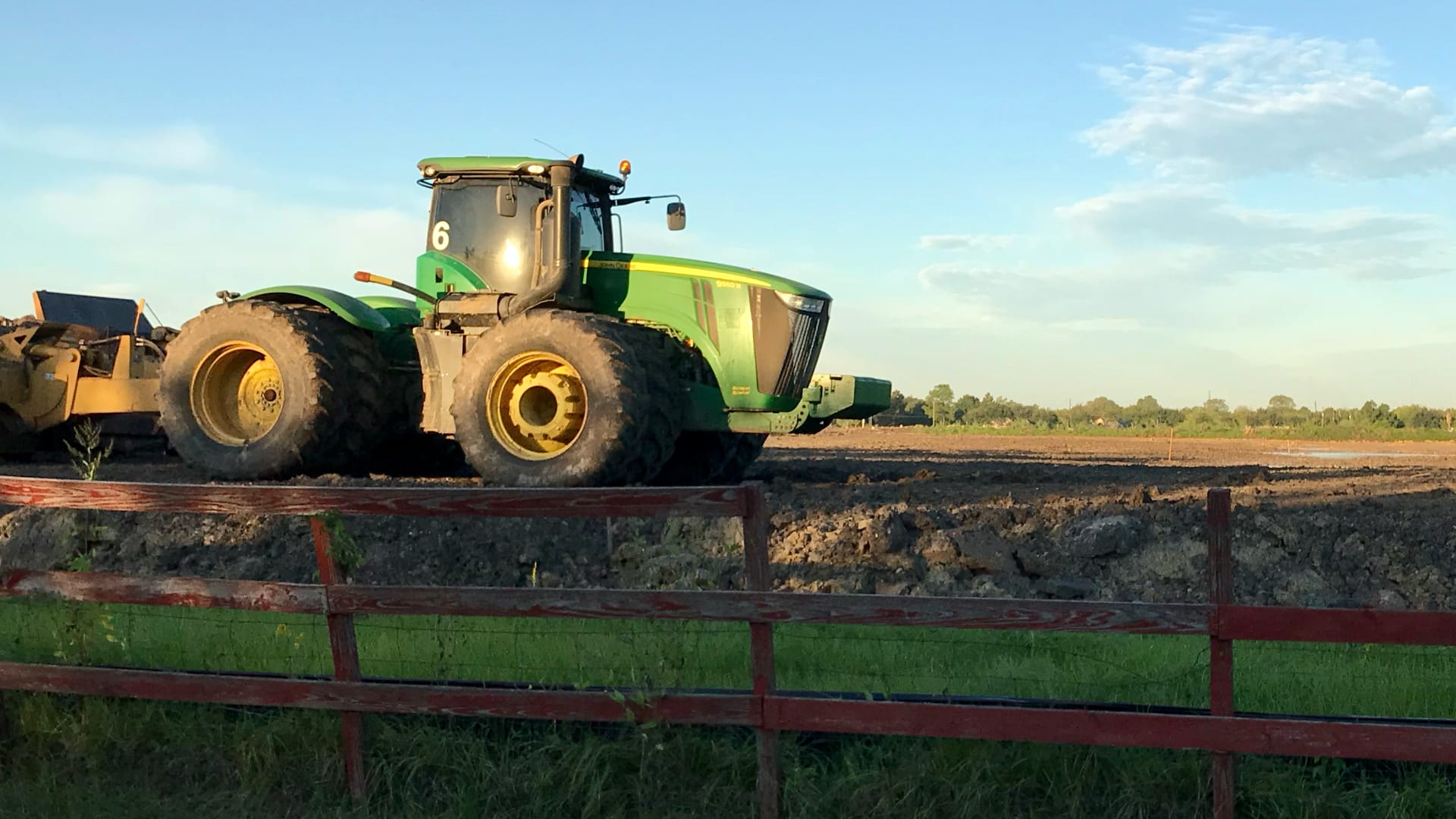
A big green tractor with huge wheels is working in a dirt field. The tractor is pulling farm equipment to prepare the soil for planting crops. You can see the tilled brown earth and green grass nearby.
🔬 Scientific Phenomena
The anchoring phenomenon here is soil preparation for agriculture. The tractor is mechanically breaking up and turning over the soil to create optimal conditions for seed germination and plant growth. This process increases soil aeration, incorporates organic matter, and creates a loose seedbed that allows roots to penetrate easily and water to infiltrate effectively.
📚 Core Science Concepts
- Soil as a Living System: Soil contains air, water, minerals, and decomposed organic matter that plants need to survive and grow.
- Human Impact on Environment: Farmers modify natural environments through tilling, planting, and harvesting to produce food for communities.
- Plant Life Cycles: Seeds need proper soil conditions (loose, aerated, nutrient-rich) to germinate and develop into mature plants.
- Tools and Technology: Humans design and use machines like tractors to solve problems and make work more efficient.
Pedagogical Tip: Start lessons with students' prior knowledge about farms and food. Many students don't realize that most of their food comes from farms, so connecting this to their daily meals makes the content personally relevant.
UDL Suggestions: Provide multiple ways for students to engage with soil concepts: hands-on soil exploration, digital farm simulations, and kinesthetic activities like acting out seed germination. This supports different learning preferences and abilities.
🔍 Zoom In / Zoom Out Concepts
- Zoom In: At the microscopic level, soil contains billions of tiny organisms like bacteria and fungi that break down dead plant material into nutrients that living plants can absorb through their roots.
- Zoom Out: This farm field is part of a larger agricultural system that connects to transportation networks, food processing facilities, and eventually grocery stores, demonstrating how local farming impacts global food security.
🤔 Potential Student Misconceptions
- Misconception: "Dirt and soil are the same thing."
Clarification: Soil is alive and contains nutrients, air, water, and organisms, while dirt is just particles of rock and clay without life.
- Misconception: "Plants only need water and sunlight to grow."
Clarification: Plants also need nutrients from soil, carbon dioxide from air, and proper temperature to survive and thrive.
- Misconception: "All farming is bad for the environment."
Clarification: Sustainable farming practices can actually help the environment by preventing erosion and providing habitats for wildlife.
🎓 NGSS Connections
- Performance Expectation: 3-LS4-3 - Construct an argument that some animals form groups that help members survive.
- Disciplinary Core Ideas: - Being part of a group helps animals obtain food, defend themselves, and cope with changes
- Crosscutting Concepts: - Students can explore how human actions (farming) cause changes in the environment that affect plant and animal survival
💬 Discussion Questions
- "How might tilling the soil help or harm the small animals that live underground?" (Bloom's: Analyze | DOK: 3)
- "What would happen to our food supply if farmers stopped preparing soil for planting?" (Bloom's: Evaluate | DOK: 3)
- "How is the tractor similar to tools you use at home or school?" (Bloom's: Compare | DOK: 2)
- "Why do you think the farmer chose to till this field instead of leaving it as natural grassland?" (Bloom's: Analyze | DOK: 2)
📖 Science Vocabulary
- Agriculture: The practice of growing crops and raising animals for food
- Tillage: Breaking up and turning over soil to prepare it for planting seeds
- Germination: When a seed begins to sprout and grow into a new plant
- Aeration: Adding air spaces to soil so plant roots can breathe
- Seedbed: Prepared soil that provides the best conditions for seeds to grow
- Nutrients: Food that plants need from soil to stay healthy and grow
🔗 Cross-Curricular Ideas
- Math - Measurement & Data: Have students measure and compare the size of different soil particles (sand, silt, clay) using simple tools like rulers and magnifying glasses. They can create bar graphs showing how much of each type is in a soil sample from your schoolyard or a local farm.
- ELA - Informative Writing: Students can write "How-To" instructions for planting a seed or preparing soil for a garden. This builds sequencing skills while reinforcing the scientific steps needed for successful plant growth.
- Social Studies - Community Helpers & Local Economy: Invite a local farmer or agricultural extension agent to visit your classroom. Students can interview them about how farming affects their community, where food comes from, and the importance of agriculture in your region.
- Art - Nature Observational Drawing: Students can create detailed sketches of different soil types, plants, or tractors. They can also make collages using actual soil samples (in sealed bags for safety) to explore textures and colors found in nature.
🚀 STEM Career Connection
- Agricultural Scientist — Works out how to grow more food on the same land without wearing the soil out.
- Try it: Develop a model to show how tilling helps plant roots grow deep into the soil. (Practice: Developing and Using Models)
- Tools: test plots, soil kits, seed drills, yield monitors
- Where they work: research farms, seed companies, extension services, universities
- Meet one: Segenet Kelemu — How to protect African food crops from disease, and how insects themselves can become food.
- Median pay: /year — "Soil and plant scientists"
- Soil Scientist — Studies dirt seriously — what it is made of, what lives in it, and what will grow in it.
- Try it: Use a clear container to model how water moves through different types of soil. (Practice: Developing and Using Models)
- Tools: soil augers, pH meters, sieve stacks, sample bags
- Where they work: farms and fields, testing laboratories, government agencies, universities
- Meet one: Asmeret Asefaw Berhe — How soil stores carbon, and why that makes dirt part of the climate story.
- Median pay: /year — "Soil and plant scientists"
Wage figures are median annual wages for the U.S. occupation named after each one, from the U.S. Bureau of Labor Statistics, Occupational Employment and Wage Statistics (OEWS), national, May 2025. Several careers share one occupation, so their figures match.