📸 Photo Description
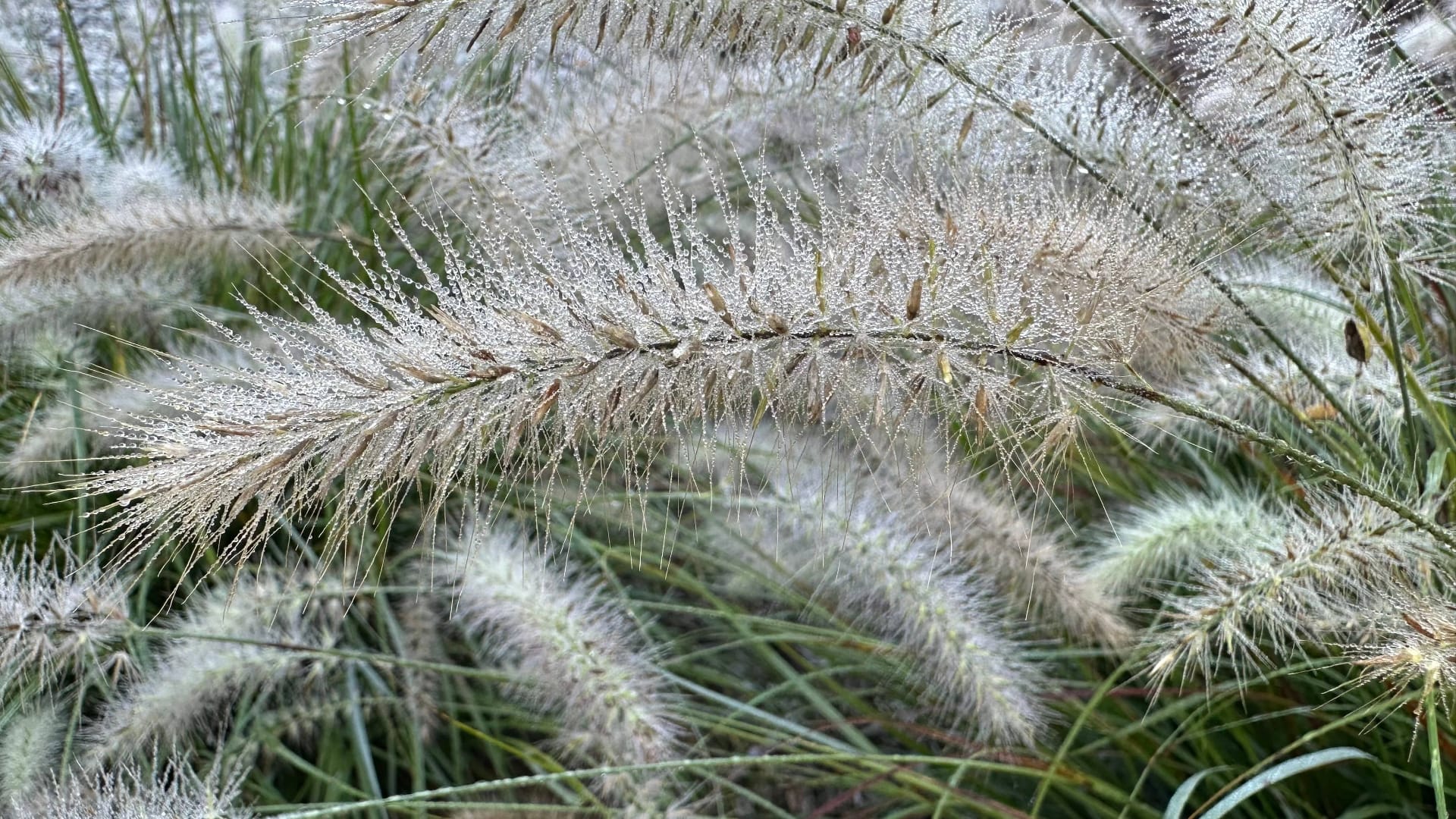
This image shows ornamental grass with fluffy, feathery seed heads covered in tiny water droplets. The grass has long, thin leaves and soft, white, fuzzy parts that look like cotton balls. The water drops make the grass sparkle and shine in the light.
🔬 Scientific Phenomena
The anchoring phenomenon here is seed dispersal and water collection on plant structures. The feathery, fluffy structures are seed heads designed to catch wind and help seeds travel to new locations. The water droplets formed through condensation - when water vapor in the air cooled and turned back into liquid water on the grass surfaces. This happens because the grass surfaces are cooler than the surrounding air, especially in early morning when dew forms.
📚 Core Science Concepts
- Seed Dispersal Adaptations - Plants have special structures that help their seeds travel to new places where they can grow
- Water Cycle in Action - Water changes from gas (water vapor) to liquid (droplets) when it touches cool surfaces
- Plant Structure and Function - Different parts of plants have specific jobs, like the feathery parts helping seeds fly away
- Condensation Process - When warm, moist air meets cooler surfaces, water droplets form
Pedagogical Tip: Use this image to help students make connections between form and function. Have them examine the feathery structures and predict how they might help the plant survive and reproduce.
UDL Suggestions: Provide tactile experiences by bringing in similar grasses or cotton balls for students to feel the fluffy texture. This helps kinesthetic learners understand how the structure aids in wind dispersal.
🔍 Zoom In / Zoom Out Concepts
- Zoom In: At the microscopic level, each water droplet contains millions of water molecules that have clustered together. The feathery structures have tiny barbs and hooks that trap air and create lift, similar to how bird feathers work.
- Zoom Out: This grass is part of a larger ecosystem where plants, animals, and weather patterns work together. Seeds that successfully disperse help create new plant communities, provide food for animals, and contribute to soil health across the landscape.
🤔 Potential Student Misconceptions
- Misconception: "The fluffy parts are just decoration to make the plant pretty."
Clarification: These structures have an important job - they help seeds travel on the wind to find new places to grow.
- Misconception: "The water drops came from inside the plant."
Clarification: The water droplets formed from water vapor in the air that condensed on the cool grass surfaces.
- Misconception: "All seeds travel the same way."
Clarification: Different plants have different seed dispersal methods - some fly on the wind, others stick to animals, and some float on water.
🎓 NGSS Connections
- Performance Expectation: 3-LS4-3: Construct an argument with evidence that in a particular habitat some organisms can survive well, some survive less well, and some cannot survive at all.
- Disciplinary Core Ideas: - Environmental changes affect organisms, and - Variation of traits over time
- Crosscutting Concepts: and
💬 Discussion Questions
- "What do you think would happen to these seeds on a windy day versus a calm day?" (Bloom's: Predict/Analyze | DOK: 2)
- "How might the shape of these seed heads help the plant survive in different environments?" (Bloom's: Analyze | DOK: 3)
- "Why do you think water droplets formed on the grass but not on other surfaces nearby?" (Bloom's: Analyze | DOK: 2)
- "What other plants have you seen that have special ways to spread their seeds?" (Bloom's: Remember/Apply | DOK: 1)
📖 Science Vocabulary
- Condensation: When water vapor in the air turns into liquid water droplets
- Seed dispersal: The way plants spread their seeds to new places
- Adaptation: A special feature that helps a living thing survive in its environment
- Water vapor: Water in the form of an invisible gas in the air
- Pollination: When pollen moves from one flower to another to help make seeds
🔗 Cross-Curricular Ideas
- Math - Measurement and Counting: Have students measure the length of grass blades using rulers and create bar graphs comparing different grass heights. They can also count water droplets on a small section of grass to practice estimation and data collection skills.
- ELA - Descriptive Writing: Students can write sensory poems or descriptive paragraphs about the grass using words that describe how it looks, feels, and sounds. Encourage them to use adjectives like "feathery," "sparkly," "fluffy," and "delicate" to paint a picture with words.
- Art - Nature Collage and Texture Exploration: Students can collect dried grasses (or use pictures) to create collages and explore different textures by drawing or rubbing paper over grass to capture its patterns. This connects the visual and tactile elements of plant structures.
- Social Studies - Plant Uses and Native Gardens: Discuss how people use ornamental grasses in their gardens and landscapes. Explore native grasses in your local region and how they support local ecosystems and communities.
🚀 STEM Career Connection
- Agricultural Scientist — Works out how to grow more food on the same land without wearing the soil out.
- Try it: Design a simple experiment to test which part of the feathery grass structure helps seeds travel the furthest when blown by a fan. (Practice: Constructing Explanations and Designing Solutions)
- Tools: test plots, soil kits, seed drills, yield monitors
- Where they work: research farms, seed companies, extension services, universities
- Meet one: Segenet Kelemu — How to protect African food crops from disease, and how insects themselves can become food.
- Median pay: /year — "Soil and plant scientists"
- Environmental Engineer — Designs the systems that clean water, cut pollution and deal with waste.
- Try it: Construct an explanation for how the feathery grass might help collect water, like a natural sponge, and how that could be useful. (Practice: Constructing Explanations and Designing Solutions)
- Tools: water treatment models, air samplers, filtration rigs, CAD software
- Where they work: treatment plants, engineering firms, environmental agencies, universities
- Meet one: Yewande Akinola — How to get clean water to places that do not have it, and how to design buildings that waste less of it.
- Median pay: /year — "Environmental engineers"
Wage figures are median annual wages for the U.S. occupation named after each one, from the U.S. Bureau of Labor Statistics, Occupational Employment and Wage Statistics (OEWS), national, May 2025. Several careers share one occupation, so their figures match.