📸 Photo Description
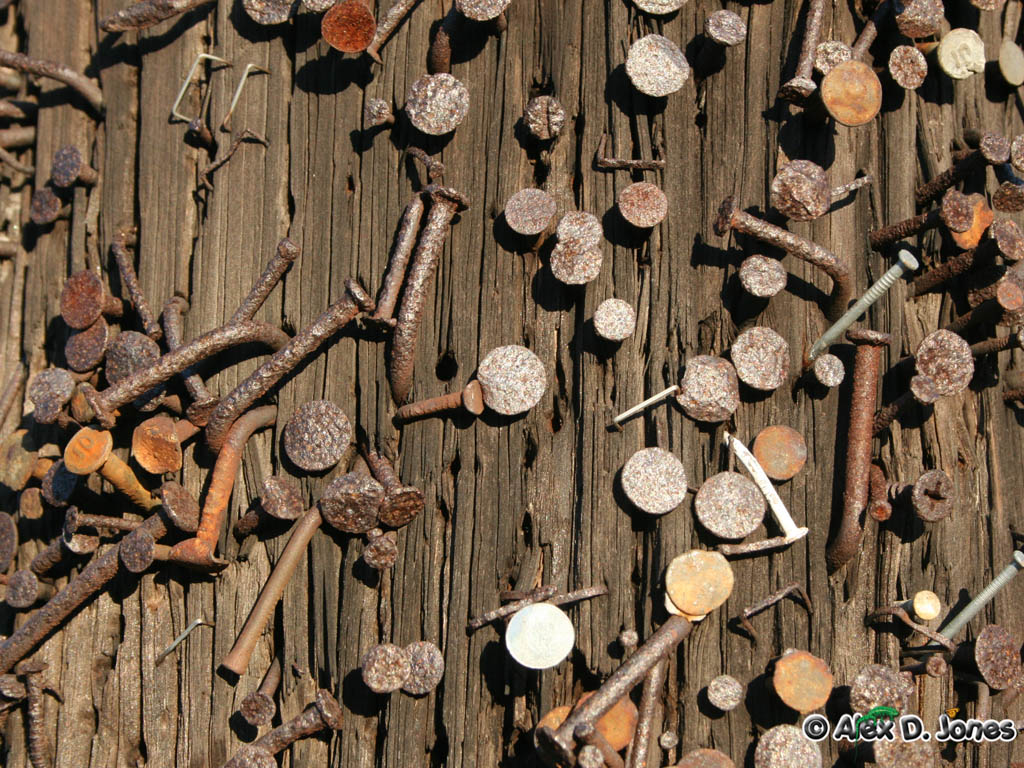
This image shows many old, rusty nails and screws scattered on weathered wooden boards. The metal pieces have turned brown and orange colors from being outside for a long time. Some round metal pieces and other hardware are mixed in with the rusty nails.
🔬 Scientific Phenomena
The anchoring phenomenon here is rusting - a chemical change that happens when iron or steel is exposed to oxygen and water over time. The metal objects in this image have undergone oxidation, where the iron atoms combine with oxygen atoms from the air to form iron oxide (rust). This process is accelerated by moisture and creates the reddish-brown coating we see on these old nails and hardware.
📚 Core Science Concepts
- Chemical vs. Physical Changes: Rusting is a chemical change because it creates a new substance (iron oxide) that cannot be easily reversed, unlike physical changes such as melting or breaking.
- Properties of Materials: Different materials have different properties - metals like iron can rust, while other materials like plastic or wood decay differently when exposed to weather.
- Environmental Effects on Objects: Weather conditions like rain, humidity, and temperature changes affect how materials break down over time.
- Observable Evidence: Scientists can observe changes in color, texture, and strength to determine what has happened to materials.
Pedagogical Tip: Have students compare rusty and non-rusty nails side by side to help them identify the specific changes that occur during rusting. This concrete comparison makes the abstract concept of chemical change more accessible.
UDL Suggestions: Provide multiple ways for students to explore rusting: visual observation, tactile exploration (safely), drawing before/after diagrams, and acting out the process with body movements to represent atoms combining.
🔍 Zoom In / Zoom Out Concepts
- Zoom In: At the atomic level, iron atoms are combining with oxygen atoms to form new molecules of iron oxide. This happens when electrons move between the iron and oxygen atoms, creating chemical bonds that form the rust we can see.
- Zoom Out: This rusting process connects to larger environmental cycles where materials break down and return nutrients to ecosystems. The rust will eventually flake off and become part of the soil, providing iron that plants need to grow.
🤔 Potential Student Misconceptions
- Misconception: "Rust is just dirt that got stuck on the metal."
Clarification: Rust is actually a new substance created when iron chemically combines with oxygen - it's not dirt from the outside.
- Misconception: "All metals rust the same way."
Clarification: Only metals containing iron can rust. Other metals like aluminum or copper change differently when exposed to weather.
- Misconception: "Rusting happens instantly."
Clarification: Rusting is a slow process that takes weeks, months, or years depending on the conditions.
🎓 NGSS Connections
- Performance Expectation: 2-PS1-4 - Construct an argument with evidence that some changes caused by heating or cooling can be reversed and some cannot.
- Disciplinary Core Ideas: - Different properties are suited to different purposes. A great variety of objects can be built up from a small set of pieces.
- Crosscutting Concepts: - Events have causes that generate observable patterns.
💬 Discussion Questions
- What do you think caused these nails to change color and texture? (Bloom's: Analyze | DOK: 2)
- How could we prevent new nails from rusting like these old ones? (Bloom's: Evaluate | DOK: 3)
- What other examples of rusting have you seen in your neighborhood or at home? (Bloom's: Apply | DOK: 2)
- If we found these same nails in a desert versus near the ocean, which ones do you think would be more rusty and why? (Bloom's: Analyze | DOK: 3)
📖 Science Vocabulary
- Rust: The reddish-brown coating that forms when iron mixes with oxygen and water over time.
- Chemical change: When materials combine to make something completely new that cannot be easily changed back.
- Oxidation: The process where a material combines with oxygen from the air.
- Properties: The special characteristics that describe how a material looks, feels, or acts.
- Corrosion: The gradual wearing away or breaking down of materials due to chemical reactions.
🔗 Cross-Curricular Ideas
- Math - Measurement & Sorting: Have students collect pictures of rusty and non-rusty objects, then sort and count them by size categories (small, medium, large). They can create a bar graph showing how many rusty versus non-rusty items they found around the school or home.
- ELA - Descriptive Writing: Ask students to write or dictate sentences describing how the rusty nails look, feel, and smell. Use sensory words like "rough," "bumpy," "orange-brown," and "flaky" to build vocabulary and descriptive language skills.
- Social Studies - Community Helpers: Connect to people who work with metal and tools, such as construction workers, plumbers, and carpenters. Discuss how these workers deal with rusty tools and why they need to protect their equipment from rust.
- Art - Texture & Color Exploration: Have students create a mixed-media artwork using actual rusty objects (safely supervised) or paint and collage to represent rust. They can explore different shades of brown, orange, and red to show the variety of colors rust creates on different materials.
🚀 STEM Career Connection
- Chemical Engineer — Scales a reaction up from a test tube to a factory without it going wrong.
- Try it: Design a simple experiment to try and slow down the rusting of a nail by changing one condition, like keeping it dry. (Practice: Constructing Explanations and Designing Solutions)
- Tools: reactor vessels, flow controllers, process models, safety systems
- Where they work: chemical plants, refineries, food factories, research labs
- Meet one: Tebello Nyokong — Dyes that can be switched on by laser light to destroy cancer cells and leave healthy ones alone.
- Median pay: /year — "Chemical engineers"
- Environmental Engineer — Designs the systems that clean water, cut pollution and deal with waste.
- Try it: Brainstorm ways to protect metal playground equipment from rusting in the rain and discuss your ideas. (Practice: Constructing Explanations and Designing Solutions)
- Tools: water treatment models, air samplers, filtration rigs, CAD software
- Where they work: treatment plants, engineering firms, environmental agencies, universities
- Meet one: Yewande Akinola — How to get clean water to places that do not have it, and how to design buildings that waste less of it.
- Median pay: /year — "Environmental engineers"
Wage figures are median annual wages for the U.S. occupation named after each one, from the U.S. Bureau of Labor Statistics, Occupational Employment and Wage Statistics (OEWS), national, May 2025. Several careers share one occupation, so their figures match.