📸 Photo Description
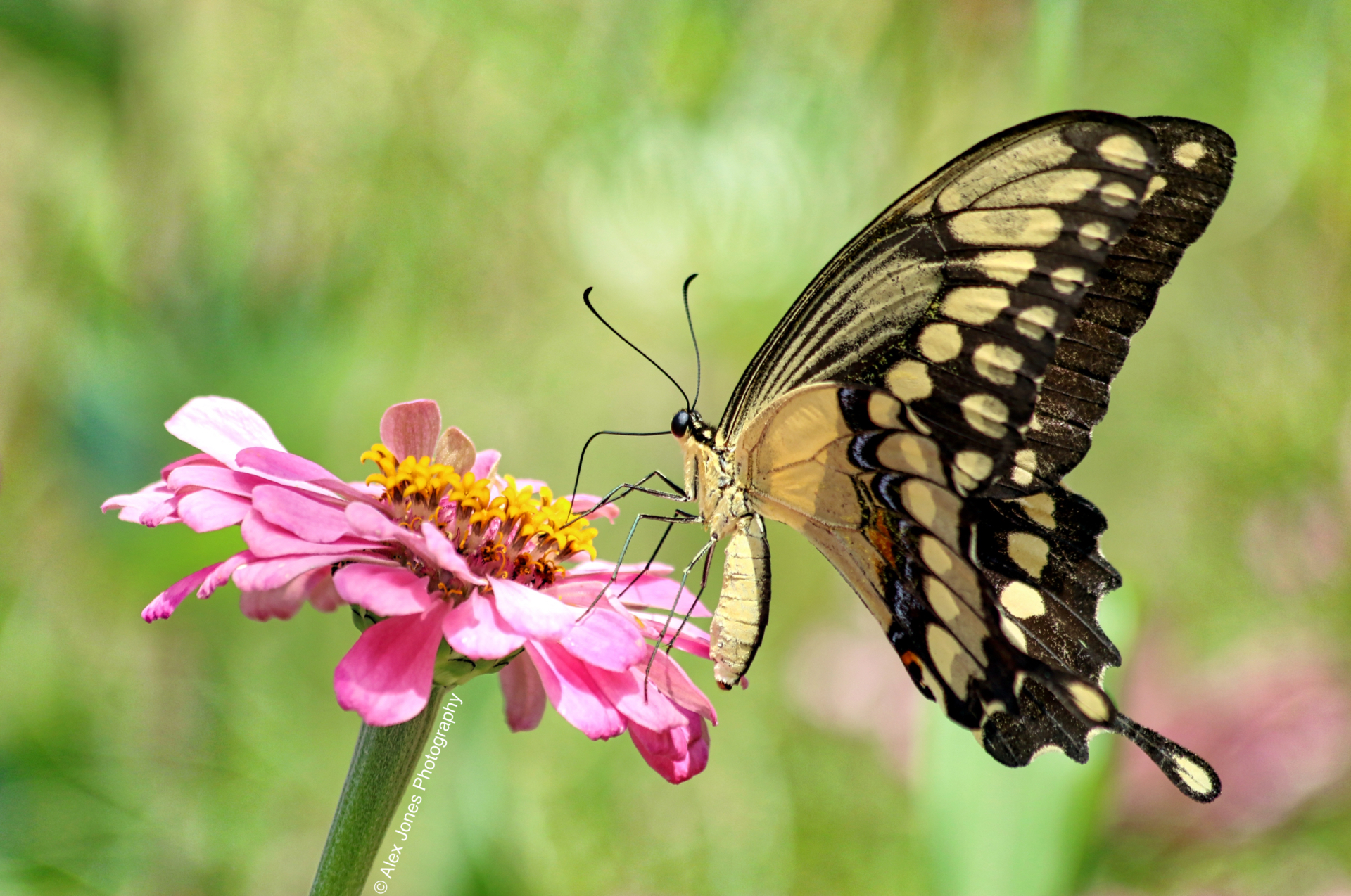
A beautiful butterfly with black wings and yellow spots is drinking nectar from a pink flower. The butterfly uses its long, thin tongue called a proboscis to reach deep inside the flower to get the sweet nectar it needs for energy.
🔬 Scientific Phenomena
This image captures the Anchoring Phenomenon of pollination through mutualistic relationships. The butterfly is engaged in nectar feeding, which represents a mutually beneficial interaction where the butterfly obtains energy-rich nectar from the flower while simultaneously transferring pollen between flowers as it moves from bloom to bloom. This phenomenon occurs because both organisms have evolved complementary structures and behaviors that support their survival needs - the flower provides food rewards to attract pollinators, while the butterfly's feeding behavior facilitates the flower's reproduction.
📚 Core Science Concepts
- Animal Needs and Survival: Butterflies need food (nectar) to survive and get energy, demonstrating how animals meet their basic needs from their environment.
- Plant and Animal Interactions: The butterfly and flower help each other - the butterfly gets food while helping the flower make seeds by moving pollen.
- Specialized Body Parts: The butterfly's proboscis (long tongue) is perfectly designed for reaching nectar deep inside flowers.
- Life Cycles and Habitats: Adult butterflies live in environments where flowering plants provide the resources they need to survive.
Pedagogical Tip: Use the "Think-Pair-Share" strategy when introducing pollination. Have students first think individually about what they notice, then discuss with a partner, and finally share observations with the class. This builds confidence and allows processing time before whole-group discussion.
UDL Suggestions: Provide multiple ways to represent this concept by combining visual observation of the image with hands-on models using straws as "proboscis" and cotton balls as "pollen" that stick to students as they "feed" from paper flowers. This supports kinesthetic learners and makes abstract concepts concrete.
🔍 Zoom In / Zoom Out Concepts
- Zoom In: At the microscopic level, tiny pollen grains are sticking to the butterfly's body and legs through static electricity and tiny hairs. These pollen grains contain the male reproductive cells that will fertilize other flowers when the butterfly visits them.
- Zoom Out: This pollination interaction is part of a larger ecosystem web where flowering plants depend on animal pollinators for reproduction, while many animals depend on plants for food. This supports biodiversity and food webs that include many other organisms like birds, mammals, and insects.
🤔 Potential Student Misconceptions
- Misconception: Butterflies eat flowers or leaves like caterpillars do.
Clarification: Adult butterflies drink liquid nectar, not solid plant parts. Only caterpillars (baby butterflies) eat leaves.
- Misconception: The butterfly is hurting or damaging the flower.
Clarification: The butterfly helps the flower by moving pollen to other flowers so the plant can make seeds and reproduce.
- Misconception: All insects are harmful to plants.
Clarification: Many insects like butterflies, bees, and beetles actually help plants by pollinating them.
🎓 NGSS Connections
- Performance Expectation: 3-LS4-3 - Construct an argument that some animals form groups that help members survive.
- Disciplinary Core Ideas: - Being part of a group helps animals obtain food, defend themselves, and cope with changes
- Crosscutting Concepts: - Students can identify the cause and effect relationship between butterfly feeding behavior and flower pollination
- Science and Engineering Practices: Constructing explanations about how animal behaviors help them survive
💬 Discussion Questions
- What do you think would happen to the flowers if butterflies disappeared from this area? (Bloom's: Analyze | DOK: 3)
- How is the butterfly's tongue similar to tools that humans use? (Bloom's: Apply | DOK: 2)
- What evidence can you see in the photo that shows the butterfly and flower are helping each other? (Bloom's: Evaluate | DOK: 2)
- Why do you think flowers are often bright colors and smell sweet? (Bloom's: Analyze | DOK: 3)
📖 Science Vocabulary
- Nectar: Sweet liquid inside flowers that gives butterflies energy
- Proboscis: A butterfly's long, tube-like tongue used for drinking nectar
- Pollination: When pollen moves from one flower to another to help plants make seeds
- Pollen: Tiny yellow powder made by flowers that helps create new plants
- Habitat: The place where an animal lives and finds everything it needs to survive
🔗 Cross-Curricular Ideas
- Math - Counting and Patterns: Have students count the spots on the butterfly's wings and create bar graphs showing different butterfly spot patterns. They could measure flower petals using non-standard units (like paper clips) and compare sizes of different flowers.
- ELA - Descriptive Writing: Students write "cinquain" poems about butterflies or flowers using sensory words (colorful, delicate, sweet). They can create "butterfly fact cards" with sentences like "The butterfly's proboscis is as thin as a hair" to practice comparative language.
- Art - Nature Observation Sketching: Students draw and paint butterflies and flowers from the photo, focusing on colors, patterns, and details. They can create a collaborative mural showing a pollination garden with various butterflies visiting different flowers.
- Social Studies - Community Helpers: Connect to the concept of "helpful workers" by explaining how butterflies are nature's helpers that do an important job for plants. Students can discuss other animals or people in their community who help others survive and thrive.
🚀 STEM Career Connection
- Entomologist — Studies insects — how they live, what they eat, and the jobs they do in an ecosystem.
- Try it: Explain how a butterfly's long tongue helps it eat nectar from flowers. (Practice: Constructing explanations)
- Tools: insect nets, a hand lens, pinning boards, microscopes
- Where they work: museums, farms, insect labs, universities
- Meet one: Corrie Moreau — How ants evolved together with the bacteria that live inside them.
- Median pay: /year — "Zoologists and wildlife biologists"
- Ecologist — Studies how living things depend on each other and on the place they live.
- Try it: Explain how a butterfly and a flower help each other survive. (Practice: Constructing explanations)
- Tools: quadrat frames, measuring tapes, GPS units, a field notebook
- Where they work: forests, grasslands, wetlands, universities
- Meet one: Sandra Díaz — What a plant's leaves, wood and shape tell you about how it lives — and how those traits add up across a whole ecosystem.
- Median pay: /year — "Environmental scientists and specialists, including health"
Wage figures are median annual wages for the U.S. occupation named after each one, from the U.S. Bureau of Labor Statistics, Occupational Employment and Wage Statistics (OEWS), national, May 2025. Several careers share one occupation, so their figures match.