📸 Photo Description
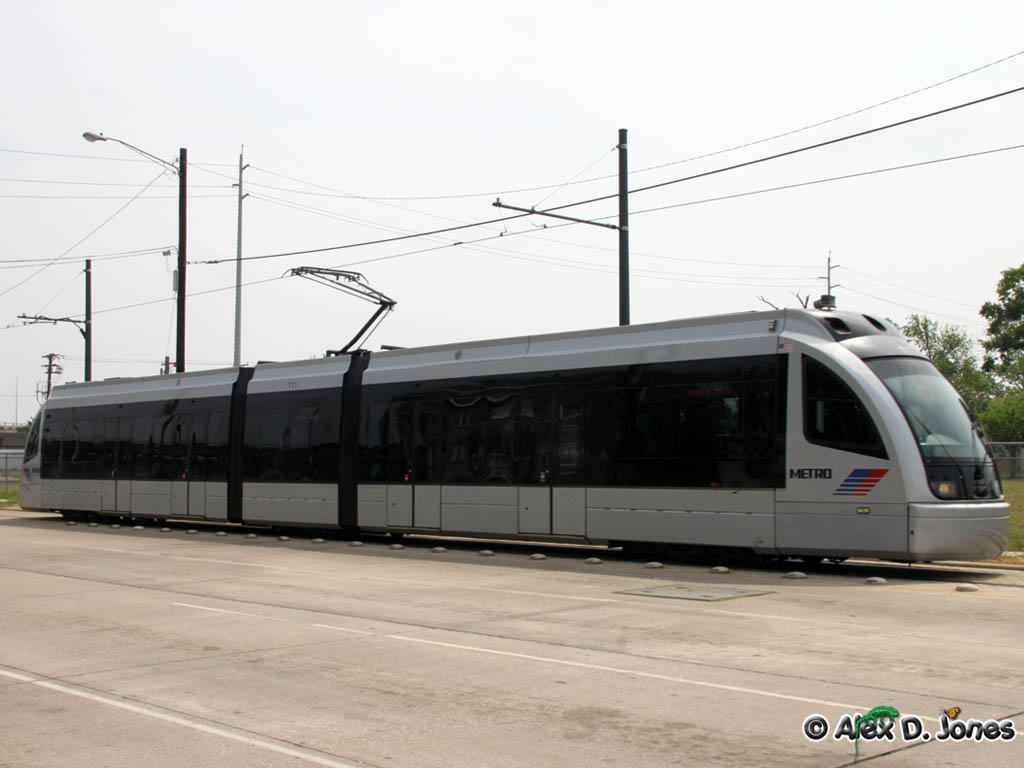
This picture shows a long, white train called a light rail that runs on tracks through a city. The train gets power from electric wires above it through a special arm called a pantograph. You can see the overhead power lines and tall poles that hold them up.
🔬 Scientific Phenomena
The anchoring phenomenon here is electromagnetic energy transfer - the conversion of electrical energy into mechanical motion. The train receives electrical current from overhead wires through its pantograph (the diamond-shaped collector on top). This electrical energy powers electric motors that turn the wheels, creating motion. This is a real-world example of how electrical energy can be transformed into kinetic energy to move heavy objects efficiently.
📚 Core Science Concepts
- Energy Transfer and Transformation: Electrical energy from power lines is converted to mechanical energy that moves the train
- Electrical Circuits: The train, tracks, and overhead wires form a complete electrical circuit that allows current to flow
- Magnetism and Motion: Electric motors inside the train use electromagnets to create the spinning motion that turns the wheels
- Forces and Motion: The train demonstrates how applied forces (from the motors) can move heavy objects along a path
Pedagogical Tip: Use the "See-Think-Wonder" thinking routine with this image. Have students observe what they see, think about how it works, and wonder about questions they have. This builds scientific thinking skills.
UDL Suggestions: Provide multiple ways to engage with this concept: kinesthetic learners can act out energy transfer with their bodies, visual learners can trace the path of electricity with their finger, and auditory learners can describe the process aloud to a partner.
🔍 Zoom In / Zoom Out Concepts
- Zoom In: Inside the electric motors, tiny electrons flow through copper wires wrapped around magnets. When electricity flows through these wires, it creates magnetic fields that push and pull against permanent magnets, causing the motor to spin.
- Zoom Out: This light rail system is part of a larger transportation network that helps reduce car pollution in cities. The electricity powering it might come from power plants, solar panels, or wind turbines located far away, connecting this train to the broader energy grid.
🤔 Potential Student Misconceptions
- Misconception: "The train makes its own electricity like a battery."
Clarification: The train receives electricity from outside sources through the overhead wires, similar to how a lamp plugs into a wall outlet.
- Misconception: "Only gas can make things move."
Clarification: Many different forms of energy can create motion, including electricity, which is often cleaner and quieter than gasoline.
- Misconception: "The electricity jumps from the wires to the train."
Clarification: The pantograph maintains physical contact with the overhead wire, creating a complete circuit for electricity to flow safely.
🎓 NGSS Connections
- Performance Expectation: 3-PS2-3 - Ask questions to determine cause and effect relationships of electric or magnetic interactions between two objects not in contact with each other
- Disciplinary Core Ideas: - Electric and magnetic forces between a pair of objects do not require that the objects be in contact
- Crosscutting Concepts: - Students can identify the cause (electrical energy) and effect (train movement)
💬 Discussion Questions
- What do you think would happen if the pantograph lost contact with the overhead wire? (Bloom's: Analyze | DOK: 2)
- How is this train similar to and different from a toy electric train? (Bloom's: Compare | DOK: 2)
- Why might cities choose electric trains instead of diesel trains? (Bloom's: Evaluate | DOK: 3)
- What other vehicles use electricity to move? (Bloom's: Apply | DOK: 1)
📖 Science Vocabulary
- Pantograph: The folding arm on top of the train that touches the electric wire to collect power
- Circuit: A complete path that electricity follows to flow from one place to another
- Current: The flow of electricity through wires or other materials
- Kinetic energy: The energy that moving objects have
- Electromagnetic: Having to do with both electricity and magnetism working together
- Transform: To change from one form into another form
🔗 Cross-Curricular Ideas
- Math Connection - Measuring and Comparing: Students can measure the length of the light rail train using string or a meter stick, then compare it to other vehicles (cars, buses, bicycles). They can create bar graphs showing "How Long Are Different Vehicles?" This builds measurement and data visualization skills while connecting to the train's real-world dimensions.
- ELA Connection - Informative Writing: Students can write simple informative paragraphs answering the question "How Does the Light Rail Train Get Its Power?" Using the vocabulary words and concepts learned, they practice organizing ideas in a logical sequence (cause and effect writing) while reinforcing scientific understanding.
- Social Studies Connection - Community Transportation: Students can explore how light rail trains help their community by reducing traffic and pollution. They can create a map showing where light rail lines go in their city and discuss how trains help people get to work, school, and fun places. This connects to civic understanding and community planning.
- Art Connection - Energy Flow Diagrams: Students can create colorful illustrations showing the path electricity takes from the overhead wires through the pantograph to the motors that move the train. They can use arrows, colors, and labels to show energy transformation, combining artistic expression with scientific communication.
🚀 STEM Career Connection
- Physicist — Works out the rules that matter and energy follow, from the very small to the whole universe.
- Try it: Explain how pushing a toy train will make it move, and why it eventually stops. (Practice: Constructing explanations)
- Tools: lasers, detectors, vacuum chambers, computer simulations
- Where they work: research laboratories, particle accelerators, observatories, universities
- Meet one: Chanda Prescod-Weinstein — Dark matter — the invisible material that makes up most of the universe.
- Median pay: /year — "Physicists"
- Materials Scientist — Invents and tests new materials — stronger, lighter, or able to do something the old ones could not.
- Try it: Test how different surfaces, like sandpaper or wax paper, affect how far a toy car slides. (Practice: Constructing explanations)
- Tools: electron microscopes, stress testers, furnaces, X-ray diffractometers
- Where they work: research laboratories, manufacturing companies, national labs, universities
- Meet one: Ainissa Ramirez — How to make metal stick to glass and ceramics — she invented a solder that does it.
- Median pay: /year — "Materials scientists"
Wage figures are median annual wages for the U.S. occupation named after each one, from the U.S. Bureau of Labor Statistics, Occupational Employment and Wage Statistics (OEWS), national, May 2025. Several careers share one occupation, so their figures match.