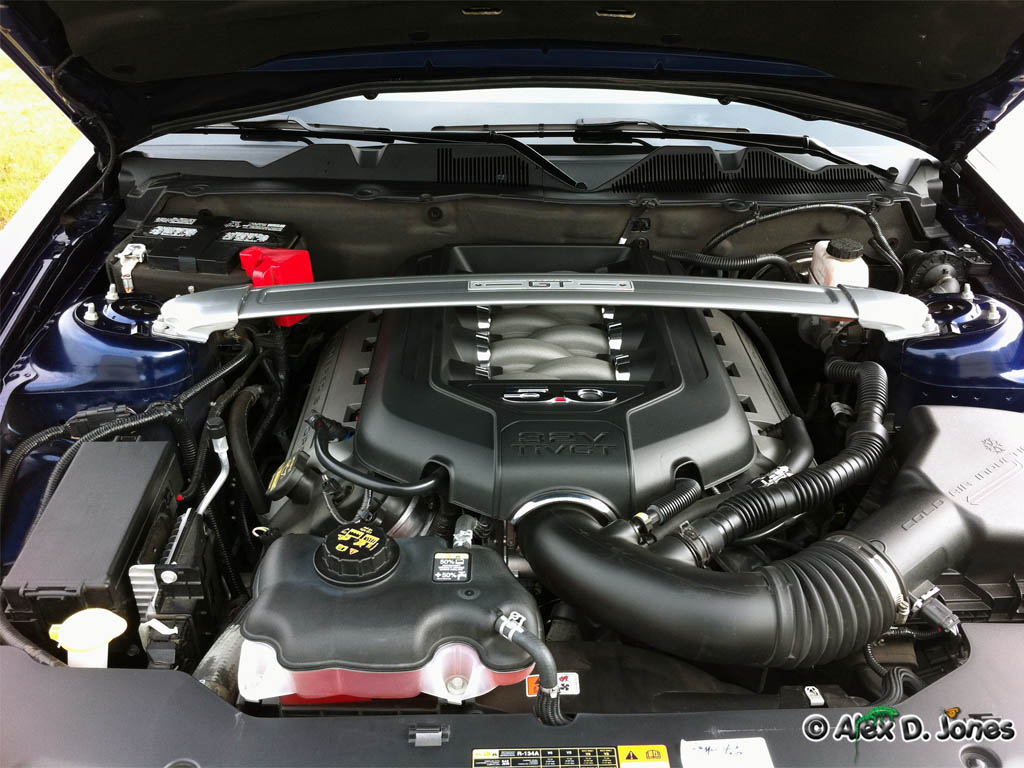
📸 Photo Description
This picture shows the inside of a car engine with its hood open. You can see many metal parts, tubes, and wires that work together to make the car move. The engine has different sections that help turn gasoline into power for the car.
🔬 Scientific Phenomena
The anchoring phenomenon here is energy transformation - specifically how chemical energy stored in gasoline is converted into mechanical energy (motion) through combustion. Inside the engine, fuel mixes with air and burns in controlled explosions within cylinders. This burning creates hot gases that expand rapidly, pushing pistons that ultimately turn the car's wheels. This demonstrates the fundamental principle that energy cannot be created or destroyed, only changed from one form to another.
📚 Core Science Concepts
- Energy Transformation: Chemical energy in fuel changes to heat energy through burning, then to mechanical energy for movement
- Simple Machines: The engine contains levers, pulleys, and other simple machines working together as a complex machine
- Force and Motion: Burning fuel creates forces that push engine parts, which transfer motion to the wheels
- Matter and Its Properties: Liquids (fuel, oil) and gases (air, exhaust) have different properties that help the engine work
Pedagogical Tip: Use the 5E instructional model when teaching about engines: Engage students by asking what makes cars move, Explore by examining toy cars or simple machines, Explain energy transformation concepts, Elaborate by connecting to other machines they know, and Evaluate through hands-on activities.
UDL Suggestions: Provide multiple ways to represent this concept: use physical models of pistons in cylinders, create simple drawings showing energy flow, and allow kinesthetic learners to act out the piston movements with their arms to understand the mechanical motion.
🔍 Zoom In / Zoom Out Concepts
- Zoom In: At the molecular level, fuel molecules are breaking apart and combining with oxygen molecules during combustion, releasing stored chemical bonds as heat and light energy that wasn't visible before.
- Zoom Out: This car engine is part of a larger transportation system that moves people and goods around the world, and the burning of fossil fuels in millions of engines affects Earth's atmosphere and climate patterns globally.
🤔 Potential Student Misconceptions
- Misconception: "The engine creates energy from nothing"
Clarification: Engines transform energy from fuel into motion - they don't create new energy, just change it from one form to another.
- Misconception: "Only the gas pedal makes the car go"
Clarification: Many systems work together including the engine, transmission, and wheels - the gas pedal just controls how much fuel enters the engine.
- Misconception: "All the fuel turns into motion"
Clarification: Most energy from fuel becomes waste heat - only about 25% actually moves the car forward.
🎓 NGSS Connections
- Performance Expectation: 5-PS1-3 (Make observations and measurements to identify materials based on their properties) - can be adapted down for 3rd grade observations
- Disciplinary Core Ideas: (Conservation of Energy and Energy Transfer), (Relationship Between Energy and Forces), (Defining and Delimiting Engineering Problems)
- Crosscutting Concepts: , ,
💬 Discussion Questions
- What do you think happens to the gasoline after it goes into the engine? (Bloom's: Analyze | DOK: 2)
- How is a car engine similar to other machines you use every day? (Bloom's: Apply | DOK: 2)
- Why do you think car engines need so many different parts working together? (Bloom's: Evaluate | DOK: 3)
- What would happen if we put water instead of gasoline in the engine? (Bloom's: Predict | DOK: 2)
📖 Science Vocabulary
- Engine: A machine that burns fuel to create power for movement
- Fuel: A substance like gasoline that stores energy and can be burned
- Combustion: The process of burning something with oxygen to release energy
- Piston: A moving part inside the engine that goes up and down to create power
- Energy transformation: When energy changes from one type to another type
🔗 Cross-Curricular Ideas
- Math Connection - Counting and Measurement: Have students count the different parts visible in the engine photo (pistons, cylinders, tubes, wires). Measure toy cars or model engines using rulers to compare sizes. Create bar graphs showing "How many wheels do different vehicles have?" or "How fast do different toy cars travel down a ramp?"
- ELA Connection - Descriptive Writing and Sequencing: Students can write or dictate sentences describing what they see in the engine using sensory words (shiny, dark, metal, tangled). Create a simple sequence story: "First the fuel goes in, then it burns, then the engine moves." Read books about cars and illustrate favorite scenes.
- Social Studies Connection - Transportation and Community: Discuss the different types of vehicles in the community (buses, fire trucks, ambulances) and how engines help people. Talk about how cars help us visit family, go to school, and get to work. Explore where gasoline comes from and how it gets to gas stations.
- Art Connection - Design and Engineering: Students can draw their own "dream car engine" using colored pencils or markers, labeling the parts they learned about. Create a collage using magazine pictures of different types of vehicles and engines. Design a simple machine using craft materials to show how pistons move up and down.
🚀 STEM Career Connection
- Mechanical Engineer — Designs things that move — engines, turbines, joints and gears — and works out the forces on them.
- Try it: Design and build a small vehicle powered by a rubber band, testing how far it travels. (Practice: Developing and Using Models)
- Tools: CAD software, 3D printers, force sensors, wind tunnels
- Where they work: engineering firms, factories, design studios, research labs
- Meet one: Shini Somara — How air and water flow around things, worked out on a computer before anything is built.
- Median pay: /year — "Mechanical engineers"
- Automotive Technician — Diagnoses why a vehicle is not working and fixes it — increasingly with a computer as well as a wrench.
- Try it: Create a flowchart showing the steps a car engine takes to convert fuel into motion. (Practice: Developing and Using Models)
- Tools: diagnostic scanners, hydraulic lifts, torque wrenches, multimeters
- Where they work: repair shops, dealerships, fleet garages, racing teams
- Median pay: /year — "Automotive service technicians and mechanics"
Wage figures are median annual wages for the U.S. occupation named after each one, from the U.S. Bureau of Labor Statistics, Occupational Employment and Wage Statistics (OEWS), national, May 2025. Several careers share one occupation, so their figures match.