📸 Photo Description
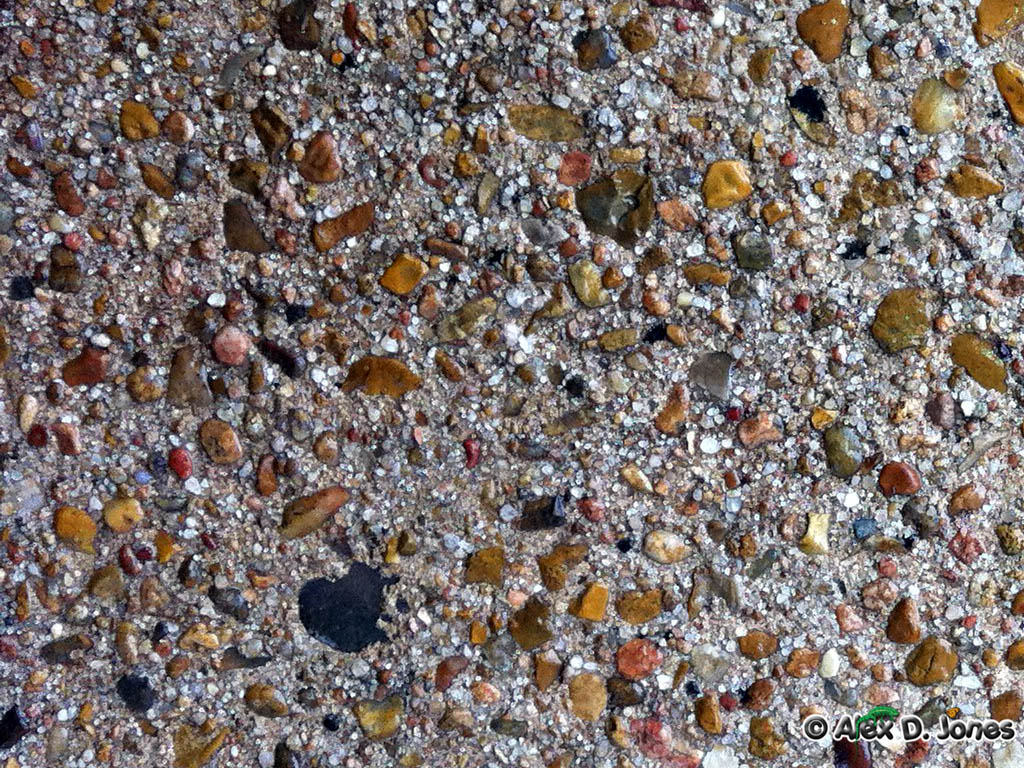
This image shows concrete with many different colored rocks and pebbles mixed inside. The rocks are different sizes, shapes, and colors like brown, orange, red, black, and gray. You can see how all the pieces are stuck together to make a strong, hard surface.
🔬 Scientific Phenomena
The anchoring phenomenon here is composite material formation - specifically how concrete demonstrates that combining different materials creates something stronger than any single material alone. This happens because the cement acts as a binding agent that hardens around the aggregate (rocks and sand), distributing forces across the entire structure. The varied sizes of aggregate help fill spaces and create interlocking connections, while the chemical curing process of cement creates strong bonds throughout the mixture.
📚 Core Science Concepts
- Material Properties: Different materials have different characteristics (hardness, color, texture) that can be observed and measured.
- Mixtures vs. Solutions: Concrete is a mixture where you can still see the individual components (rocks, sand, cement) even after they're combined.
- Engineering Design: Humans combine materials with specific properties to solve problems and meet needs, like creating strong surfaces for roads and buildings.
- Forces and Structures: The combination of materials helps distribute weight and forces, making the final product stronger than individual parts.
Pedagogical Tip: Have students bring in small rock samples from home to create a class collection. This builds personal connection to the content and provides concrete examples for comparison and classification activities.
UDL Suggestions: Provide multiple ways for students to explore material properties: visual observation charts, tactile exploration stations with different textures, and audio descriptions of what they're feeling and seeing to support diverse learning needs.
🔍 Zoom In / Zoom Out Concepts
Zoom In: At the molecular level, cement particles undergo hydration reactions with water, forming calcium silicate hydrate crystals that grow and interlock around the aggregate particles, creating incredibly strong chemical bonds that give concrete its durability.
Zoom Out: This concrete is part of larger infrastructure systems like roads, sidewalks, and buildings that connect communities, support transportation networks, and provide the foundation for modern civilization's built environment.
🤔 Potential Student Misconceptions
- Misconception: "Concrete and cement are the same thing."
Clarification: Cement is just one ingredient in concrete - like flour in bread. Concrete is the mixture of cement, water, sand, and rocks.
- Misconception: "The rocks make concrete weaker because they take up space."
Clarification: The rocks (aggregate) actually make concrete much stronger by providing structure and helping spread out forces.
- Misconception: "All the pieces were glued together after mixing."
Clarification: The cement and water create a chemical reaction that hardens naturally, binding everything together as it cures.
🎓 NGSS Connections
Performance Expectation: 2-PS1-2: Analyze data obtained from testing different materials to determine which materials have the properties that are best suited for an intended purpose.
Disciplinary Core Ideas:
- : Different kinds of matter exist and many of them can be either solid or liquid
- : Different properties are suited to different purposes
Crosscutting Concepts:
- : Patterns in the natural and human designed world can be observed
- : The shape and stability of structures are related to their function
💬 Discussion Questions
- What patterns do you notice in how the rocks are arranged in the concrete? (Bloom's: Analyze | DOK: 2)
- Why do you think engineers choose to mix different sized rocks instead of using all the same size? (Bloom's: Evaluate | DOK: 3)
- How might the properties of this concrete change if we removed all the rocks and just used cement? (Bloom's: Apply | DOK: 2)
- What other materials in our classroom or school are made by combining different things together? (Bloom's: Apply | DOK: 2)
📖 Science Vocabulary
- Mixture: When two or more different materials are combined but keep their own properties.
- Properties: The special characteristics that describe how a material looks, feels, or acts.
- Aggregate: The rocks, sand, and gravel pieces mixed into concrete.
- Composite: A material made by combining two or more different materials to make something stronger.
- Cement: The gray powder that hardens when mixed with water to hold other materials together.
🔗 Cross-Curricular Ideas
Math Connection: Have students sort and classify rocks from the photo by size, then create a bar graph showing how many rocks fall into each size category (small, medium, large). This builds data analysis skills while reinforcing the observation that concrete contains mixed-size aggregate.
ELA Connection: Ask students to write descriptive sentences about the concrete using sensory words (rough, bumpy, hard, speckled). Then have them create a simple "How Concrete is Made" sequence story using transition words like "first," "next," and "finally" to describe the mixing and curing process.
Social Studies Connection: Explore how concrete is used in your community by taking a neighborhood walk to identify concrete structures (sidewalks, building foundations, roads). Students can create a map or list of all the places they find concrete, discussing how it helps people in their community.
Art Connection: Create a mixed-media collage by gluing actual small rocks, sand, and pebbles onto paper to recreate a concrete texture. This hands-on activity helps students understand how different materials combine to create a finished product while exploring artistic composition.
🚀 STEM Career Connection
- Chemist — Studies what substances are made of and what happens when you combine them.
- Try it: Mix water and sand in a clear cup and observe how they settle differently. (Practice: Obtaining, Evaluating, and Communicating Information)
- Tools: fume hoods, balances, spectrometers, glassware
- Where they work: laboratories, manufacturing plants, testing facilities, universities
- Meet one: Tebello Nyokong — Dyes that can be switched on by laser light to destroy cancer cells and leave healthy ones alone.
- Median pay: /year — "Chemists"
- Materials Engineer — Chooses and shapes the right material for a job, and tests it until it fails.
- Try it: Test which material is strongest by trying to bend or break small pieces of paper, cardboard, and fabric. (Practice: Obtaining, Evaluating, and Communicating Information)
- Tools: tensile testers, furnaces, microscopes, hardness testers
- Where they work: manufacturing plants, product design firms, testing labs, universities
- Meet one: Ainissa Ramirez — How to make metal stick to glass and ceramics — she invented a solder that does it.
- Median pay: /year — "Materials engineers"
Wage figures are median annual wages for the U.S. occupation named after each one, from the U.S. Bureau of Labor Statistics, Occupational Employment and Wage Statistics (OEWS), national, May 2025. Several careers share one occupation, so their figures match.