📸 Photo Description
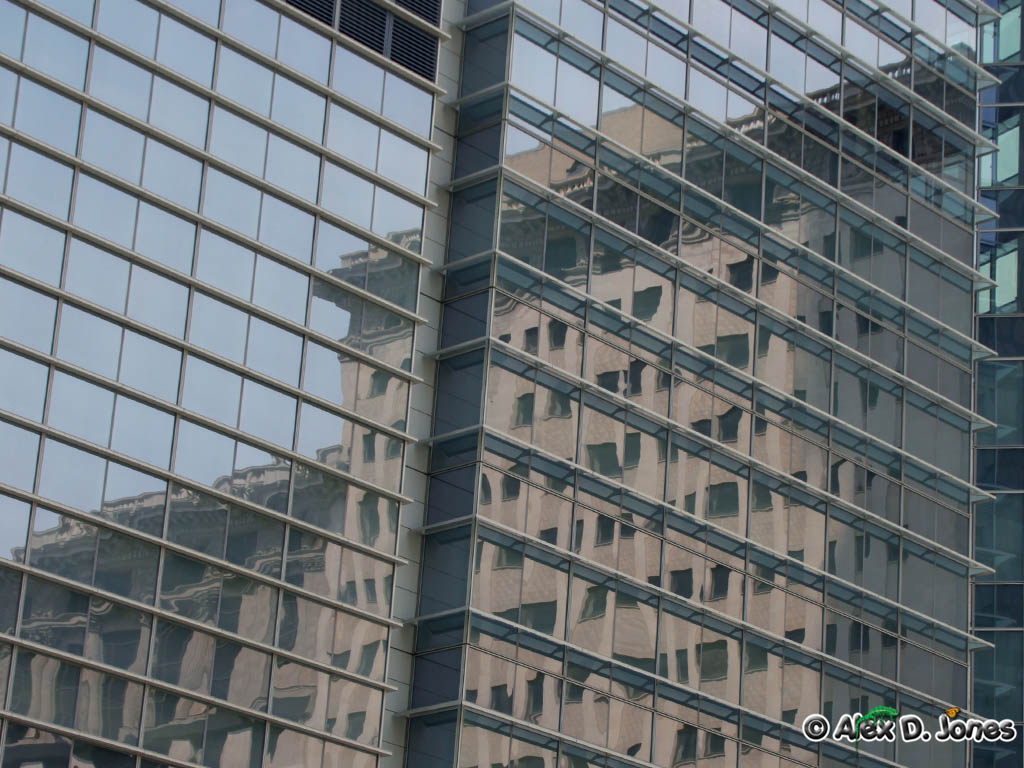
This picture shows a tall glass building that acts like a giant mirror. The glass windows reflect another building, making it look like the second building is inside the first one. The reflection creates interesting patterns and shapes on the shiny surface.
🔬 Scientific Phenomena
The anchoring phenomenon here is reflection - when light bounces off a smooth, shiny surface like glass or a mirror. This happens because light travels in straight lines, and when it hits the glass windows at an angle, it bounces back at the same angle, carrying the image of the nearby building with it. The glass acts like a massive mirror, creating a reflected image that appears to be "inside" the building but is actually just light bouncing back to our eyes.
📚 Core Science Concepts
- Light travels in straight lines - Light moves from the sun or other sources in straight paths until it hits something
- Reflection occurs when light bounces off surfaces - Smooth, shiny surfaces like glass reflect light better than rough surfaces
- The angle of reflection equals the angle of incidence - Light bounces off at the same angle it hits the surface
- Materials have different properties - Glass is transparent (you can see through it) but also reflective when light conditions are right
Pedagogical Tip: Have students use flashlights and mirrors during indoor exploration time to see how light bounces at predictable angles. This hands-on experience helps them understand that reflection follows rules, not random chance.
UDL Suggestions: Provide multiple ways for students to explore reflection: kinesthetic learners can use their bodies to "be" light rays bouncing off surfaces, visual learners can draw light path diagrams, and auditory learners can create sound reflections (echoes) to understand the concept.
🔍 Zoom In / Zoom Out Concepts
- Zoom In: At the microscopic level, light is made of tiny packets of energy called photons that bounce off the electrons in the glass molecules, causing the reflection we see with our eyes.
- Zoom Out: This building reflection is part of a larger urban heat island effect - all these reflective glass buildings in a city bounce sunlight around, making cities warmer than surrounding areas and affecting local weather patterns.
🤔 Potential Student Misconceptions
- Misconception: "The other building is actually inside the glass building"
Clarification: The building we see is just a reflection - light bouncing off the glass surface, like looking in a bathroom mirror
- Misconception: "Only mirrors can reflect things"
Clarification: Many smooth, shiny surfaces can reflect light, including water, glass, metal, and even ice
- Misconception: "Light bounces randomly off surfaces"
Clarification: Light follows predictable rules - it always bounces off at the same angle it hits the surface
🎓 NGSS Connections
- Performance Expectation: 1-PS4-3 Plan and conduct an investigation to determine the effect of placing objects made with different materials in the path of a beam of light
- Disciplinary Core Ideas: - Objects can be seen if light is available to illuminate them or if they give off their own light
- Crosscutting Concepts: - Simple tests can be designed to gather evidence to support or refute student ideas about causes
💬 Discussion Questions
- What do you think would happen to the reflection if the glass building had rough, bumpy windows instead of smooth ones? (Bloom's: Predict | DOK: 3)
- Why can you see the building's reflection better on the glass building than on a brick wall? (Bloom's: Analyze | DOK: 2)
- How is this building reflection similar to seeing yourself in a puddle of water? (Bloom's: Compare | DOK: 2)
- If you were standing inside the glass building, do you think you could see the reflection from inside? Why or why not? (Bloom's: Evaluate | DOK: 3)
📖 Science Vocabulary
- Reflection: When light bounces off a surface and back to your eyes
- Transparent: A material you can see through, like clear glass or water
- Surface: The outside or top layer of something
- Property: A special characteristic that describes what a material is like
- Light source: Something that makes its own light, like the sun or a flashlight
🔗 Cross-Curricular Ideas
- Math - Symmetry and Patterns: Have students explore symmetry by looking at the grid patterns in the glass building's windows. They can count the rows and columns of windows, create their own grid designs on graph paper, and discover how reflections create matching patterns on both sides of a line (bilateral symmetry).
- ELA - Descriptive Writing: Ask students to write a short story or poem from the perspective of the reflected building. "What would the building say if it could talk about being a reflection?" This connects descriptive language skills with the science concept and encourages creative thinking about the phenomenon.
- Art - Mirror Self-Portraits: Students can create self-portraits using mirrors to observe their own reflections carefully, noticing details they might miss without a mirror. Then they can draw what they see, exploring how artists use reflections in their work. This connects the physics of reflection to visual arts.
- Social Studies - Community Helpers: Discuss the people who work in tall glass buildings (office workers, architects, engineers) and how reflection and light affect their daily work environments. Connect to local community by having students identify reflective buildings in their own town.
🚀 STEM Career Connection
- Materials Engineer — Chooses and shapes the right material for a job, and tests it until it fails.
- Try it: Test how different types of smooth surfaces (e.g., polished metal, glass, plastic wrap) reflect light by measuring the brightness of the reflection. (Practice: Planning and Carrying Out Investigations)
- Tools: tensile testers, furnaces, microscopes, hardness testers
- Where they work: manufacturing plants, product design firms, testing labs, universities
- Meet one: Ainissa Ramirez — How to make metal stick to glass and ceramics — she invented a solder that does it.
- Median pay: /year — "Materials engineers"
- Environmental Scientist — Measures how healthy the air, water and land are, and finds out what is harming them.
- Try it: Investigate how reflections from a pond's surface affect the amount of light reaching aquatic plants by measuring light levels above and below the surface. (Practice: Planning and Carrying Out Investigations)
- Tools: water test kits, air sensors, sample jars, data loggers
- Where they work: rivers and lakes, city environmental offices, testing labs, consulting firms
- Meet one: Tierra Curry — Which plants and animals are closest to disappearing, and what it takes to save them.
- Median pay: /year — "Environmental scientists and specialists, including health"
Wage figures are median annual wages for the U.S. occupation named after each one, from the U.S. Bureau of Labor Statistics, Occupational Employment and Wage Statistics (OEWS), national, May 2025. Several careers share one occupation, so their figures match.