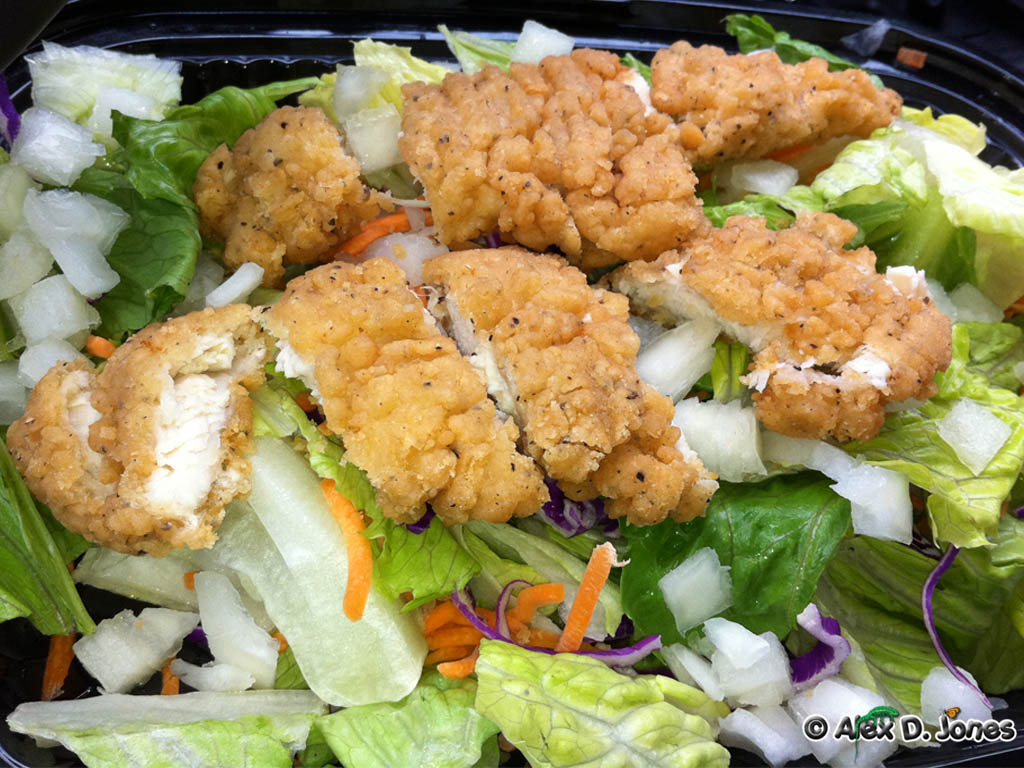
📸 Photo Description
This picture shows golden-brown fried food pieces sitting on top of fresh green lettuce and colorful vegetables. The fried pieces have a bumpy, crispy coating that looks crunchy. You can see different colored vegetables like orange carrots and purple cabbage mixed with the green lettuce leaves.
🔬 Scientific Phenomena
The Anchoring Phenomenon is the transformation of food through cooking and heating. When foods are heated in oil, the water inside turns to steam and escapes, while the outside becomes crispy and changes color. This happens because heat energy breaks apart and rearranges the molecules in the food, creating new textures, colors, and even new substances through chemical reactions.
📚 Core Science Concepts
- Heat Transfer - Heat energy moves from the hot oil into the cooler food, cooking it from the outside in
- States of Matter - Water in the food changes from liquid to gas (steam) when heated
- Physical vs. Chemical Changes - The food undergoes both physical changes (getting hot, losing water) and chemical changes (browning, new flavors forming)
- Energy Transformation - Electrical or gas energy becomes heat energy, which then changes the food's properties
Pedagogical Tip: Use familiar foods like popcorn or toast to help students connect to the concept of heat changing matter. Students can observe and describe changes they see, hear, and smell during cooking demonstrations.
UDL Suggestions: Provide multiple ways for students to express their observations through drawing, acting out the process, or using graphic organizers to compare before/after states of the food.
🔍 Zoom In / Zoom Out Concepts
- Zoom In: At the molecular level, heat energy makes tiny particles (molecules) move faster and faster until chemical bonds break and reform, creating new substances with different properties than the original raw food.
- Zoom Out: This connects to the larger food system where energy from the sun helps plants grow, humans harvest and process the food, and we use various energy sources to transform raw ingredients into meals that provide energy for our bodies.
🤔 Potential Student Misconceptions
- Misconception: "The food just gets hot, nothing else changes."
Clarification: Heating food creates both physical and chemical changes - new colors, textures, and even new substances form.
- Misconception: "All the water disappears when you cook food."
Clarification: Some water turns to steam and escapes, but some water stays inside the food in different forms.
- Misconception: "Heat only makes things melt."
Clarification: Heat can cause many different changes - melting, evaporating, chemical reactions, and changes in texture and color.
🎓 NGSS Connections
- Performance Expectation: 2-PS1-1 (can be adapted up) - Plan and conduct an investigation to describe and classify different kinds of materials by their observable properties
- Disciplinary Core Ideas: - Different kinds of matter exist and many of them can be either solid or liquid, depending on temperature
- Crosscutting Concepts: - Simple tests can be designed to gather evidence to support or refute student ideas about causes
💬 Discussion Questions
- What changes do you notice between raw vegetables and cooked food? (Bloom's: Analyze | DOK: 2)
- How do you think heat energy traveled from the stove to change this food? (Bloom's: Apply | DOK: 2)
- What evidence tells you that the food has been heated? (Bloom's: Evaluate | DOK: 3)
- If you could watch the tiny particles in this food while it cooked, what do you think you would see happening? (Bloom's: Create | DOK: 3)
📖 Science Vocabulary
- Heat energy: The energy that makes things warmer and can change how they look and feel
- Chemical change: When heat or other forces create completely new substances with different properties
- Physical change: When something looks different but is still made of the same materials
- Molecule: Tiny particles too small to see that make up all matter
- Steam: Water that has turned into an invisible gas when heated
- Temperature: How hot or cold something is
🔗 Cross-Curricular Ideas
- Math Connection: Students can measure and compare the amounts of different vegetables in the salad using non-standard units (like counting carrot pieces) or by estimating portions. They can create a simple bar graph showing "Before Cooking" vs. "After Cooking" to compare how the amount of food changes when water evaporates during heating.
- ELA Connection: Students can write descriptive sentences about the food using sensory words (crispy, golden, crunchy, colorful). They can also create a simple recipe card with step-by-step instructions for preparing a salad with cooked protein, practicing sequential writing and following directions.
- Social Studies Connection: Students can explore where different foods come from by researching which countries or regions grow lettuce, carrots, and other vegetables. This connects to understanding food systems and how communities depend on agriculture and trade to get the foods they eat.
- Art Connection: Students can create a mixed-media collage showing the transformation of food from raw to cooked by drawing or painting the "before" and "after" versions side by side. They could also use actual food packaging or pictures to create a colorful representation of healthy meals.
🚀 STEM Career Connection
- Food Scientist — Studies what food is made of, why it spoils, and how to keep it safe and nourishing.
- Try it: Compare the amount of water that evaporates from an open container of water versus a sealed container over two days. (Practice: Analyzing and Interpreting Data)
- Tools: pH meters, test kitchens, incubators, texture analysers
- Where they work: food companies, testing laboratories, government safety agencies, universities
- Meet one: Mario Ferruzzi — How the body takes in nutrients from food, and how to make everyday foods more nourishing.
- Median pay: /year — "Food scientists and technologists"
- Chemist — Studies what substances are made of and what happens when you combine them.
- Try it: Mix baking soda and vinegar and record the gas bubbles produced and the change in temperature. (Practice: Analyzing and Interpreting Data)
- Tools: fume hoods, balances, spectrometers, glassware
- Where they work: laboratories, manufacturing plants, testing facilities, universities
- Meet one: Tebello Nyokong — Dyes that can be switched on by laser light to destroy cancer cells and leave healthy ones alone.
- Median pay: /year — "Chemists"
Wage figures are median annual wages for the U.S. occupation named after each one, from the U.S. Bureau of Labor Statistics, Occupational Employment and Wage Statistics (OEWS), national, May 2025. Several careers share one occupation, so their figures match.