📸 Photo Description
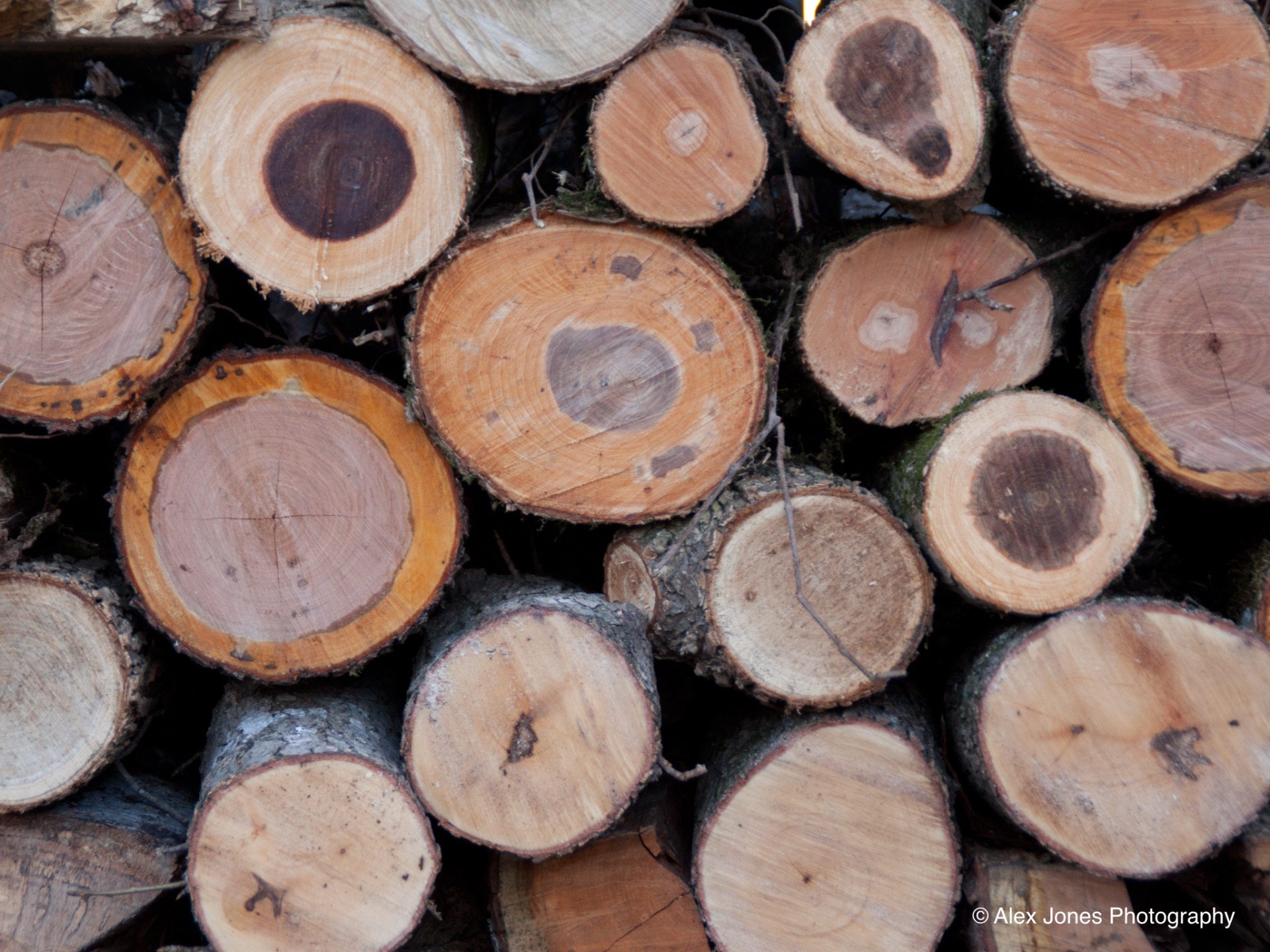
The photo shows a pile of cut tree logs. Each log has a circular cross-section, revealing different patterns of rings and colors inside. Some logs have rough bark on the outside, while others show smoother wood.
🔬 Scientific Phenomena
This image illustrates the concept of plant growth and structure. The circular patterns within each log, known as tree rings, are a visual record of a tree's growth over time. Each ring represents one year of growth, with wider rings indicating favorable conditions (like ample water and sunlight) and narrower rings suggesting less favorable conditions. The different colors and textures within the wood also reveal its internal structure, which is crucial for the tree's survival.
📚 Core Science Concepts
- Tree Rings: These are the visible layers within a tree trunk, each representing one year of growth. They show how trees grow outwards.
- Plant Structure: Trees have different parts, including roots, a trunk, branches, and leaves. The trunk is made of wood, which contains structures that transport water and nutrients.
- Life Cycle of a Tree: Trees, like all organisms, have a life cycle that includes germination (birth), growth, reproduction (producing seeds), and eventually death. The rings are evidence of the growth stage.
- Environmental Influence on Growth: The width and appearance of tree rings can be affected by environmental factors such as the amount of rainfall, sunlight, and the presence of nutrients.
Pedagogical Tip: When discussing tree rings, encourage students to observe the variations in width and color. Prompt them to think about what might have caused these differences, connecting it to factors like seasons or weather patterns.
UDL Suggestions: Provide a variety of visual aids such as diagrams of tree cross-sections, time-lapse videos of tree growth, and even real tree cookie samples (if available and safe) to cater to different learning preferences.
🔍 Zoom In / Zoom Out Concepts
- Zoom In: Inside each wood cell, there are specialized structures that help transport water and nutrients throughout the tree, and others that store food. These microscopic structures are responsible for the tree's ability to grow and survive.
- Zoom Out: These logs are part of a forest ecosystem. Forests play a vital role in the environment by producing oxygen, providing habitats for animals, and helping to regulate the climate.
🤔 Potential Student Misconceptions
- Misconception: All trees grow at the same rate and have the same number of rings.
Clarification: Trees grow at different rates depending on their species, age, and the environment they live in. The number of rings indicates the tree's age, but the width of the rings shows how conditions changed year to year.
- Misconception: Tree rings are just decorations inside the wood.
Clarification: Tree rings are actually living evidence of the tree's growth history, showing how it responded to changes in its environment over many years.
🎓 NGSS Connections
3-LS1-1: Develop models to describe that organisms have unique and diverse life cycles but all have in common birth, growth, reproduction, and death.
K-LS1-1 (Grade K — foundational connection): Use observations to describe patterns of what plants and animals (including humans) need to survive.
💬 Discussion Questions
- What do the rings inside the logs tell us about the tree's life? (Bloom's: Understand | DOK: 2 | SEP: Analyzing and Interpreting Data)
- How might the environment have affected the growth of these trees over time? (Bloom's: Analyze | DOK: 2 | SEP: Constructing Explanations and Designing Solutions)
- If you found a log with very wide rings, what could that tell you about the year that part of the tree grew? (Bloom's: Analyze | DOK: 2 | SEP: Constructing Explanations and Designing Solutions)
📖 Vocabulary
- Trunk: The main woody stem of a tree.
- Rings: Circles seen on the cut end of a tree trunk that show how much it grew each year.
- Growth: The process of increasing in size, as a plant or animal does.
- Environment: The surroundings or conditions in which a person, animal, or plant lives or operates.
🌡️ Extension Activities
- Tree Ring Art: Have students draw or paint their own tree ring patterns, experimenting with different colors and widths to represent varied growth conditions.
- "Tree Cookie" Investigation: If possible, bring in a real "tree cookie" (a cross-section of a log). Students can count the rings to estimate the tree's age and observe variations in ring width.
- Growth Journal: Students can keep a journal tracking their own growth (height, weight, etc.) and compare it to how trees grow.
🔗 Cross-Curricular Ideas
- ELA: Read stories or poems about trees and forests. Students can write their own stories from the perspective of a tree.
- Math: Measure the diameter of different logs and compare them. Students can also learn to calculate the approximate age of a tree using its rings.
- Art: Create rubbings of tree bark or draw detailed cross-sections of logs, paying attention to patterns and textures.
🚀 STEM Career Connection
- Horticulturist — Grows and cares for plants on purpose — choosing what will thrive in a particular place.
- Try it: Draw a model of a plant showing its roots, stem, and leaves, and explain how each part helps the plant get what it needs to grow. (Practice: Developing and Using Models)
- Tools: pruning shears, soil test kits, grafting knives, greenhouses
- Where they work: botanical gardens, plant nurseries, city parks, farms and orchards
- Meet one: Carlos Magdalena — How to bring the world's rarest plants back from the edge, including the smallest water lily on Earth after it vanished from the wild.
- Median pay: /year — "Soil and plant scientists"
- Agricultural Scientist — Works out how to grow more food on the same land without wearing the soil out.
- Try it: Create a model of a garden bed and decide where to plant different vegetables, explaining how their spacing will affect their growth. (Practice: Developing and Using Models)
- Tools: test plots, soil kits, seed drills, yield monitors
- Where they work: research farms, seed companies, extension services, universities
- Meet one: Segenet Kelemu — How to protect African food crops from disease, and how insects themselves can become food.
- Median pay: /year — "Soil and plant scientists"
Wage figures are median annual wages for the U.S. occupation named after each one, from the U.S. Bureau of Labor Statistics, Occupational Employment and Wage Statistics (OEWS), national, May 2025. Several careers share one occupation, so their figures match.