📸 Photo Description
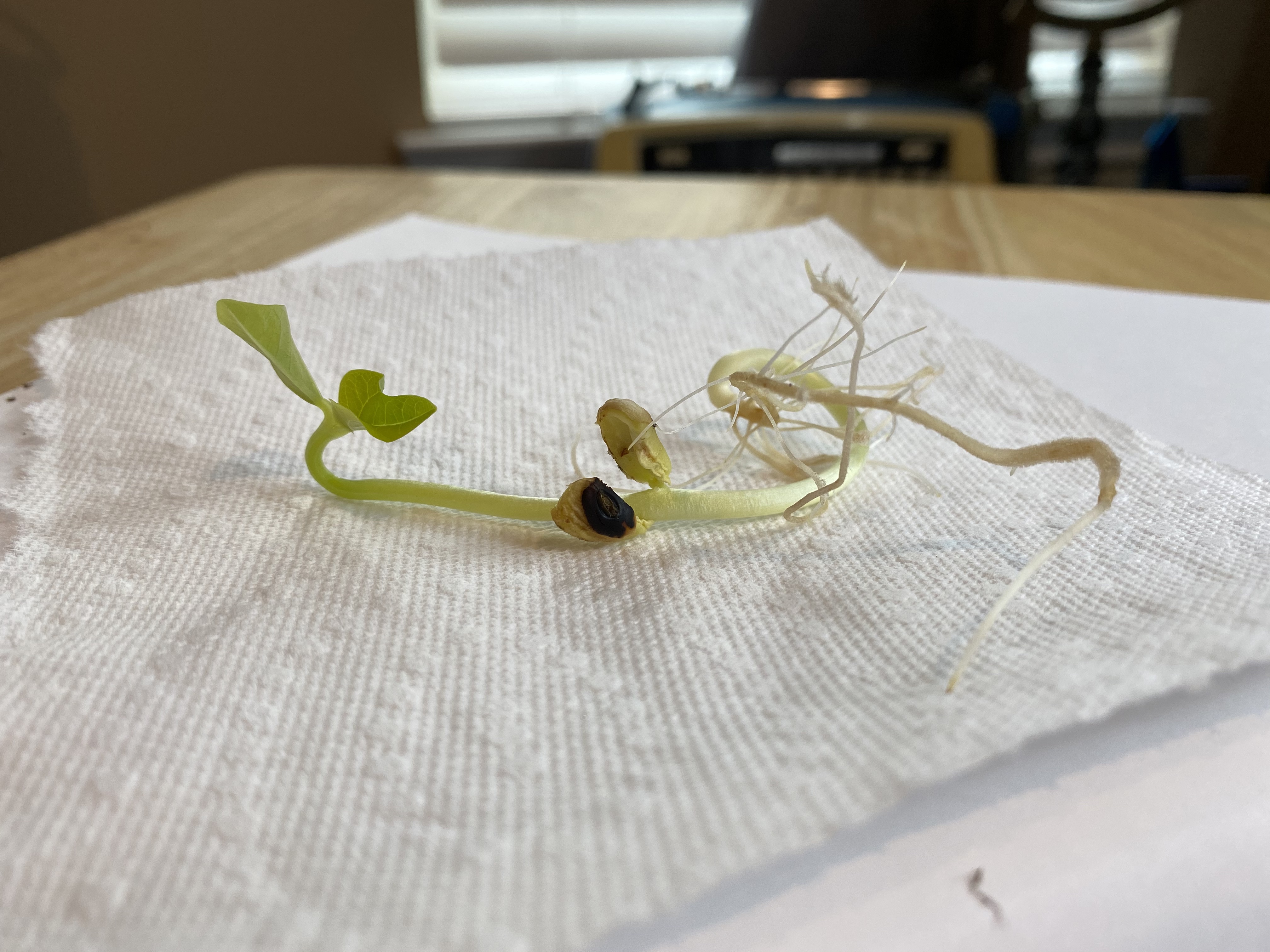
A young plant is growing from a dark seed on a white paper towel. The plant has green leaves and white roots that are spreading out. The seed still has part of its shell attached to the growing plant.
🔬 Scientific Phenomena
This image shows seed germination - the process where a seed begins to grow into a new plant. The seed absorbed water, which activated the tiny plant (embryo) inside. The embryo used stored food in the seed to grow its first roots and leaves. This is the beginning of a plant's life cycle, where the seed transforms from a dormant state into an actively growing organism.
📚 Core Science Concepts
- Life Cycles: Plants go through predictable stages from seed to adult plant, and this germination represents the first stage of growth.
- Plant Structures and Functions: The white structures are roots that absorb water and nutrients, while the green parts are the first leaves that will make food through photosynthesis.
- Basic Needs of Living Things: Seeds need water, warmth, and oxygen to germinate and begin growing into plants.
- Growth and Development: Plants change over time as they grow, starting small and developing more complex structures.
Pedagogical Tip: Have students keep germination journals with daily drawings and observations. This helps them notice small changes over time and develops their scientific observation skills.
UDL Suggestions: Provide multiple ways for students to record observations - drawings, photos, verbal descriptions, or simple charts. Some students may excel at noticing visual changes while others might better describe what they observe in words.
🔍 Zoom In / Zoom Out Concepts
- Zoom In: Inside the seed, tiny cells are dividing and growing rapidly. The plant embryo is using stored starches and proteins as food energy to build new plant tissues and structures.
- Zoom Out: This single germinating seed represents how plants spread and populate ecosystems. When this plant grows up, it may produce many more seeds that will travel to new places and start the cycle again.
🤔 Potential Student Misconceptions
- Misconception: Seeds are not alive until they start growing.
Reality: Seeds contain living embryos that are dormant but alive, waiting for the right conditions to begin growing.
- Misconception: Plants get their food from soil through their roots.
Reality: Plants make their own food using sunlight, air, and water. Roots absorb water and minerals, not food.
- Misconception: All seeds need soil to grow.
Reality: Seeds only need water, warmth, and air to germinate. Soil provides support and nutrients for later growth.
🎓 NGSS Connections
Performance Expectation: 3-LS1-1 - Develop models to describe that organisms have unique and diverse life cycles but all have in common birth, growth, reproduction, and death.
Disciplinary Core Ideas:
- - Growth and Development of Organisms
Crosscutting Concepts:
-
-
💬 Discussion Questions
- What do you think this seed needed to start growing? (Bloom's: Apply | DOK: 2)
- How is this baby plant similar to and different from adult plants you know? (Bloom's: Analyze | DOK: 3)
- What do you predict will happen to this plant over the next few weeks? (Bloom's: Evaluate | DOK: 3)
- Why do you think the plant grew roots before it grew bigger leaves? (Bloom's: Analyze | DOK: 2)
📖 Science Vocabulary
- Germination: When a seed begins to grow into a new plant
- Embryo: The tiny baby plant inside a seed
- Root: The part of a plant that grows down to get water and hold the plant in place
- Seedling: A young plant that just started growing from a seed
- Life cycle: The stages a living thing goes through as it grows and changes
🔗 Cross-Curricular Ideas
- Math - Measurement and Growth Tracking: Students can measure their germinating seeds each day using rulers or paper clips and record the data on a simple bar graph or line plot. This connects to measurement standards and helps students see plant growth as numerical data they can compare and analyze.
- ELA - Sequencing and Descriptive Writing: Have students write or dictate the steps of seed germination in order (first, next, then, last) using transition words. They can also write descriptive sentences about what they observe, developing vocabulary and writing skills while practicing science communication.
- Art - Nature Sketching and Life Drawing: Students can create detailed drawings or paintings of their germinating seeds at different stages of growth. This develops observation skills and fine motor control while celebrating the natural beauty of plant development. Students could also create a collage using actual plant materials.
- Social Studies - Where Do Seeds Come From: Explore how seeds travel to different places through wind, water, and animals. Students can learn about farmers who grow food from seeds and how different cultures use plants. This connects to understanding how communities depend on plants for food and materials.
🚀 STEM Career Connection
- Horticulturist — Grows and cares for plants on purpose — choosing what will thrive in a particular place.
- Try it: Design a model showing the essential parts of a seed and how they contribute to germination. (Practice: Developing and Using Models)
- Tools: pruning shears, soil test kits, grafting knives, greenhouses
- Where they work: botanical gardens, plant nurseries, city parks, farms and orchards
- Meet one: Carlos Magdalena — How to bring the world's rarest plants back from the edge, including the smallest water lily on Earth after it vanished from the wild.
- Median pay: /year — "Soil and plant scientists"
- Botanist — Studies plants — how they grow, how they reproduce, and how they survive where they live.
- Try it: Create a diagram of a germinating seed, labeling the seed coat, embryo, root, and shoot. (Practice: Developing and Using Models)
- Tools: a hand lens, a plant press, a soil probe, field guides
- Where they work: botanical gardens, herbariums, forests and fields, universities
- Meet one: Robin Wall Kimmerer — Mosses — which she calls the coral reefs of the forest — and what Indigenous knowledge teaches about bringing plants back.
- Median pay: /year — "Soil and plant scientists"
Wage figures are median annual wages for the U.S. occupation named after each one, from the U.S. Bureau of Labor Statistics, Occupational Employment and Wage Statistics (OEWS), national, May 2025. Several careers share one occupation, so their figures match.