📸 Photo Description
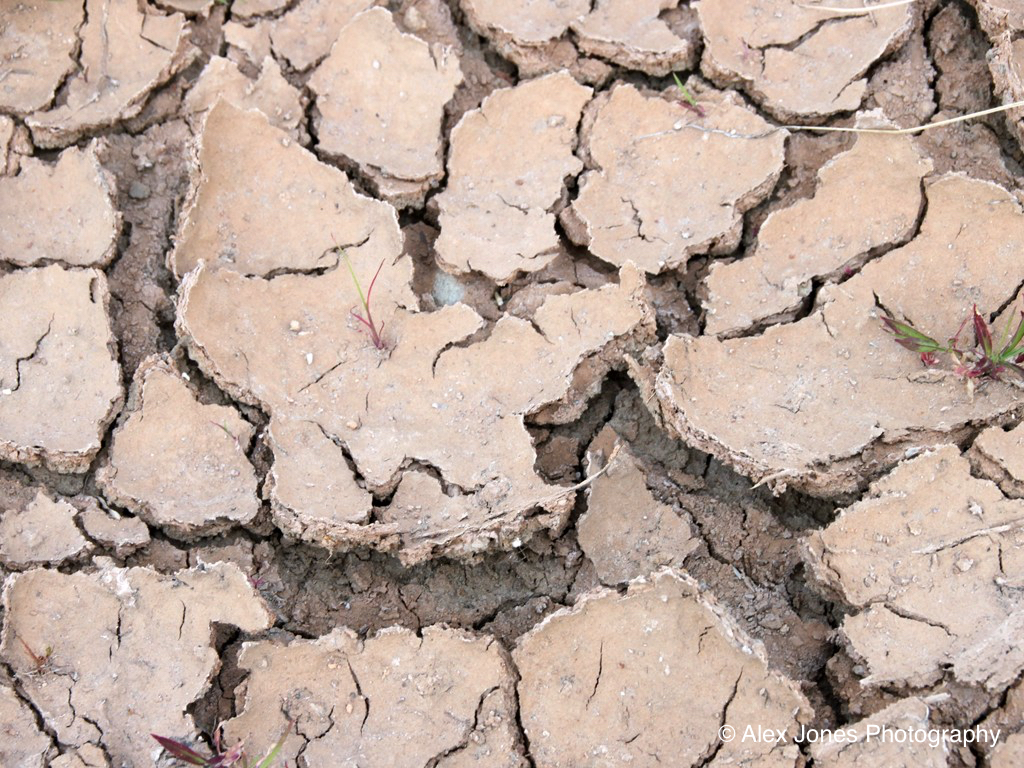
The picture shows dry, cracked soil that looks like puzzle pieces. Small green plants are trying to grow through some of the cracks. The ground is very dry and hard because there has not been enough water for a long time.
🔬 Scientific Phenomena
This image represents the Anchoring Phenomenon of drought and soil desiccation. When soil loses water over extended periods without rainfall, the clay particles shrink and contract, creating characteristic polygonal crack patterns. This process occurs because water molecules that normally fill spaces between soil particles evaporate, causing the soil structure to compress and fracture along lines of weakness. The resilient plant growth emerging through cracks demonstrates how life adapts to extreme environmental conditions.
📚 Core Science Concepts
- Water Cycle Disruption: Drought occurs when the water cycle is interrupted, with less precipitation returning to Earth than normal evaporation rates.
- Soil Composition and Structure: Soil contains water, air, minerals, and organic matter. When water is removed, the physical structure changes dramatically.
- Plant Adaptations: Some plants have special features that help them survive with very little water, including deep root systems and water storage capabilities.
- Weather vs. Climate Patterns: Short-term weather events can lead to longer-term climate impacts on local ecosystems.
Pedagogical Tip: Use a hands-on demonstration with wet clay that students can observe drying over several days. This helps them visualize the cracking process and understand cause-and-effect relationships in real time.
UDL Suggestions: Provide multiple ways for students to explore this concept: tactile experiences with different soil samples, visual time-lapse videos of cracking, and kinesthetic activities where students act out water molecules leaving soil spaces.
🔍 Zoom In / Zoom Out Concepts
- Zoom In: At the microscopic level, soil particles are held together by thin films of water. When this water evaporates, the attractive forces between clay particles increase, pulling them closer together and creating tension that eventually causes cracks to form.
- Zoom Out: This localized drought connects to larger Earth systems including atmospheric circulation patterns, regional precipitation cycles, and global climate change effects that can alter weather patterns across entire continents.
🤔 Potential Student Misconceptions
- Misconception: "The ground cracks because it's hot outside."
Clarification: While heat speeds up evaporation, the cracking happens specifically because water leaves the soil, not just because of high temperatures.
- Misconception: "Plants can't grow without lots of water."
Clarification: Some plants have special adaptations that allow them to survive and even thrive in dry conditions by storing water or having very deep roots.
- Misconception: "Cracked soil is dead and useless."
Clarification: Dry soil can return to healthy condition when water is added back through rain or irrigation.
🎓 NGSS Connections
- Performance Expectation: 3-LS4-3: Construct an argument that some animals and plants have internal and external structures that function to support survival, growth, behavior, and reproduction.
- Disciplinary Core Ideas: - Adaptation, - The History of Planet Earth
- Crosscutting Concepts: , ,
💬 Discussion Questions
- What do you think happened to the water that used to be in this soil? (Bloom's: Analyze | DOK: 2)
- How might the small plants growing in the cracks be different from plants that need lots of water? (Bloom's: Compare | DOK: 2)
- If you were a farmer, what could you do to help soil like this? (Bloom's: Evaluate | DOK: 3)
- What patterns do you notice in how the soil cracked, and why do you think it cracked this way? (Bloom's: Analyze | DOK: 2)
📖 Science Vocabulary
- Drought: A long period of time when an area gets much less rain than normal.
- Evaporation: When water changes from liquid to invisible water vapor and goes into the air.
- Adaptation: Special features that help plants and animals survive in their environment.
- Soil: The layer of earth where plants grow, made of tiny rock pieces, water, air, and dead plant materials.
- Precipitation: Water that falls from clouds as rain, snow, sleet, or hail.
🔗 Cross-Curricular Ideas
- Math - Measurement and Patterns: Have students measure the width of soil cracks using rulers or string. Create a graph showing crack sizes across different areas of a dried mud sample. Students can also count the number of polygon shapes and sort them by number of sides, connecting to geometry standards.
- ELA - Descriptive Writing: Ask students to write a short story from the perspective of a plant trying to grow through cracked soil, or a water droplet during the water cycle. They can use sensory words (dry, hard, crumbly, thirsty) to describe what the soil looks and feels like.
- Social Studies - Human Impact and Agriculture: Discuss how droughts affect farmers and communities. Show students where droughts happen around the world using maps. Talk about how people use water wisely and help crops survive during dry times through irrigation and farming practices.
- Art - Nature Textures and Patterns: Have students create crayon rubbings of dried mud or cracked surfaces to capture the texture. They can also paint or draw their own cracked soil patterns using natural earth-tone colors, exploring how artists use patterns found in nature.
🚀 STEM Career Connection
- Agricultural Scientist — Works out how to grow more food on the same land without wearing the soil out.
- Try it: Design a simple irrigation system using household materials to deliver water to a small plant. (Practice: Constructing Explanations and Designing Solutions)
- Tools: test plots, soil kits, seed drills, yield monitors
- Where they work: research farms, seed companies, extension services, universities
- Meet one: Segenet Kelemu — How to protect African food crops from disease, and how insects themselves can become food.
- Median pay: /year — "Soil and plant scientists"
- Civil Engineer — Designs the things a town runs on — roads, bridges, water pipes and drains.
- Try it: Sketch a plan for a small dam that could help store water for a community during dry periods. (Practice: Constructing Explanations and Designing Solutions)
- Tools: surveying equipment, CAD software, soil tests, load calculations
- Where they work: construction sites, city engineering departments, design firms, transport agencies
- Meet one: Roma Agrawal — How to hold a skyscraper up — she designed the foundations and the spire of the Shard.
- Median pay: /year — "Civil engineers"
Wage figures are median annual wages for the U.S. occupation named after each one, from the U.S. Bureau of Labor Statistics, Occupational Employment and Wage Statistics (OEWS), national, May 2025. Several careers share one occupation, so their figures match.