📸 Photo Description
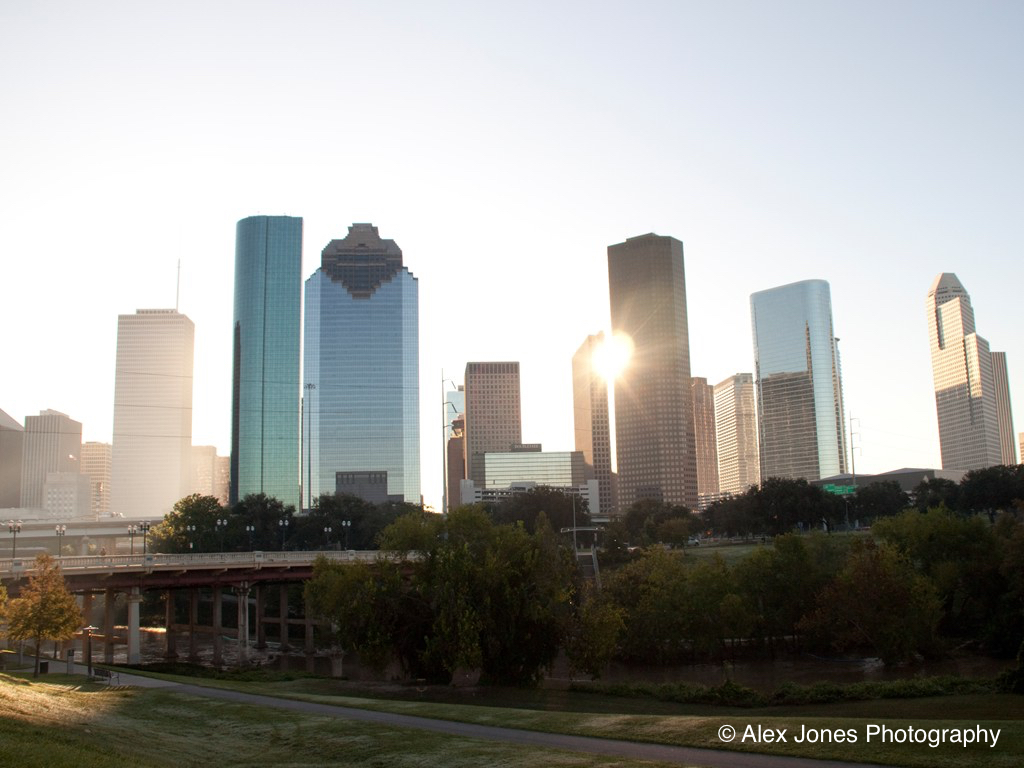
This picture shows tall buildings in a city during sunrise or sunset. The sun is shining brightly between the buildings, creating shadows and light. You can see different shaped buildings made of glass and concrete with trees and roads in front of them.
🔬 Scientific Phenomena
The Anchoring Phenomenon is the interaction between sunlight and human-built structures creating patterns of light and shadow in urban environments. This occurs because light travels in straight lines and cannot bend around solid objects like buildings. When the sun is low in the sky (during sunrise or sunset), it creates long shadows and dramatic lighting effects as the light is blocked by the tall structures and reflected off glass surfaces.
📚 Core Science Concepts
- Light travels in straight lines - Sunlight moves in straight paths from the sun to Earth, which is why buildings can block it and create shadows.
- Shadows form when light is blocked - The dark areas around and behind buildings happen because solid objects stop light from passing through them.
- Materials interact differently with light - Glass windows reflect and let light through, while concrete walls block light completely.
- Earth's rotation causes the sun's apparent movement - The sun appears to move across the sky because Earth is spinning, changing where shadows fall throughout the day.
Pedagogical Tip: Use a flashlight and building blocks in a darkened classroom to recreate this phenomenon. Students can observe how moving the light source (like the sun moving across the sky) changes shadow patterns, making the abstract concept concrete and observable.
UDL Suggestions: Provide multiple ways for students to explore light and shadow: kinesthetic learners can use their bodies to create shadows, visual learners can draw shadow patterns, and auditory learners can describe what they observe to partners. This ensures all students can access the learning regardless of their preferred learning style.
🔍 Zoom In / Zoom Out Concepts
- Zoom In: At the molecular level, light is made of tiny particles called photons that bounce off surfaces or get absorbed by materials. When photons hit glass, some bounce back (reflection) and some pass through (transmission), while concrete absorbs most photons.
- Zoom Out: This cityscape is part of Earth's larger day-night cycle caused by our planet's 24-hour rotation. Cities around the world experience similar lighting patterns as Earth spins, creating a continuous cycle of sunrise and sunset across different time zones.
🤔 Potential Student Misconceptions
- Misconception: The sun moves around Earth during the day.
Clarification: Earth spins like a top, making it look like the sun is moving across our sky.
- Misconception: Shadows are always the same size as the object.
Clarification: Shadow size changes based on where the light source is - low sun creates long shadows, high sun creates short shadows.
- Misconception: Light can bend around corners to avoid making shadows.
Clarification: Light travels in straight lines and cannot bend around solid objects, which is exactly why shadows form.
🎓 NGSS Connections
- Performance Expectation: 5-ESS1-2 (Represent data in graphical displays to reveal patterns of daily changes in length and direction of shadows, day and night, and the seasonal appearance of some stars in the night sky)
- Disciplinary Core Ideas: (The sun is a star that appears larger and brighter than other stars because it is closer)
- Crosscutting Concepts: (Similarities and differences in patterns can be used to sort and classify natural phenomena)
💬 Discussion Questions
- What do you notice about the shadows in this picture compared to shadows at noon? (Bloom's: Analyze | DOK: 2)
- How might this same city look different at different times of day? (Bloom's: Apply | DOK: 2)
- Why do some buildings appear brighter than others in this photo? (Bloom's: Analyze | DOK: 3)
- What would happen to the shadows if this photo was taken from the opposite direction? (Bloom's: Evaluate | DOK: 3)
📖 Science Vocabulary
- Shadow: A dark area created when an object blocks light from reaching a surface.
- Reflection: When light bounces off a surface, like sunlight bouncing off glass windows.
- Transparent: A material that lets light pass through it, like clear glass.
- Opaque: A material that blocks light from passing through it, like concrete walls.
- Light source: Something that makes its own light, like the sun or a flashlight.
🔗 Cross-Curricular Ideas
- Math - Measuring Shadows: Students can measure shadows cast by objects at different times of day and create bar graphs to compare the lengths. This connects shadow science to data representation and measurement skills while reinforcing patterns they observe in the photo.
- ELA - Descriptive Writing: Have students write descriptive paragraphs about what they see in the photo, using sensory words to describe the light, shadows, and colors. They can also read and discuss the children's books listed in resources, then write their own shadow stories.
- Social Studies - City Planning: Discuss how architects and city planners think about where buildings are placed and how sunlight affects the city. Students can learn that buildings in cities are designed with light and shadow in mind, connecting science to how communities are built and organized.
- Art - Shadow Art Projects: Students can create their own shadow artwork using flashlights, objects, and paper or walls. They can also draw or paint pictures of buildings with shadows at different times of day, practicing perspective and light techniques while exploring the artistic side of scientific phenomena.
🚀 STEM Career Connection
- Civil Engineer — Designs the things a town runs on — roads, bridges, water pipes and drains.
- Try it: Design a simple structure that minimizes shadows on a specific area using craft sticks and tape, explaining why your design works. (Practice: Constructing Explanations and Designing Solutions)
- Tools: surveying equipment, CAD software, soil tests, load calculations
- Where they work: construction sites, city engineering departments, design firms, transport agencies
- Meet one: Roma Agrawal — How to hold a skyscraper up — she designed the foundations and the spire of the Shard.
- Median pay: /year — "Civil engineers"
- Solar Panel Installer — Mounts and wires solar panels, working out which angle catches the most sun on that particular roof.
- Try it: Use a flashlight and a flat surface to test different angles of a small object to see which angle casts the shortest shadow, representing maximum sun exposure. (Practice: Constructing Explanations and Designing Solutions)
- Tools: mounting rails, electrical meters, angle finders, safety harnesses
- Where they work: rooftops, solar farms, installation companies, utility projects
- Median pay: /year — "Solar photovoltaic installers"
Wage figures are median annual wages for the U.S. occupation named after each one, from the U.S. Bureau of Labor Statistics, Occupational Employment and Wage Statistics (OEWS), national, May 2025. Several careers share one occupation, so their figures match.