📸 Photo Description
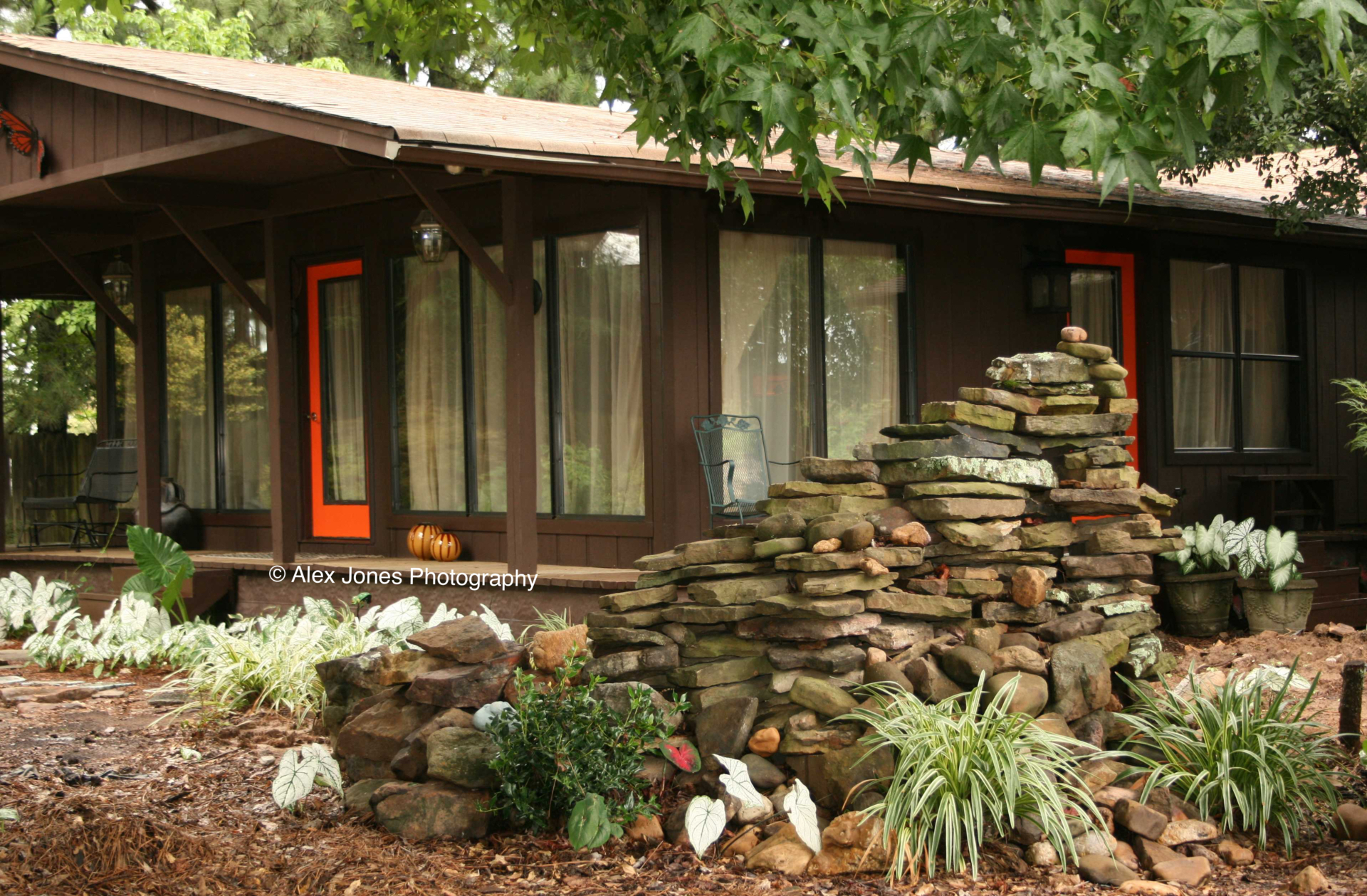
The image shows a stone wall built with flat, layered rocks in front of a house. Plants are growing around and on the rocks, and some are planted in pots. The rocks vary in color and size, and some show signs of weathering.
🔬 Scientific Phenomena
This image represents the phenomenon of landforms created by natural materials. The stacked rocks form a small, man-made hill or wall. This is happening because rocks are natural materials that can be shaped, moved, and used to build structures, both naturally and by humans. The way the rocks are layered and the presence of plants suggest that this structure has been in place for some time, allowing for natural processes like weathering to begin.
📚 Core Science Concepts
- Rocks as Natural Resources: Rocks are naturally occurring solid materials that make up Earth's crust. They come in many shapes, sizes, and textures.
- Landforms: Natural features on Earth's surface, like mountains, hills, and valleys. This stone wall, though man-made, mimics a small landform.
- Weathering and Erosion: The processes that break down rocks and soil and move them to new locations. The varied appearance of the rocks suggests they have undergone some weathering.
Pedagogical Tip: Encourage students to observe the different textures and colors of the rocks. Ask them to describe how they think the rocks might have been formed or changed over time.
UDL Suggestions: Provide visual aids, such as pictures of different types of rocks and landforms, to support understanding. Offer sentence starters for students who need help describing the rocks or the structure.
- Human Impact on Landforms: Humans can build structures using natural materials that alter the landscape.
🔍 Zoom In / Zoom Out Concepts
- Zoom In: At a microscopic level, the rocks are made of minerals. Over time, water and ice can seep into cracks, freeze and expand, breaking down the rock (physical weathering). Chemical reactions can also occur, changing the rock's composition (chemical weathering).
- Zoom Out: This stone wall is a small part of a larger landscape. The rocks themselves may have been quarried or collected from a natural area, connecting this man-made structure to the broader geological processes and resources of the Earth.
🤔 Potential Student Misconceptions
- Misconception: All rocks are the same.
Clarification: Rocks are diverse and can be classified based on their properties like color, texture, and how they are formed. This stone wall shows a variety of rock types.
- Misconception: Rocks do not change.
Clarification: Rocks are constantly changing through natural processes like weathering and erosion, though these changes often happen very slowly.
🎓 NGSS Connections
3-ESS2-1: Represent data in tables and graphical displays to describe typical weather conditions expected during a particular season.
2-ESS2-1: Compare multiple solutions designed to slow or prevent wind or water from changing the shape of the land. (Grade 2 — foundational connection)
4-ESS2-1: Make observations and/or measurements to provide evidence of the effects of weathering or the rate of erosion by water, ice, wind, or vegetation. (Grade 4 — where this learning leads)
💬 Discussion Questions
- What are some different kinds of rocks you can see in the wall? (Bloom's: Understand | DOK: 1 | SEP: Obtaining Evaluating and Communicating Information)
- How do you think the rocks in the wall got their shapes? (Bloom's: Analyze | DOK: 2 | SEP: Constructing Explanations and Designing Solutions)
- If you were to build a small wall like this, what would you need to consider to make it stay strong? (Bloom's: Apply | DOK: 2 | SEP: Constructing Explanations and Designing Solutions)
- What are some ways that rocks can change over a very long time? (Bloom's: Understand | DOK: 2 | SEP: Constructing Explanations and Designing Solutions)
📖 Vocabulary
- Rock: A naturally occurring solid material that is made up of one or more minerals.
- Landform: A natural feature on the surface of the Earth, such as a mountain, hill, or valley.
- Weathering: The process of breaking down rocks and minerals into smaller pieces.
- Erosion: The process of moving weathered rock and soil from one place to another.
- Minerals: Naturally occurring solid substances with a definite chemical composition and a crystalline structure.
🌡️ Extension Activities
- Rock Collection and Sorting: Have students collect various rocks from the schoolyard or a park. They can then sort and describe them based on observable properties like color, size, texture, and weight.
- Build a Mini-Terrarium: Students can create small terrariums using soil, small rocks, and plants in a jar. This helps them see how rocks and plants interact in a small ecosystem.
- Erosion Experiment: Set up small models using soil and rocks. Use a watering can to simulate rain and observe how water causes erosion, comparing different slopes or ground covers.
🔗 Cross-Curricular Ideas
- ELA: Write descriptive paragraphs about different types of rocks, using sensory details.
- Math: Measure the dimensions of different rocks and calculate their volume or surface area. Create bar graphs showing the number of different types of rocks collected.
- Art: Draw or paint the stone wall, focusing on the textures and shapes of the rocks. Create sculptures using clay or other materials to mimic rock formations.
- Social Studies: Research how people in different cultures have used rocks for building throughout history.
🚀 STEM Career Connection
- Geologist — Reads rocks and landforms to work out what happened here long before anyone was watching.
- Try it: Examine pictures of different rock layers and describe what story the layers tell about the landform's history. (Practice: Obtaining, Evaluating, and Communicating Information)
- Tools: a rock hammer, a hand lens, a compass, core samplers
- Where they work: mountains and canyons, quarries and mines, government surveys, universities
- Meet one: Wendy Bohon — Earthquakes — how faults grow over time, and how to warn people clearly before one hits.
- Median pay: /year — "Geoscientists, except hydrologists and geographers"
- Conservation Scientist — Looks after land, forests and water so they stay healthy for the people and animals who use them.
- Try it: Look at images of natural landforms and discuss how plants and animals might depend on them for survival. (Practice: Obtaining, Evaluating, and Communicating Information)
- Tools: soil samplers, aerial photographs, measuring tapes, mapping software
- Where they work: forests and rangelands, parks departments, government agencies, land trusts
- Meet one: Tierra Curry — Which plants and animals are closest to disappearing, and what it takes to save them.
- Median pay: /year — "Conservation scientists"
Wage figures are median annual wages for the U.S. occupation named after each one, from the U.S. Bureau of Labor Statistics, Occupational Employment and Wage Statistics (OEWS), national, May 2025. Several careers share one occupation, so their figures match.