📸 Photo Description
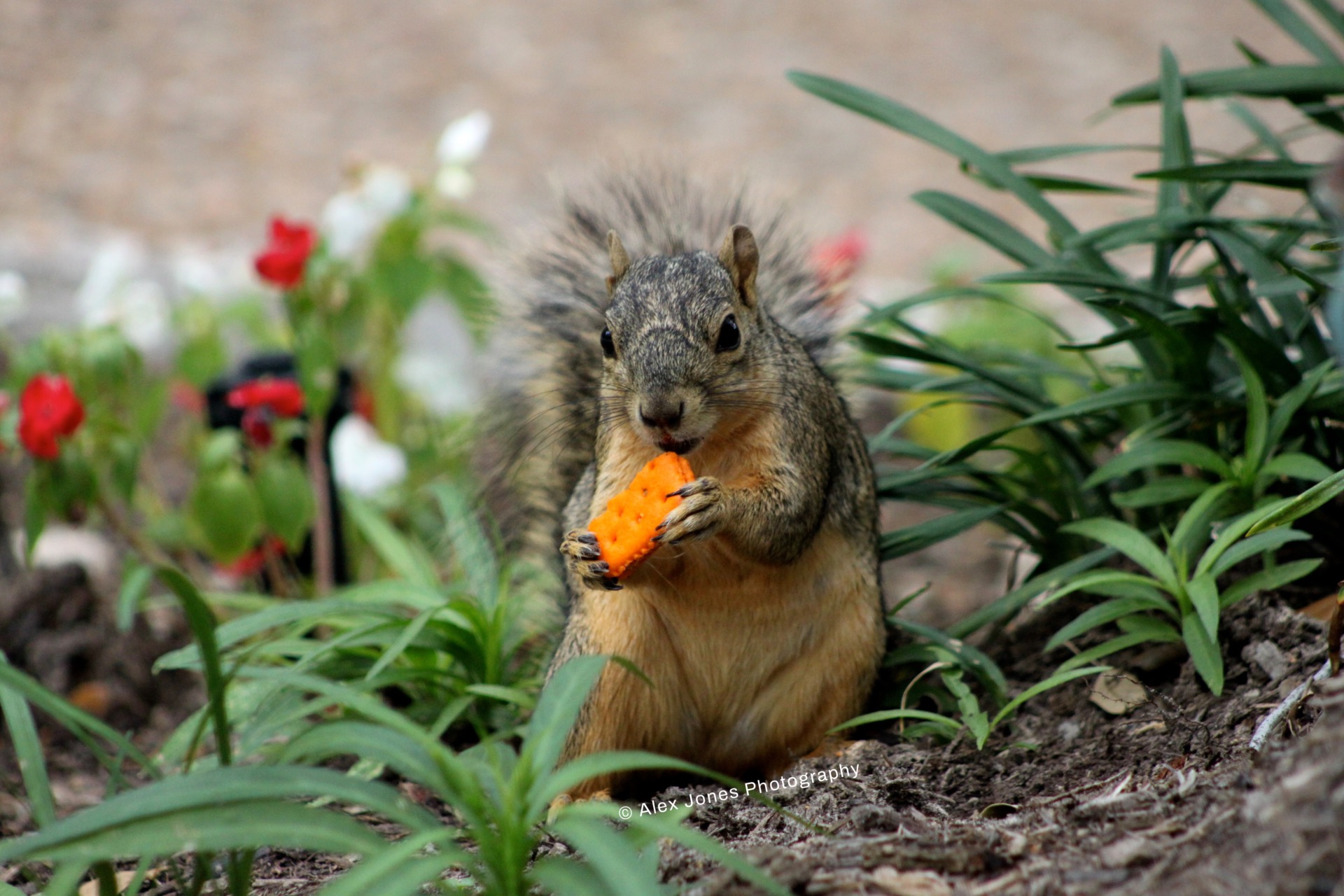
This photo shows a squirrel sitting on the ground and eating a piece of orange food. The squirrel is surrounded by green plants and some red and white flowers. Its bushy tail is raised behind it, and its front paws are holding the food.
🔬 Scientific Phenomena
The image captures a common phenomenon: animal foraging. This refers to the process by which animals search for and find food. Squirrels, like the one pictured, are omnivores that actively seek out a variety of food sources in their environment to meet their energy needs for survival, growth, and reproduction. The specific food item, while possibly not natural, represents a food source that the squirrel has located and is consuming.
📚 Core Science Concepts
- Animal Needs: Animals, including squirrels, have basic needs for survival such as food, water, shelter, and space. Food provides the energy they need for all their life processes.
- Foraging Behavior: Animals exhibit various behaviors to find food, which can include scavenging, hunting, or gathering. The squirrel in the image is engaged in gathering behavior.
Pedagogical Tip: Encourage students to observe and describe animal behaviors they see in their own environment, noting what the animals are doing and what they might be trying to accomplish.
- Environmental Interactions: Animals interact with their environment to obtain resources. The squirrel is using its surroundings, including the plants and soil, as a habitat and a place to find food.
- Adaptations for Feeding: Squirrels have physical adaptations like sharp claws for climbing and strong teeth for chewing, which help them obtain and eat their food.
UDL Suggestions: Provide visual aids such as diagrams of squirrel anatomy or short video clips showing squirrels eating to support students with diverse learning needs.
🔍 Zoom In / Zoom Out Concepts
- Zoom In: At a microscopic level, the food the squirrel is eating is made up of cells containing nutrients. When the squirrel chews and digests this food, its body breaks down these nutrients into smaller molecules that can be absorbed and used for energy.
- Zoom Out: This squirrel is part of a larger ecosystem. Its foraging behavior impacts the plant life in its habitat by consuming seeds or other plant parts. It also serves as prey for larger predators, connecting it to other parts of the food web.
🤔 Potential Student Misconceptions
- Misconception: Squirrels only eat nuts and seeds.
Clarification: While nuts and seeds are a primary food source for many squirrels, they are omnivores and will eat a variety of things, including fruits, insects, fungi, and sometimes even bird eggs, depending on availability.
- Misconception: The orange object is a natural food for the squirrel.
Clarification: While the squirrel is eating it, the object appears to be a processed food item (like a cracker or cheese puff). This highlights that animals will consume readily available food sources, even if they are not natural to their diet, which can sometimes be harmful.
🎓 NGSS Connections
- 3-LS4-3: Construct an argument with evidence that in a particular habitat some organisms can survive well, some survive less well, and some cannot survive at all.
- : Use observations to describe patterns of what plants and animals (including humans) need to survive.
- : Organisms need food from their environment in order to live and grow.
- : The availability of food in an environment affects the survival of organisms.
*
💬 Discussion Questions
- What is the squirrel doing in the picture and why is it important for its survival? (Bloom's: Understand | DOK: 1 | SEP: Constructing Explanations and Designing Solutions)
- What are some other things squirrels might eat in their natural habitat? (Bloom's: Remember | DOK: 1 | SEP: Obtaining Evaluating and Communicating Information)
- How might the environment, like the presence of flowers and plants, help or hinder the squirrel in finding food? (Bloom's: Analyze | DOK: 2 | SEP: Analyzing and Interpreting Data)
- Based on the picture, what can you infer about the squirrel's immediate needs? (Bloom's: Infer | DOK: 2 | SEP: Constructing Explanations and Designing Solutions)
📖 Vocabulary
- Organism: A living thing, like a plant or an animal.
- Habitat: The natural home or environment where an animal lives.
- Foraging: The act of searching for food.
- Nutrients: Substances in food that living things need to grow and stay healthy.
- Ecosystem: All the living things and non-living things in an area, and how they interact.
🌡️ Extension Activities
- Habitat Diorama: Students create shoebox dioramas representing a squirrel's habitat, including elements like trees, plants, and potential food sources.
- Animal Needs Chart: Create a class chart listing different animals and what they need to survive (food, water, shelter). Students can draw pictures or write words for each need.
- Nature Walk Observation: Take students on a walk outdoors to observe animals in their natural environment. Have them record what the animals are doing and where they are finding resources.
🔗 Cross-Curricular Ideas
- ELA: Read books about squirrels and their habitats. Have students write a short story from the perspective of the squirrel in the picture.
- Art: Students can draw or paint the squirrel and its surroundings, focusing on details like fur texture and flower colors.
- Social Studies: Discuss how human actions (like leaving out food) can impact local wildlife. Explore local parks and their role in providing habitats.
- Math: Measure the length of the squirrel's tail or the approximate size of the food it is eating. Compare the sizes of different animals.
🚀 STEM Career Connection
- Animal Behaviourist — Watches what animals do and works out why they do it.
- Try it: Research and report on how different animals find food in their environment, such as hunting, gathering, or scavenging. (Practice: Obtaining, Evaluating, and Communicating Information)
- Tools: observation blinds, video recorders, stopwatches, behaviour checklists
- Where they work: zoos, field research stations, farms, universities
- Meet one: Rae Wynn-Grant — Where black bears and people run into each other, and how to keep both safe.
- Median pay: /year — "Zoologists and wildlife biologists"
- Wildlife Biologist — Studies wild animals — what they eat, where they go, and what they need to survive.
- Try it: Collect and present information about the diet and habitat of a local wild animal. (Practice: Obtaining, Evaluating, and Communicating Information)
- Tools: binoculars, radio collars, trail cameras, a field notebook
- Where they work: national parks, wildlife refuges, state wildlife agencies, universities
- Meet one: Rae Wynn-Grant — Where black bears and people run into each other, and how to keep both safe.
- Median pay: /year — "Zoologists and wildlife biologists"
Wage figures are median annual wages for the U.S. occupation named after each one, from the U.S. Bureau of Labor Statistics, Occupational Employment and Wage Statistics (OEWS), national, May 2025. Several careers share one occupation, so their figures match.