📸 Photo Description
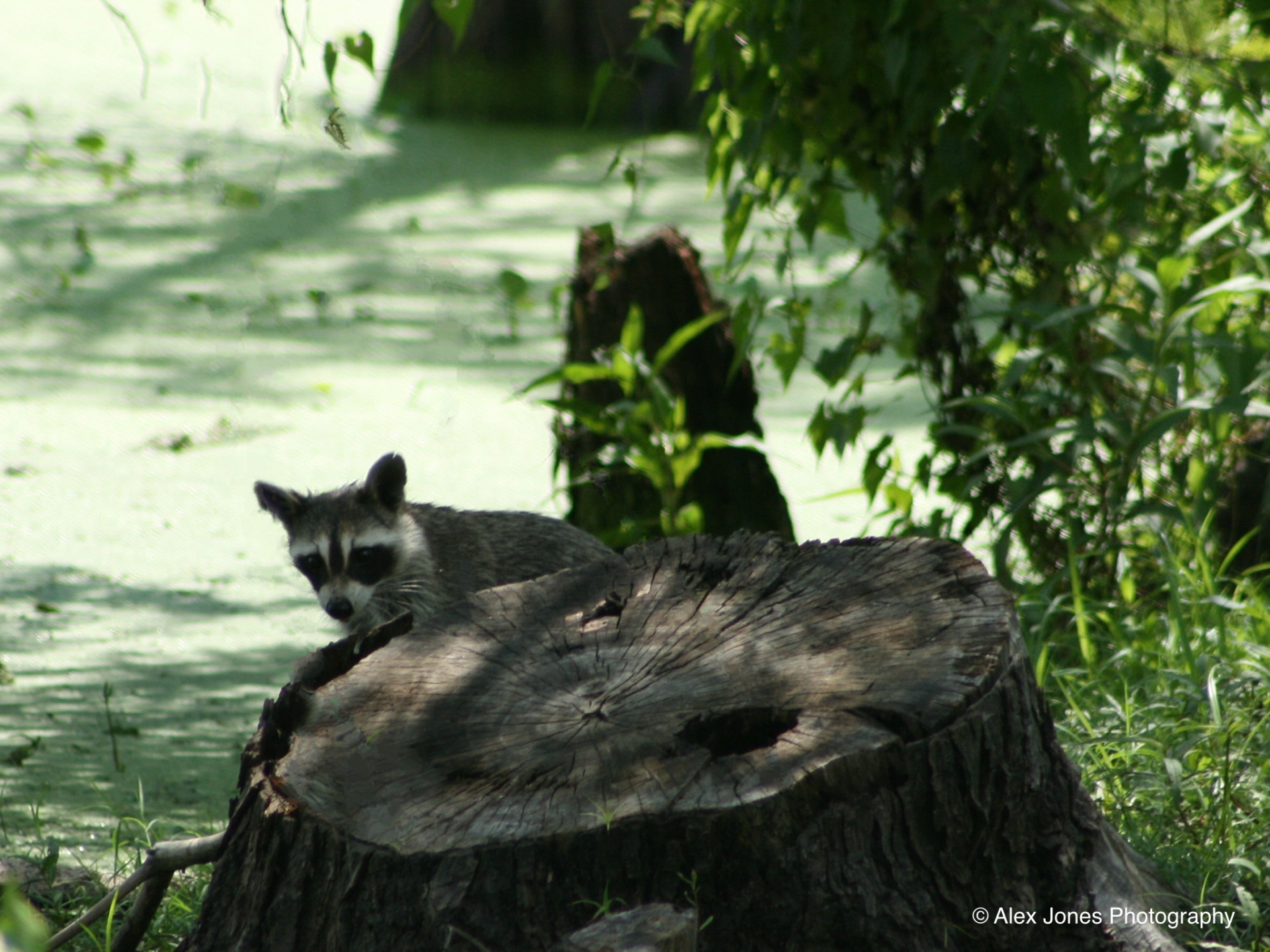
A raccoon sits on top of a large tree stump in a shady forest area. The raccoon has gray and black fur with a distinctive black mask around its eyes and black rings on its tail. Green plants and trees surround the wooden stump where the raccoon is resting.
🔬 Scientific Phenomena
The anchoring phenomenon shown is animal adaptation for survival. The raccoon demonstrates multiple adaptations that help it survive in its forest habitat. Its distinctive facial markings aren't just for looks - the dark "mask" around its eyes helps reduce glare and improve night vision, similar to how football players use eye black. The raccoon's choice to rest on the elevated stump provides safety from ground predators while allowing it to survey its surroundings. This behavior showcases how animals use both physical adaptations (body features) and behavioral adaptations (actions) to meet their survival needs in their specific environment.
📚 Core Science Concepts
- Animal Adaptations: Physical features like the raccoon's mask, dexterous paws, and striped tail help it survive in its environment.
- Habitat Requirements: Animals need specific places to live that provide food, water, shelter, and space to raise their young.
- Behavioral Adaptations: The raccoon's choice to rest in an elevated, shaded location demonstrates learned survival behaviors.
- Camouflage and Protection: The raccoon's coloring helps it blend with shadows and tree bark in its forest environment.
Pedagogical Tip: When teaching about adaptations, have students act out different animal behaviors or use mirrors to observe their own "adaptations" like opposable thumbs. This kinesthetic approach helps make abstract concepts concrete for young learners.
UDL Suggestions: Provide multiple ways for students to demonstrate their understanding of animal adaptations - through drawings, physical demonstrations, verbal explanations, or creating simple models. This allows students with different strengths and learning preferences to show what they know.
🔍 Zoom In / Zoom Out Concepts
- Zoom In: At the cellular level, the raccoon's whiskers contain specialized nerve cells called mechanoreceptors that can detect tiny vibrations and movements, helping the raccoon navigate and find food in complete darkness.
- Zoom Out: This raccoon is part of a larger forest ecosystem where it serves as both predator and prey. It helps control insect and small animal populations while providing food for larger predators like coyotes, connecting it to complex food webs that maintain forest balance.
🤔 Potential Student Misconceptions
- Misconception: "Raccoons are dirty because they have black around their eyes."
Clarification: The black markings are natural fur coloring that helps raccoons see better at night, not dirt or sickness.
- Misconception: "All animals that live in trees are the same."
Clarification: Different animals have different adaptations for tree life - raccoons climb down headfirst using rotating ankle joints, while squirrels use their tails for balance.
- Misconception: "Animals choose their adaptations."
Clarification: Animals are born with adaptations that developed over many generations; they don't consciously decide to grow certain features.
🎓 NGSS Connections
- Performance Expectation: 3-LS4-3 - Construct an argument that some animals form groups that help members survive.
- Disciplinary Core Ideas: - Environmental changes affect organisms, and - Being part of a group helps animals obtain food, defend themselves, and cope with changes
- Crosscutting Concepts: - Students can observe how specific adaptations cause certain survival advantages
💬 Discussion Questions
- "What do you notice about this raccoon's body that might help it survive in the forest?" (Bloom's: Analyze | DOK: 2)
- "How might this raccoon's life be different if it lived in a desert instead of a forest?" (Bloom's: Evaluate | DOK: 3)
- "What evidence can you find in the photo that shows this is the raccoon's natural habitat?" (Bloom's: Apply | DOK: 2)
- "Why do you think the raccoon chose to rest on top of the stump instead of on the ground?" (Bloom's: Analyze | DOK: 2)
📖 Science Vocabulary
- Adaptation: A special feature or behavior that helps an animal survive in its home.
- Habitat: The natural place where an animal lives and finds everything it needs.
- Camouflage: Colors or patterns that help an animal blend in with its surroundings.
- Nocturnal: Active during the night time when it's dark.
- Predator: An animal that hunts and eats other animals.
- Environment: All the living and non-living things around an animal.
🔗 Cross-Curricular Ideas
- ELA - Animal Storytelling: Have students write a short story from the raccoon's perspective describing a day in its life. They can use the vocabulary words from the lesson and include details about what the raccoon does to survive and adapt to its forest home.
- Math - Measurement and Comparison: Students can measure and compare the sizes of different animal homes. Create a chart showing how tall a tree stump might be compared to a student's height, or estimate how many acorns a raccoon might find in a day using simple multiplication.
- Art - Camouflage Collage: Students create a forest habitat collage using torn paper, leaves, and natural materials. Then they draw or cut out a raccoon and try to hide it in their artwork to demonstrate camouflage. This hands-on activity reinforces how the raccoon's coloring helps it blend into its environment.
- Social Studies - Animal Communities: Discuss how raccoons live in communities with other animals (forest neighborhoods). Students can create a map of a forest habitat showing where different animals live, what they eat, and how they depend on each other - introducing the concept of interdependence.
🚀 STEM Career Connection
- Biologist — Studies living things of every kind and what keeps them alive.
- Try it: Explain how the raccoon's eye markings help it see in different light conditions, like a scientist. (Practice: Constructing explanations and designing solutions)
- Tools: microscopes, sample jars, measuring tools, a field notebook
- Where they work: laboratories, field sites, museums, universities
- Meet one: Sandra Díaz — What a plant's leaves, wood and shape tell you about how it lives — and how those traits add up across a whole ecosystem.
- Median pay: /year — "Biological scientists, all other"
- Wildlife Rehabilitator — Cares for injured or orphaned wild animals until they can go back to the wild.
- Try it: Design a safe, elevated resting spot for a raccoon using craft materials, explaining why it's a good choice. (Practice: Constructing explanations and designing solutions)
- Tools: feeding syringes, heat lamps, flight cages, record charts
- Where they work: wildlife rescue centres, animal hospitals, nature centres, sanctuaries
- Meet one: Karen Terio — What zoo and wild animals get sick from — work that has taken her to chimpanzees, cheetahs and Serengeti lions.
- Median pay: /year — "Animal caretakers"
Wage figures are median annual wages for the U.S. occupation named after each one, from the U.S. Bureau of Labor Statistics, Occupational Employment and Wage Statistics (OEWS), national, May 2025. Several careers share one occupation, so their figures match.