📸 Photo Description
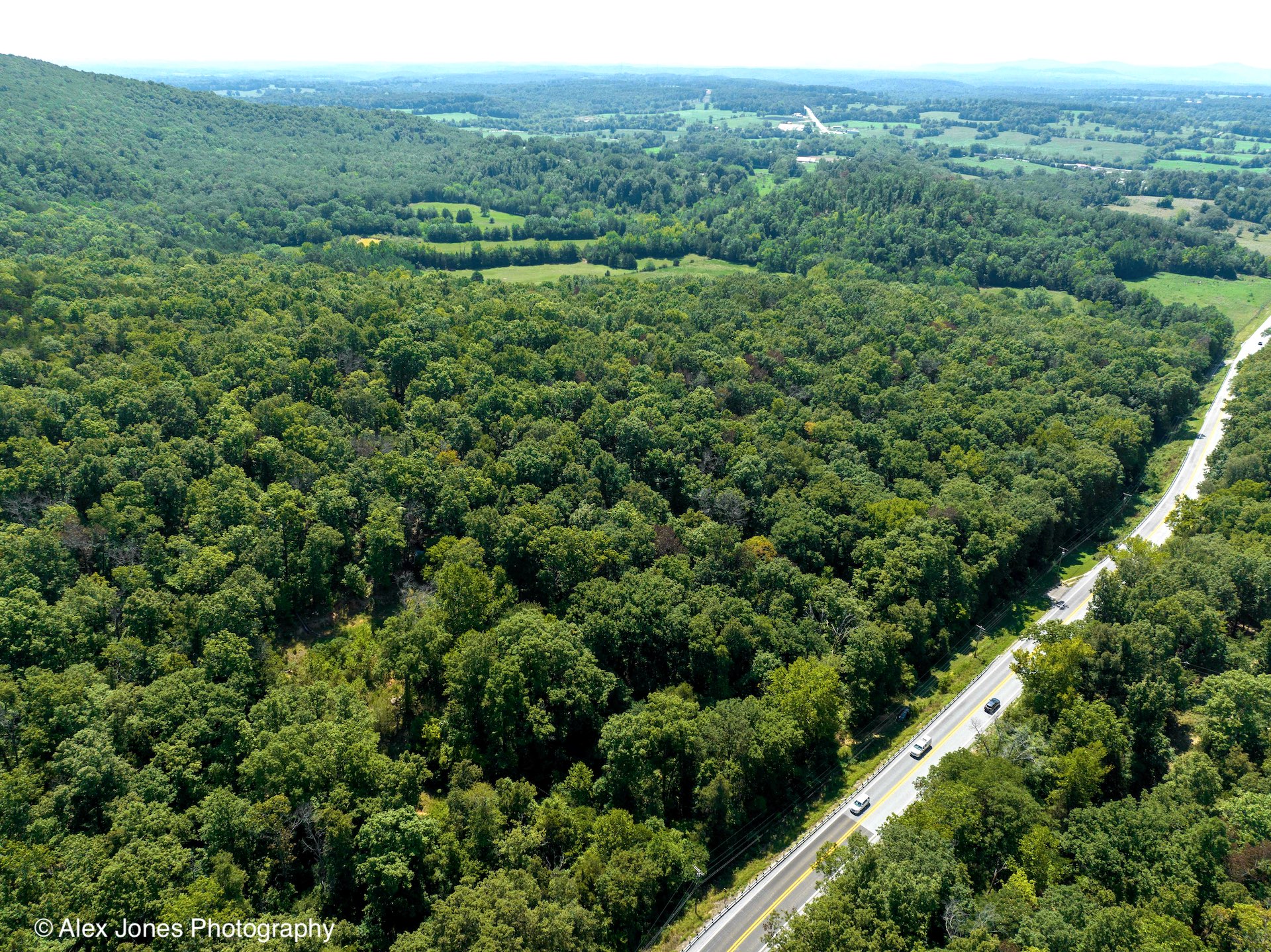
This aerial photograph shows a thick forest of green trees covering hills and valleys. A straight road cuts through the forest with cars driving on it. In the distance, you can see open fields and farmland beyond the forest.
🔬 Scientific Phenomena
The Anchoring Phenomenon this image represents is forest ecosystem structure and habitat connectivity. This dense forest canopy demonstrates how trees form layers that create different living spaces for animals and plants. The forest exists because trees compete for sunlight, water, and nutrients, creating a complex community where different organisms depend on each other. The road represents human impact on natural habitats, showing how infrastructure can fragment ecosystems and affect wildlife movement patterns.
📚 Core Science Concepts
- Forest Ecosystems: Trees, plants, and animals living together in a community where they depend on each other for survival
- Habitat Layers: Forests have different levels (canopy, understory, forest floor) where different animals and plants live
- Human Impact on Environment: Roads and buildings change natural habitats and can make it harder for animals to find food and shelter
- Interdependence: All living things in the forest need each other - trees provide homes for birds, animals spread seeds, decomposers recycle nutrients
Pedagogical Tip: Use the "Think-Pair-Share" strategy when discussing this image. Have students first think individually about what animals might live in this forest, then pair up to share ideas, and finally discuss as a class. This builds confidence before whole-group discussion.
UDL Suggestions: Provide multiple ways for students to express their observations - drawing, verbal descriptions, or acting out animal movements. Consider using hand gestures to represent different forest layers (hands up high for canopy, middle for understory, low for forest floor).
🔍 Zoom In / Zoom Out Concepts
- Zoom In: At the microscopic level, tree roots are connected to fungi in the soil that help them share nutrients and water with other trees, creating an underground communication network.
- Zoom Out: This forest is part of a larger watershed system that filters rainwater, prevents flooding, and provides clean air by absorbing carbon dioxide and releasing oxygen that affects our entire planet's atmosphere.
🤔 Potential Student Misconceptions
- Misconception: "Forests are just a bunch of trees growing together randomly."
Clarification: Forests are organized communities where trees, plants, and animals have specific relationships and depend on each other.
- Misconception: "Roads don't really affect animals because they can just walk around them."
Clarification: Roads create barriers that make it dangerous and difficult for animals to find food, mates, and safe places to live.
- Misconception: "All parts of the forest are the same."
Clarification: Forests have different layers with different amounts of sunlight, temperature, and moisture where different species live.
🎓 NGSS Connections
- Performance Expectation: 3-LS4-3 - Construct an argument that some animals form groups that help members survive
- Disciplinary Core Ideas:
- - Being part of a group helps animals obtain food, defend themselves, and cope with changes
- - Populations live in a variety of habitats, and change in those habitats affects the organisms living there
- Crosscutting Concepts:
-
-
💬 Discussion Questions
- What different animals do you think might live in the top of the trees versus on the forest floor, and why? (Bloom's: Analyze | DOK: 2)
- How might building the road through this forest have changed where animals can live and find food? (Bloom's: Evaluate | DOK: 3)
- If you were a bird flying over this forest, what clues would tell you this is a healthy ecosystem? (Bloom's: Apply | DOK: 2)
- What would happen to this forest community if all the trees suddenly disappeared? (Bloom's: Synthesize | DOK: 3)
📖 Science Vocabulary
- Ecosystem: A community of living and non-living things that work together in one place
- Canopy: The top layer of a forest made of tree branches and leaves
- Habitat: The natural home where an animal or plant lives and gets what it needs to survive
- Interdependence: When living things need and depend on each other to stay alive
- Fragmentation: When natural habitats get broken up into smaller pieces by roads or buildings
🔗 Cross-Curricular Ideas
- Mathematics - Measuring & Comparing: Have students estimate and measure the width of the road using a ruler on a printed photo. Then compare it to the width of the forest. Create a simple bar graph showing "Forest Width" versus "Road Width" and discuss why roads need to be a certain size for cars to drive safely.
- English Language Arts - Story Writing: Students can write a short story from the perspective of an animal living in this forest (a deer, bird, or squirrel). Have them describe their day, where they find food, where they sleep, and how the road affects their journey. This helps them practice narrative writing while reinforcing ecosystem concepts.
- Social Studies - Community Helpers & Planning: Discuss how city planners and engineers decide where to build roads. Have students debate: "Should we build more roads through forests or find other ways to help people travel?" This connects to citizenship and decision-making in communities.
- Art - Layered Collage: Students create a forest collage using tissue paper and markers to show the three forest layers (canopy, understory, forest floor). They can add drawn or cut-out animals in each layer, reinforcing the concept that different organisms live in different parts of the forest while creating a beautiful visual representation.
🚀 STEM Career Connection
- Ecologist — Studies how living things depend on each other and on the place they live.
- Try it: Create a model showing how a tree, a bird, and a squirrel depend on each other in the forest. (Practice: Developing and Using Models)
- Tools: quadrat frames, measuring tapes, GPS units, a field notebook
- Where they work: forests, grasslands, wetlands, universities
- Meet one: Sandra Díaz — What a plant's leaves, wood and shape tell you about how it lives — and how those traits add up across a whole ecosystem.
- Median pay: /year — "Environmental scientists and specialists, including health"
- Forest Ecologist — Studies how a whole forest works — the trees, the soil, and everything living in between.
- Try it: Draw a model of the forest ecosystem, showing how the trees, soil, and animals are all connected. (Practice: Developing and Using Models)
- Tools: increment borers, climbing gear, canopy platforms, plot markers
- Where they work: forests, research stations, forestry services, universities
- Meet one: Nalini Nadkarni — The world living in the treetops, which she reaches with climbing gear — plants that grow on branches and trap soil in mid-air.
- Median pay: /year — "Environmental scientists and specialists, including health"
Wage figures are median annual wages for the U.S. occupation named after each one, from the U.S. Bureau of Labor Statistics, Occupational Employment and Wage Statistics (OEWS), national, May 2025. Several careers share one occupation, so their figures match.