📸 Photo Description
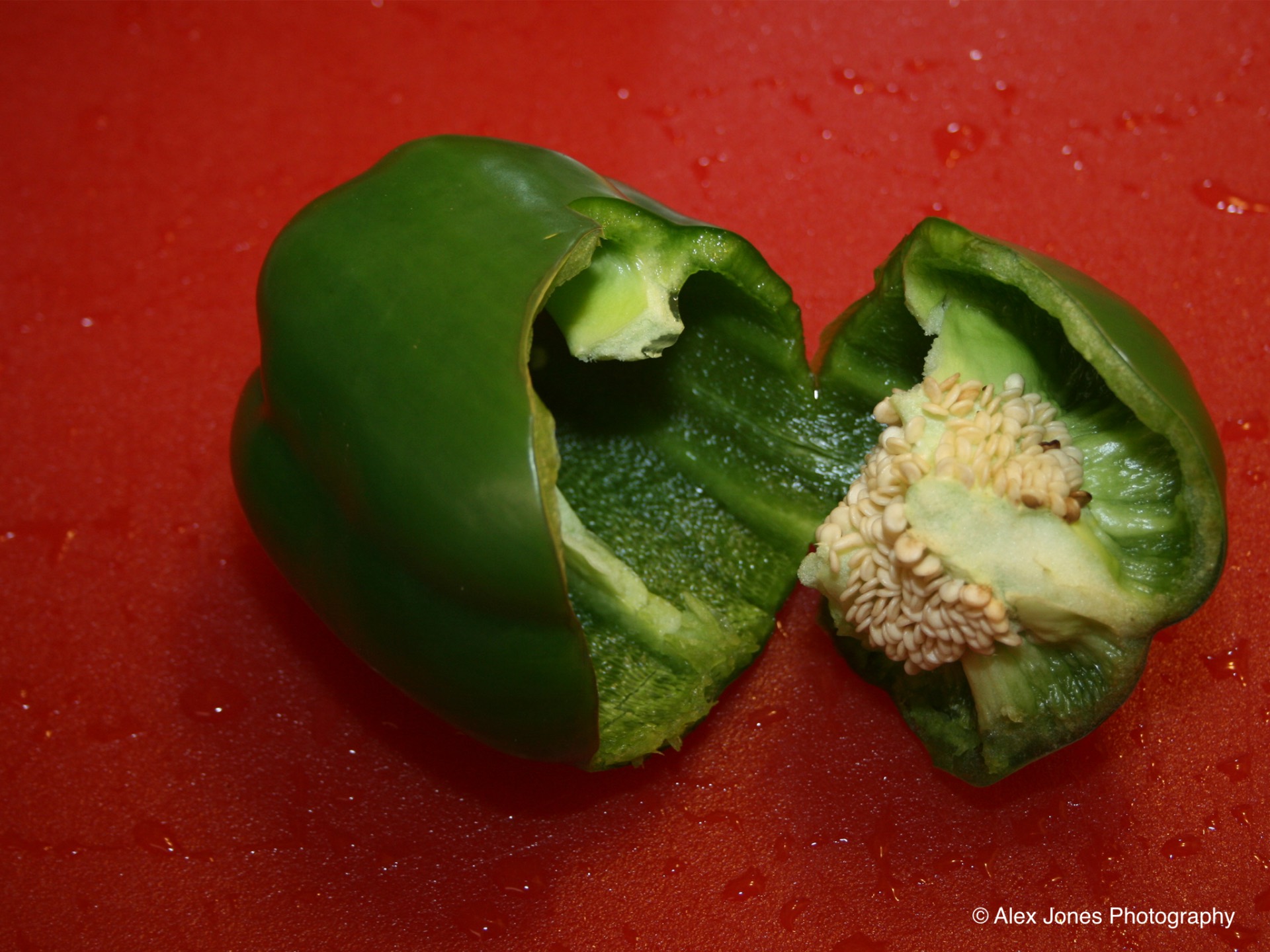
This photo shows a green bell pepper that has been cut in half. You can see the thick green skin on the outside and the white seeds clustered together inside the pepper. The pepper's hollow inside space and the stem area are clearly visible.
🔬 Scientific Phenomena
The Anchoring Phenomenon this image represents is plant reproduction through seed formation. The pepper fruit developed from a flower after pollination occurred. The white seeds visible inside contain embryonic plants and formed as the flower's ovules were fertilized. The thick, fleshy pepper walls grew around the seeds to protect them and attract animals to eat the fruit and disperse the seeds to new locations.
📚 Core Science Concepts
- Plant Life Cycles: Peppers go through a complete life cycle from seed to seedling to flowering plant to fruit production
- Plant Reproduction: The seeds inside the pepper are the plant's way of creating new pepper plants
- Seed Structure: Each seed contains everything needed to grow a new plant - an embryo, stored food, and a protective coating
- Fruit Function: The pepper fruit protects the seeds and helps them spread to new places where they can grow
Pedagogical Tip: Have students gently remove and count the seeds from different peppers to see natural variation. This hands-on exploration helps make abstract concepts concrete and memorable.
UDL Suggestions: Provide multiple ways for students to explore seeds - visual observation with magnifying glasses, tactile exploration by touching different seed textures, and kinesthetic learning by acting out the plant life cycle with body movements.
🔍 Zoom In / Zoom Out Concepts
- Zoom In: Inside each tiny seed is a microscopic baby plant (embryo) with the beginnings of roots, stems, and leaves, plus stored nutrients to help it grow until it can make its own food through photosynthesis.
- Zoom Out: This pepper is part of a larger ecosystem where bees and other pollinators visit pepper flowers, animals eat the ripe peppers and spread seeds through their waste, and new pepper plants grow in different locations to continue the cycle.
🤔 Potential Student Misconceptions
- Misconception: Seeds are just "baby plants" that grow bigger
Scientific Reality: Seeds contain an embryo plant plus stored food, and they need specific conditions (water, warmth, oxygen) to germinate and begin growing
- Misconception: All fruits are sweet and grow on trees
Scientific Reality: Scientifically, fruits are structures that contain seeds - this includes peppers, tomatoes, and cucumbers, even though we call them vegetables
- Misconception: Plants make seeds just because they're supposed to
Scientific Reality: Seed production is how plants reproduce and ensure their species survives by creating new plants
🎓 NGSS Connections
Performance Expectation: 3-LS1-1 - Develop models to describe that organisms have unique and diverse life cycles but all have in common birth, growth, reproduction, and death.
Disciplinary Core Ideas:
- - Growth and Development of Organisms
- - Natural Selection
Crosscutting Concepts:
-
-
💬 Discussion Questions
- What do you think would happen if you planted one of these pepper seeds? (Bloom's: Apply | DOK: 2)
- Why do you think the pepper plant makes the fruit thick and colorful around the seeds? (Bloom's: Analyze | DOK: 3)
- How are the seeds in this pepper similar to and different from other seeds you've seen? (Bloom's: Analyze | DOK: 2)
- What conditions do you think these seeds would need to grow into new pepper plants? (Bloom's: Evaluate | DOK: 2)
📖 Science Vocabulary
- Seed: A small part of a plant that contains everything needed to grow a new plant
- Fruit: The part of a plant that grows around seeds to protect them
- Embryo: The tiny baby plant inside a seed
- Germination: When a seed begins to sprout and grow into a new plant
- Life cycle: All the stages a living thing goes through from birth to death
🔗 Cross-Curricular Ideas
- Math + Science: Have students measure and compare the number of seeds in different peppers using tally marks and simple bar graphs. This connects plant reproduction to data collection and graphing skills while reinforcing counting and comparison.
- ELA + Science: Students can write a "Life Story of a Pepper Seed" from the seed's point of view, describing its journey from inside the flower to germination. This narrative writing practice helps students understand the plant life cycle while developing storytelling skills.
- Art + Science: Students can create detailed drawings or paintings of pepper cross-sections, labeling the different parts (skin, seeds, stem). This combines scientific observation with artistic expression and reinforces vocabulary through visual representation.
- Social Studies + Science: Explore where peppers are grown around the world and how different cultures use peppers in their food. Students can learn that peppers originated in Central and South America and are now grown on every continent, connecting plant science to geography and culture.
🚀 STEM Career Connection
- Botanist — Studies plants — how they grow, how they reproduce, and how they survive where they live.
- Try it: Examine the inside of a bell pepper and describe the function of the seeds and the fleshy walls. (Practice: Structure and Function)
- Tools: a hand lens, a plant press, a soil probe, field guides
- Where they work: botanical gardens, herbariums, forests and fields, universities
- Meet one: Robin Wall Kimmerer — Mosses — which she calls the coral reefs of the forest — and what Indigenous knowledge teaches about bringing plants back.
- Median pay: /year — "Soil and plant scientists"
- Biologist — Studies living things of every kind and what keeps them alive.
- Try it: Observe the structure of a pepper seed and explain what parts it might have to help it grow. (Practice: Structure and Function)
- Tools: microscopes, sample jars, measuring tools, a field notebook
- Where they work: laboratories, field sites, museums, universities
- Meet one: Sandra Díaz — What a plant's leaves, wood and shape tell you about how it lives — and how those traits add up across a whole ecosystem.
- Median pay: /year — "Biological scientists, all other"
Wage figures are median annual wages for the U.S. occupation named after each one, from the U.S. Bureau of Labor Statistics, Occupational Employment and Wage Statistics (OEWS), national, May 2025. Several careers share one occupation, so their figures match.