📸 Photo Description
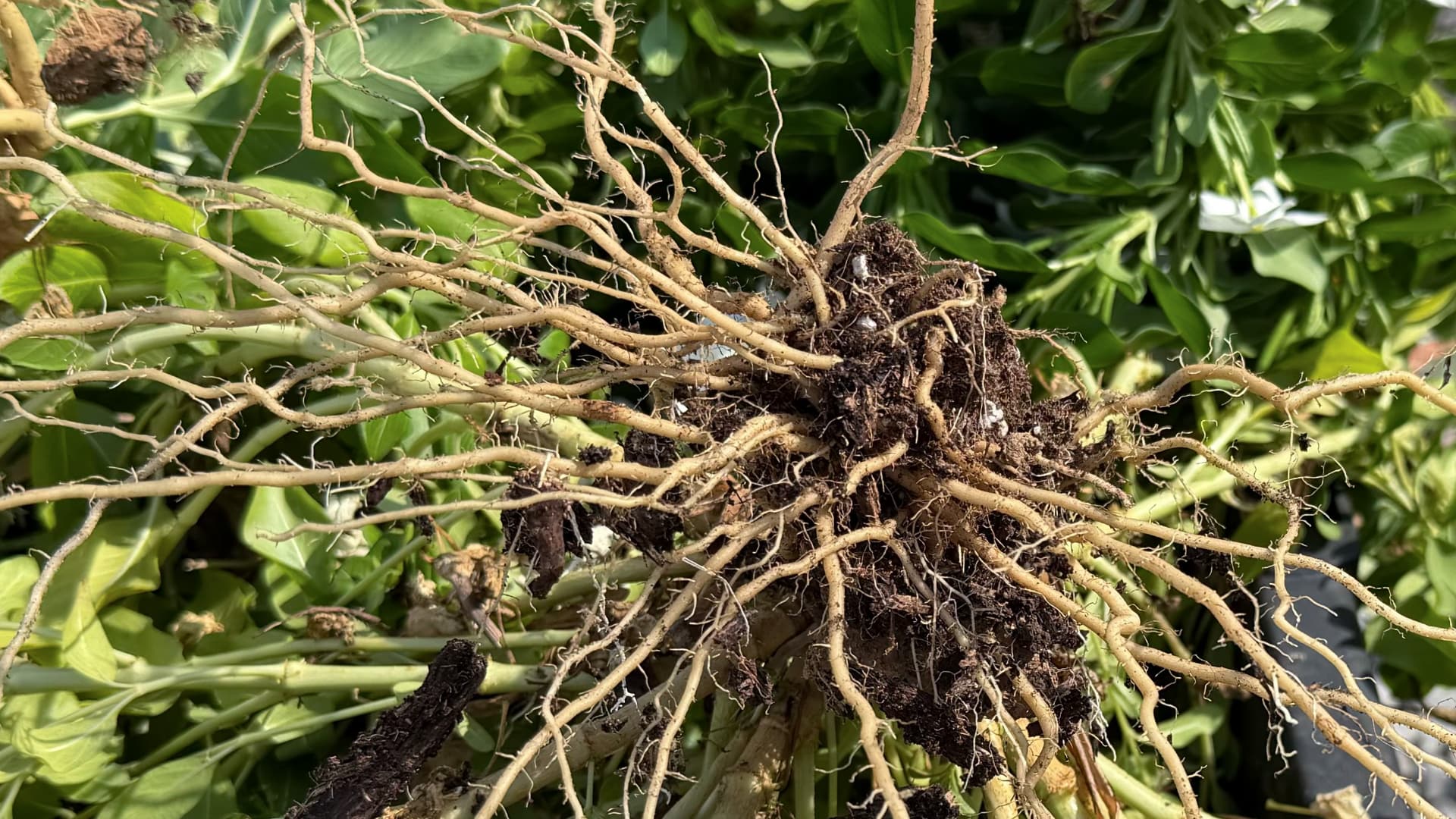
This image shows the complex root system of a plant, pulled from the soil. The roots are a network of thin, branching structures covered in dark soil particles. These roots are connected to the plant's stem and leaves, which are visible in the background.
🔬 Scientific Phenomena
The image captures the "plant root system and its functions," specifically focusing on the anchoring and absorption roles. Roots are the underground part of a plant that anchor it in the soil and absorb water and nutrients. They are essential for the plant's survival, allowing it to stand upright and to access the resources needed for growth.
📚 Core Science Concepts
- Structure and Function of Roots: Roots are specialized plant structures that grow underground. Their primary functions include anchoring the plant firmly in the soil, absorbing water and dissolved nutrients from the soil, and sometimes storing food.
- Plant Needs for Survival: Plants need water and nutrients from the soil, which they absorb through their roots. They also need sunlight, which they capture with their leaves for photosynthesis.
- Interconnectedness of Plant Parts: The roots, stem, and leaves are all interconnected parts of a plant. The roots gather resources from the soil, the stem transports these resources to the leaves, and the leaves use sunlight to make food for the entire plant.
Pedagogical Tip: When introducing the concept of roots, consider using a variety of plant examples to show different types of root systems, such as taproots (like carrots) and fibrous roots (like grass), to highlight the diversity in plant structures.
UDL Suggestions: Provide students with visual aids like diagrams and real plant examples (if possible) to help them understand the structure and function of roots. Offer sentence starters or graphic organizers for students to record their observations and explanations.
🔍 Zoom In / Zoom Out Concepts
- Zoom In: At a microscopic level, the surface of the roots is covered in tiny root hairs. These hairs greatly increase the surface area available for absorbing water and minerals from the soil, allowing the plant to take in what it needs more efficiently.
- Zoom Out: The entire plant, including its root system, is part of a larger ecosystem. The roots help prevent soil erosion, and the plant provides food and shelter for various organisms, contributing to the overall health and stability of the environment.
🤔 Potential Student Misconceptions
- Misconception: Roots are just "dirt" that holds the plant in place.
- Clarification: While roots do anchor the plant, they are living parts of the plant that actively absorb water and nutrients necessary for its survival and growth.
- Misconception: All plants have the same kind of roots.
- Clarification: Plants have different types of root systems, like taproots and fibrous roots, which help them survive in different environments and conditions.
🎓 NGSS Connections
3-LS1-1: Develop models to describe that organisms have unique and diverse life cycles but all have in common birth, growth, reproduction, and death.
K-LS1-1: Use observations to describe patterns of what plants and animals (including humans) need to survive. (Grade K — foundational connection)
💬 Discussion Questions
- What jobs do the roots do for the plant? (Bloom's: Remember | DOK: 1 | SEP: Obtaining Evaluating and Communicating Information)
- How does the structure of the roots help them do their jobs? (Bloom's: Analyze | DOK: 2 | SEP: Constructing Explanations and Designing Solutions)
- What might happen to a plant if its roots were damaged or unable to get water? (Bloom's: Analyze | DOK: 2 | SEP: Constructing Explanations and Designing Solutions)
📖 Vocabulary
- Roots: The part of a plant that typically grows underground and anchors the plant, absorbing water and nutrients.
- Absorb: To take in something, like water or nutrients, into the plant.
- Nutrients: Substances that plants need to grow and stay healthy.
- Anchor: To hold something firmly in place.
🌡️ Extension Activities
- Root Observation Station: Have students carefully examine different types of plant roots (e.g., from a carrot, radish, or grass). They can draw and label the parts they observe, focusing on the root hairs and main root structures.
- "Plant Needs" Investigation: Conduct a simple experiment where students grow two similar plants. One plant receives water and sunlight, while the other receives only water or only sunlight. Students observe and record how the lack of resources affects the plant's growth, focusing on what happens to the plant as a whole, and by extension, its roots.
🔗 Cross-Curricular Ideas
- Art: Have students create detailed drawings or sculptures of plant root systems, focusing on their intricate, branching patterns.
- ELA: Read stories or poems about plants and their importance, and have students write their own descriptive paragraphs about the journey of water from the soil, through the roots, and up the plant.
- Social Studies: Discuss how farmers rely on healthy soil and strong root systems for successful crop growth and food production.
🚀 STEM Career Connection
- Botanist — Studies plants — how they grow, how they reproduce, and how they survive where they live.
- Try it: Draw a detailed diagram of a plant's roots, labeling all the parts you can identify.
- Tools: a hand lens, a plant press, a soil probe, field guides
- Where they work: botanical gardens, herbariums, forests and fields, universities
- Meet one: Robin Wall Kimmerer — Mosses — which she calls the coral reefs of the forest — and what Indigenous knowledge teaches about bringing plants back.
- Median pay: /year — "Soil and plant scientists"
Wage figures are median annual wages for the U.S. occupation named after each one, from the U.S. Bureau of Labor Statistics, Occupational Employment and Wage Statistics (OEWS), national, May 2025. Several careers share one occupation, so their figures match.