📸 Photo Description
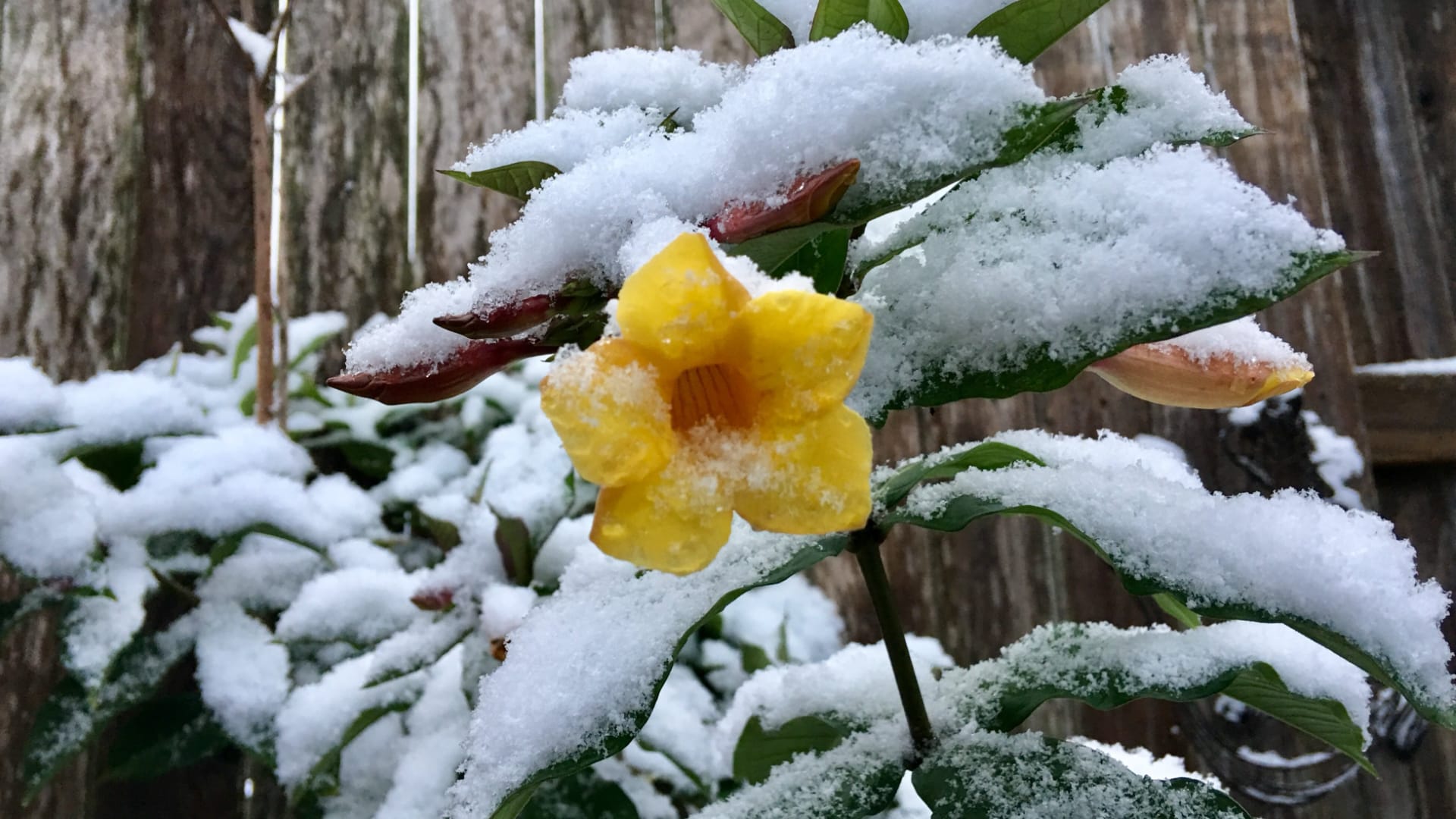
The photo shows a bright yellow flower with green leaves covered in white snow. Some flower buds are also visible, also dusted with snow. The background is a wooden fence.
🔬 Scientific Phenomena
This image captures an unusual weather event: snow falling on blooming flowers. This phenomenon highlights the concept of phase changes in water, specifically when liquid water (in the air or on the plant) turns into solid ice crystals (snow). It also touches upon how living organisms interact with their environment, and how temperature affects physical states. The unexpected presence of snow on a plant that is typically associated with warmer weather presents a scientific puzzle for students to investigate.
📚 Core Science Concepts
- States of Matter: Water exists in three states: solid (ice), liquid (water), and gas (water vapor). Snow is a form of solid water.
- Temperature and Weather: Temperature is a measure of how hot or cold something is. Different temperatures cause different types of weather. Snow forms when the temperature is below freezing.
- Interaction of Living Things and Environment: Plants and animals are affected by weather conditions. This image shows a plant experiencing a weather condition (snow) that is not typical for its blooming season, prompting questions about its survival.
- Phase Changes: Water can change from one state to another. In this case, water vapor in the atmosphere changed directly into ice crystals (snow) or liquid water on the plant froze into ice.
Pedagogical Tip: Encourage students to make predictions about what might happen to the flower and snow as the temperature changes. This taps into their natural curiosity and sets the stage for understanding cause-and-effect relationships.
UDL Suggestions: Provide visual aids and real-life examples of different states of water (ice, liquid water, steam) to support understanding for diverse learners. Allow students to draw or act out the process of snow formation.
🔍 Zoom In / Zoom Out Concepts
- Zoom In: At a microscopic level, the water molecules in the atmosphere were cold enough to arrange themselves into a crystalline structure, forming snowflakes. If liquid water was on the petals or leaves, the water molecules slowed down and locked into a rigid, solid form as ice.
- Zoom Out: This scene is a small snapshot of a larger weather system. The snow is part of a broader weather pattern, possibly a cold front moving through, which can affect entire regions. It also highlights the seasonal changes that occur on Earth, even if they are sometimes unpredictable.
🤔 Potential Student Misconceptions
- Misconception: Snow only falls in winter or in very cold places.
- Clarification: While snow is most common in winter and in colder regions, unexpected cold snaps can occur in other seasons or warmer climates, leading to snow even when plants are blooming.
- Misconception: Plants need snow to grow.
- Clarification: Most blooming plants, like the one pictured, thrive in warmer temperatures. Snow is frozen water and can actually damage delicate flowers if the temperature drops too low. Plants need water, but usually in liquid form and at appropriate temperatures for their life cycle.
🎓 NGSS Connections
3-PS2-1: Plan and conduct an investigation to provide evidence of the effects of balanced and unbalanced forces on the motion of an object.
K-PS3-1: Make observations to determine the effect of sunlight on Earth's surface. (Grade K — foundational connection)
💬 Discussion Questions
- Why do you think snow is covering the flower? (Bloom's: Analyze | DOK: 2 | SEP: Constructing Explanations and Designing Solutions)
- What might happen to the flower if the snow stays on it for a long time? (Bloom's: Analyze | DOK: 2 | SEP: Constructing Explanations and Designing Solutions)
- How is snow different from rain? (Bloom's: Understand | DOK: 1 | SEP: Obtaining Evaluating and Communicating Information)
- What kind of weather usually happens when flowers are blooming? (Bloom's: Understand | DOK: 1 | SEP: Obtaining Evaluating and Communicating Information)
📖 Vocabulary
- Snow: Frozen precipitation in the form of ice crystals.
- Flower: The part of a plant that produces seeds and is often brightly colored.
- Bud: An undeveloped flower or leaf, typically enclosed by protective scales.
- Temperature: A measure of how hot or cold something is.
- Weather: The condition of the atmosphere at a particular place and time, including temperature, cloudiness, dryness, sunshine, wind, and rain.
🌡️ Extension Activities
- "Snow Melt" Observation: Set up an experiment with a small amount of snow in a clear container. Have students observe what happens as the temperature in the room changes (e.g., place it in a sunny spot, a cooler spot). They can record their observations by drawing or writing about the changes.
- States of Water Sort: Provide students with pictures or descriptions of different forms of water (ice, liquid water, steam, snow, fog). Have them sort these into categories based on their state (solid, liquid, gas) and discuss the conditions under which each form occurs.
- Weather Journal: Have students create a simple weather journal for a week. They can record the daily temperature, precipitation (rain, snow, sun), and what they observe happening with plants and animals in their local environment.
🔗 Cross-Curricular Ideas
- ELA: Read a story about seasons or weather, such as "When the Wind Blows" or "Snowflake Bentley." Have students write their own short poems or stories about snow falling on unexpected things.
- Art: Students can create snow-themed art using different materials. They could use cotton balls for snow, paint flowers, or even try making paper snowflakes.
- Social Studies: Discuss how different climates affect the types of plants that grow in different regions and how people prepare for different types of weather.
🚀 STEM Career Connection
- Environmental Scientist — Measures how healthy the air, water and land are, and finds out what is harming them.
- Try it: Draw a picture of the flower and the snow, labeling the parts of the flower and describing what you observe about the weather.
- Tools: water test kits, air sensors, sample jars, data loggers
- Where they work: rivers and lakes, city environmental offices, testing labs, consulting firms
- Meet one: Tierra Curry — Which plants and animals are closest to disappearing, and what it takes to save them.
- Median pay: /year — "Environmental scientists and specialists, including health"
Wage figures are median annual wages for the U.S. occupation named after each one, from the U.S. Bureau of Labor Statistics, Occupational Employment and Wage Statistics (OEWS), national, May 2025. Several careers share one occupation, so their figures match.