📸 Photo Description
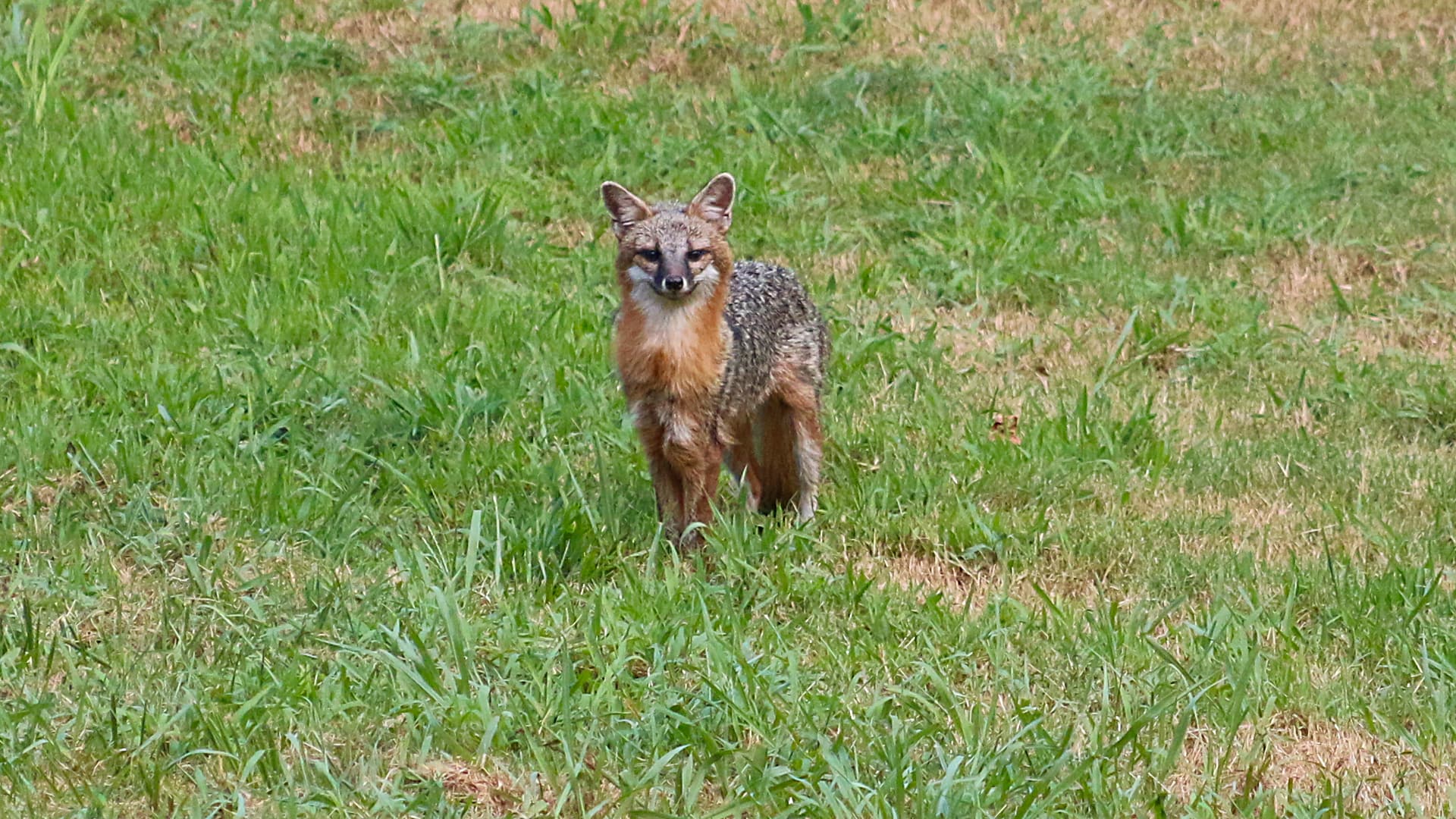
This photo shows a gray fox standing in a grassy field. The fox has pointy ears, a bushy tail, and fur that is a mix of gray, brown, and white. It is looking directly at the camera, appearing alert.
🔬 Scientific Phenomena
The image depicts an animal in its natural habitat, highlighting the concept of adaptation. Animals have specific traits, like the gray fox's fur color and keen senses, that help them survive in their environment. This fox's coloration likely provides camouflage among the grasses, helping it avoid predators and sneak up on prey. The scientific phenomenon is that the physical characteristics (adaptations) of an organism help it survive and thrive in its specific environment.
📚 Core Science Concepts
- Organisms and their environments: This image showcases a living organism, a gray fox, within its natural habitat, a grassy field. This highlights how animals are suited to live in certain places.
- Traits and survival: The fox's physical appearance, such as its fur color and pointed ears, are traits that aid its survival. Its fur color may help it blend in with the surroundings, and its ears are likely adapted for hearing prey.
- Food chains and webs: Foxes are often omnivores or carnivores, meaning they eat plants or animals. This fox is likely looking for food or a place to hide, illustrating its role in the ecosystem.
Pedagogical Tip: When discussing adaptation, encourage students to observe the fox's physical features and make inferences about how those features help it survive in its habitat. Avoid simply stating facts; guide them to make reasoned connections.
UDL Suggestions: Provide students with a graphic organizer to sketch the fox and list its observable traits, then draw lines connecting each trait to a potential survival benefit (e.g., pointy ears connect to hearing prey). This caters to visual and kinesthetic learners.
🔍 Zoom In / Zoom Out Concepts
- Zoom In: The fox's fur is made of many individual hairs, each with a specific structure and color. These hairs provide insulation, protecting the fox from extreme temperatures, and their color patterns help camouflage the animal.
- Zoom Out: This gray fox is part of a larger ecosystem. It interacts with plants (for food or shelter), other animals (as prey or predator), and even non-living elements like soil and water, all contributing to the balance of its environment.
🤔 Potential Student Misconceptions
- Misconception: All animals in a grassy field look the same.
Clarification: Animals have many different appearances and adaptations. The gray fox has unique traits like its fur color and size that distinguish it from other animals that might live in a grassy field, like rabbits or birds.
- Misconception: Animals are always safe in their environment.
Clarification: While animals have adaptations to help them survive, they still face dangers like predators, lack of food, or environmental changes. The fox in the photo is alert, suggesting it is aware of potential threats or opportunities in its surroundings.
🎓 NGSS Connections
3-LS4-3: Construct an argument with evidence that in a particular habitat some organisms can survive well, some survive less well, and some cannot survive at all.
K-LS1-1 (Grade K — foundational connection): Use observations to describe patterns of what plants and animals (including humans) need to survive.
💬 Discussion Questions
- What adaptations does the gray fox have that help it survive in this grassy habitat? (Bloom's: Analyze | DOK: 2 | SEP: Constructing Explanations and Designing Solutions)
- How might the gray fox's appearance help it avoid predators or find food? (Bloom's: Analyze | DOK: 2 | SEP: Constructing Explanations and Designing Solutions)
- Imagine you are another animal living in this field. How would you feel seeing a fox nearby? (Bloom's: Apply | DOK: 2 | SEP: Engaging in Argument from Evidence)
📖 Vocabulary
- Habitat: The natural home or environment where an animal lives.
- Adaptation: A special body part or behavior that helps a living thing survive.
- Trait: A characteristic or feature of a living thing, like fur color or the shape of an ear.
- Camouflage: The ability of an animal to blend in with its surroundings to avoid being seen.
🌡️ Extension Activities
- Habitat Diorama: Students create dioramas of a grassy habitat, including a model of a gray fox and other animals and plants that might live there. They can label the adaptations of each organism.
- Animal Trait Match-Up: Provide students with pictures of different animals and a list of adaptations. Students match the animal to its adaptations and explain how those traits help it survive.
🔗 Cross-Curricular Ideas
- ELA: Read books about foxes or other wild animals. Students can write their own stories from the perspective of the fox, describing its day and its adaptations.
- Art: Students can draw or paint the gray fox, focusing on its colors and textures. They can also create camouflage patterns inspired by the fox's fur.
- Social Studies: Discuss different habitats around the world and the animals that live in them. Students can research animals from a specific habitat and present their findings.
🚀 STEM Career Connection
- Animal Behaviourist — Watches what animals do and works out why they do it.
- Try it: Describe how a gray fox's keen senses, like hearing or smell, could help it find food or avoid predators. (Practice: Constructing Explanations and Designing Solutions)
- Tools: observation blinds, video recorders, stopwatches, behaviour checklists
- Where they work: zoos, field research stations, farms, universities
- Meet one: Rae Wynn-Grant — Where black bears and people run into each other, and how to keep both safe.
- Median pay: /year — "Zoologists and wildlife biologists"
- Conservation Biologist — Works out which plants and animals are in trouble, and what would help them recover.
- Try it: Explain why a gray fox's camouflage is important for its survival and what might happen if its habitat changed. (Practice: Constructing Explanations and Designing Solutions)
- Tools: population surveys, GPS trackers, habitat maps, trail cameras
- Where they work: nature reserves, conservation charities, government agencies, universities
- Meet one: Tierra Curry — Which plants and animals are closest to disappearing, and what it takes to save them.
- Median pay: /year — "Zoologists and wildlife biologists"
- Wildlife Biologist — Studies wild animals — what they eat, where they go, and what they need to survive.
- Try it: Draw a simple food chain that includes a gray fox and explain its role in the ecosystem. (Practice: Constructing Explanations and Designing Solutions)
- Tools: binoculars, radio collars, trail cameras, a field notebook
- Where they work: national parks, wildlife refuges, state wildlife agencies, universities
- Meet one: Rae Wynn-Grant — Where black bears and people run into each other, and how to keep both safe.
- Median pay: /year — "Zoologists and wildlife biologists"
Wage figures are median annual wages for the U.S. occupation named after each one, from the U.S. Bureau of Labor Statistics, Occupational Employment and Wage Statistics (OEWS), national, May 2025. Several careers share one occupation, so their figures match.