📸 Photo Description
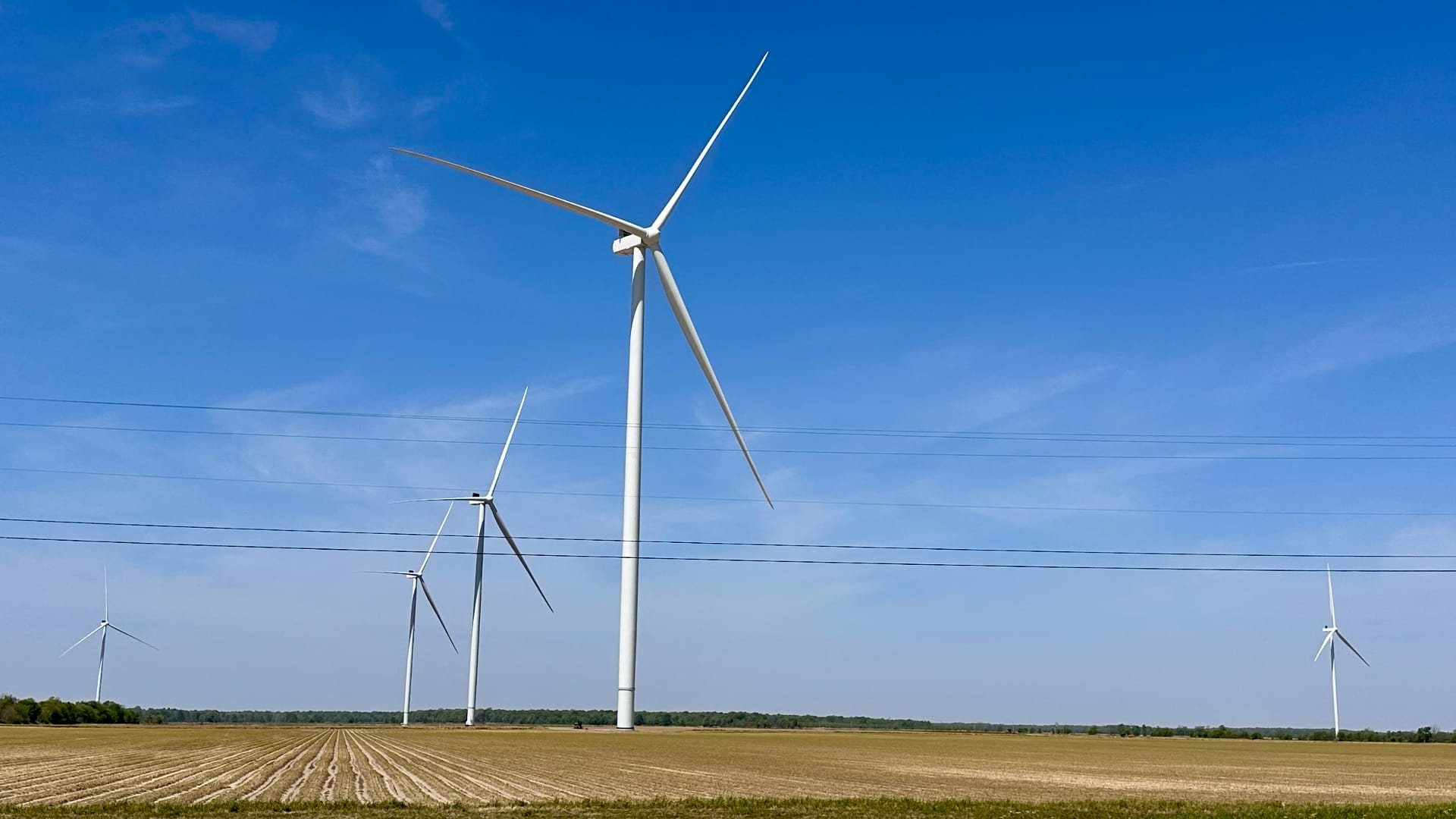
The image shows several tall, white structures with large blades that are spinning. These structures are standing in a large, open field under a bright blue sky. They are called wind turbines.
🔬 Scientific Phenomena
This image captures the phenomenon of harnessing wind energy. The spinning blades of the wind turbines are a direct result of moving air, which is wind. Wind is a form of energy that can be used to do work, such as generating electricity. This process relies on the interaction between the wind and the turbine blades, demonstrating how natural forces can be converted into usable energy.
📚 Core Science Concepts
- Wind as a Force: Wind is moving air, and moving air exerts a force. This force can be observed pushing on objects, like the blades of a wind turbine.
- Energy Transfer: The wind possesses kinetic energy (the energy of motion). When the wind blows, it transfers this energy to the turbine blades, causing them to spin.
- Motion and Forces: The spinning of the turbine blades is a change in motion caused by the force of the wind. Understanding how forces cause motion is key to understanding how wind turbines work.
Pedagogical Tip: When introducing the concept of forces and motion to third graders, use relatable examples of pushes and pulls they experience every day, such as pushing a toy car or pulling a wagon. This helps build a foundation for understanding the less obvious forces acting on a wind turbine.
UDL Suggestions: Provide visual aids such as diagrams or short videos showing how wind moves and how turbine blades catch the wind. Offer opportunities for students to act out the concept of wind pushing on objects by using fans to blow lightweight objects.
🔍 Zoom In / Zoom Out Concepts
- Zoom In: The spinning of the turbine blades is caused by the wind pushing on the angled surfaces of the blades. Each part of the blade experiences a push, and together these pushes create a turning force, making the entire rotor spin. This spinning motion is then used to power a generator inside the turbine.
- Zoom Out: Wind turbines are often grouped together in "wind farms" to generate a significant amount of electricity for communities. This electricity can then be sent through power lines to homes and businesses, powering lights, appliances, and other devices. This represents a large-scale system for producing clean energy.
🤔 Potential Student Misconceptions
- Misconception: Students might think the turbines are like giant fans blowing air.
Clarification: Wind turbines actually work the opposite way. Instead of using electricity to blow air, they use the natural movement of the air (wind) to create electricity.
- Misconception: Students might think the turbines are always spinning.
Clarification: Wind turbines only spin when there is enough wind. If the wind is too weak or too strong, the turbines might stop spinning for safety or efficiency.
🎓 NGSS Connections
- 3-PS2-1: Plan and conduct an investigation to provide evidence of the effects of balanced and unbalanced forces on the motion of an object.
- K-PS2-1 (Grade K — foundational connection): Plan and conduct an investigation to compare the effects of different strengths or different directions of pushes and pulls on the motion of an object.
💬 Discussion Questions
- What makes the blades of the wind turbines spin? (Bloom's: Remembering | DOK: 1 | SEP: Obtaining Evaluating and Communicating Information)
- How is the wind helping the turbines? (Bloom's: Understanding | DOK: 2 | SEP: Constructing Explanations and Designing Solutions)
- What do you think happens to the spinning motion of the blades? (Bloom's: Analyzing | DOK: 2 | SEP: Developing and Using Models)
📖 Vocabulary
- Wind Turbine: A tall structure with large blades that spins when the wind blows, used to make electricity.
- Force: A push or a pull on an object.
- Motion: The act of moving or changing position.
- Energy: The ability to do work or cause change.
🌡️ Extension Activities
- Build a Pinwheel: Have students design and build their own pinwheels. They can then test them in different wind conditions (e.g., with a fan on different settings, outdoors on a windy day) to observe how wind causes motion.
- Wind Sock Experiment: Create simple wind socks using plastic bags and string. Students can observe how the wind fills and moves the wind sock, demonstrating the force of moving air.
🔗 Cross-Curricular Ideas
- ELA: Read stories or informational texts about wind and wind energy. Students can write their own short stories about the journey of wind or create descriptive paragraphs about the wind turbines.
- Art: Students can draw or paint pictures of wind turbines, focusing on the movement of the blades and the vastness of the landscape. They could also create sculptures representing wind or motion.
- Social Studies: Discuss how wind energy is a type of renewable resource and how it helps our environment. Compare different energy sources and their impacts on the Earth.
🚀 STEM Career Connection
- Physicist — Works out the rules that matter and energy follow, from the very small to the whole universe.
- Try it: Use a fan to blow on different-sized objects (like a ping pong ball and a small block) and record which ones move and how far. (Practice: Planning and Carrying Out Investigations)
- Tools: lasers, detectors, vacuum chambers, computer simulations
- Where they work: research laboratories, particle accelerators, observatories, universities
- Meet one: Chanda Prescod-Weinstein — Dark matter — the invisible material that makes up most of the universe.
- Median pay: /year — "Physicists"
Wage figures are median annual wages for the U.S. occupation named after each one, from the U.S. Bureau of Labor Statistics, Occupational Employment and Wage Statistics (OEWS), national, May 2025. Several careers share one occupation, so their figures match.