📸 Photo Description
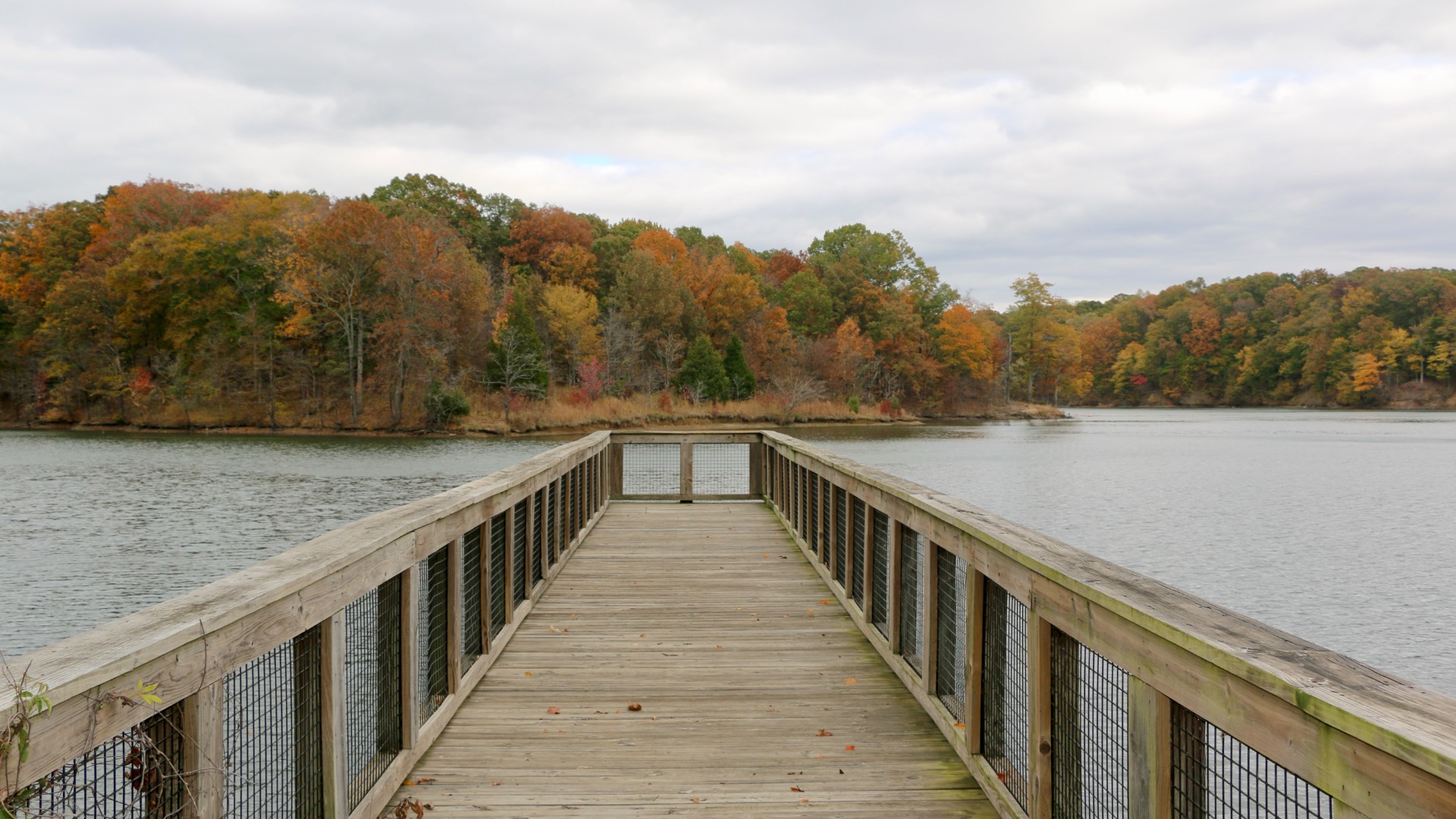
The image shows a wooden pier extending over a body of water. On the far side of the water, there are many deciduous trees displaying vibrant autumn colors of red, orange, and yellow. The sky is cloudy and gray, suggesting a cooler day.
🔬 Scientific Phenomena
This image captures the phenomenon of seasonal change, specifically the transition to autumn. The changing colors of the deciduous trees are a direct result of the decreasing amount of sunlight and cooler temperatures associated with this season. These environmental factors trigger a chemical change in the leaves, causing them to lose their green chlorophyll and reveal the underlying yellow and orange pigments. Eventually, the leaves will fall off the trees, which is a natural process preparing them for winter. This is an observable example of Earth's systems interacting with living organisms.
📚 Core Science Concepts
- Seasonal Changes: The image depicts the visible effects of Earth's changing seasons, particularly autumn. This is driven by Earth's tilt and its revolution around the sun, leading to variations in sunlight and temperature throughout the year.
- Plant Adaptations: Deciduous trees have adapted to seasonal changes by shedding their leaves. This process conserves water and energy during colder months when sunlight is less available for photosynthesis.
- Weather Patterns: The cloudy sky indicates current weather conditions, which are part of broader weather patterns that change with the seasons.
Pedagogical Tip: Encourage students to observe and record weather patterns over time. They can create simple charts or calendars to track temperature, precipitation, and cloud cover, connecting these observations to seasonal changes.
UDL Suggestions: Provide visual aids, such as diagrams of Earth's tilt or time-lapse videos of leaves changing color, to support students with different learning styles. Offer opportunities for students to express their understanding through drawing, writing, or verbal explanations.
🔍 Zoom In / Zoom Out Concepts
- Zoom In: Inside each leaf, the green chlorophyll that allows trees to make food from sunlight is breaking down. As the chlorophyll disappears, other pigments that were always there, like yellow and orange carotenoids, become visible.
- Zoom Out: This scene is part of a larger ecosystem, where the seasonal changes affect not only the trees but also the animals that live in and around the water. Animals may prepare for winter by migrating, storing food, or changing their behavior in response to the cooler temperatures and changing food availability.
🤔 Potential Student Misconceptions
- Misconception: Leaves change color because the cold freezes them.
Clarification: Leaves change color because the cooler temperatures and shorter days signal the tree to stop making chlorophyll, the green pigment. This allows the other colors already in the leaf to show through.
- Misconception: All trees lose their leaves in the fall.
Clarification: Only deciduous trees lose their leaves. Evergreen trees, like pine trees, keep their leaves (needles) all year round.
🎓 NGSS Connections
3-ESS2-1: Represent data in tables and graphical displays to describe typical weather conditions expected during a particular season.
K-ESS2-1 (Grade K — foundational connection): Use and share observations of local weather conditions to describe patterns over time.
💬 Discussion Questions
- What are some observable signs in the picture that indicate it is autumn? (Bloom's: Remembering | DOK: 1 | SEP: Obtaining Evaluating and Communicating Information)
- How do the changing colors of the leaves help the tree survive the winter? (Bloom's: Understanding | DOK: 2 | SEP: Constructing Explanations and Designing Solutions)
- If you were to visit this same spot in the summer, what differences would you expect to see? (Bloom's: Applying | DOK: 2 | SEP: Analyzing and Interpreting Data)
📖 Vocabulary
- Deciduous Trees: Trees that lose their leaves seasonally, typically in the fall.
- Autumn/Fall: The season between summer and winter, characterized by cooler temperatures and changing leaf colors.
- Chlorophyll: The green pigment in plants that absorbs sunlight for photosynthesis.
- Pigments: Natural substances that give color.
🌡️ Extension Activities
- Leaf Rubbings and Collection: Collect fallen leaves of various colors and shapes. Students can create leaf rubbings by placing a leaf under a piece of paper and rubbing the side of a crayon over it. They can also classify leaves by color, shape, and type of tree.
- Seasonal Observation Journal: Have students keep a journal where they draw or write about observations of seasonal changes in their local environment over several weeks, noting changes in plants, weather, and animal behavior.
🔗 Cross-Curricular Ideas
- ELA: Read books about autumn and the science of leaf color change. Students can write poems or descriptive paragraphs about the fall scenery.
- Art: Create artwork inspired by the fall colors, using various mediums like paint, crayons, or collage with real leaves.
- Social Studies: Discuss how the changing seasons have historically impacted human communities, such as in agriculture, migration, or traditions.
🚀 STEM Career Connection
- Hydrologist — Follows water — where it falls, where it goes underground, and where it comes out again.
- Try it: Observe a puddle after rain and draw how the water level changes over an hour. (Practice: Analyzing and Interpreting Data)
- Tools: stream gauges, well probes, flow meters, rain gauges
- Where they work: rivers and reservoirs, water utilities, government surveys, universities
- Meet one: Newsha Ajami — How cities can use water more wisely, especially when there is not enough of it.
- Median pay: /year — "Hydrologists"
- Soil Scientist — Studies dirt seriously — what it is made of, what lives in it, and what will grow in it.
- Try it: Mix water with soil samples and describe how the soil feels and looks when wet. (Practice: Analyzing and Interpreting Data)
- Tools: soil augers, pH meters, sieve stacks, sample bags
- Where they work: farms and fields, testing laboratories, government agencies, universities
- Meet one: Asmeret Asefaw Berhe — How soil stores carbon, and why that makes dirt part of the climate story.
- Median pay: /year — "Soil and plant scientists"
Wage figures are median annual wages for the U.S. occupation named after each one, from the U.S. Bureau of Labor Statistics, Occupational Employment and Wage Statistics (OEWS), national, May 2025. Several careers share one occupation, so their figures match.