📸 Photo Description
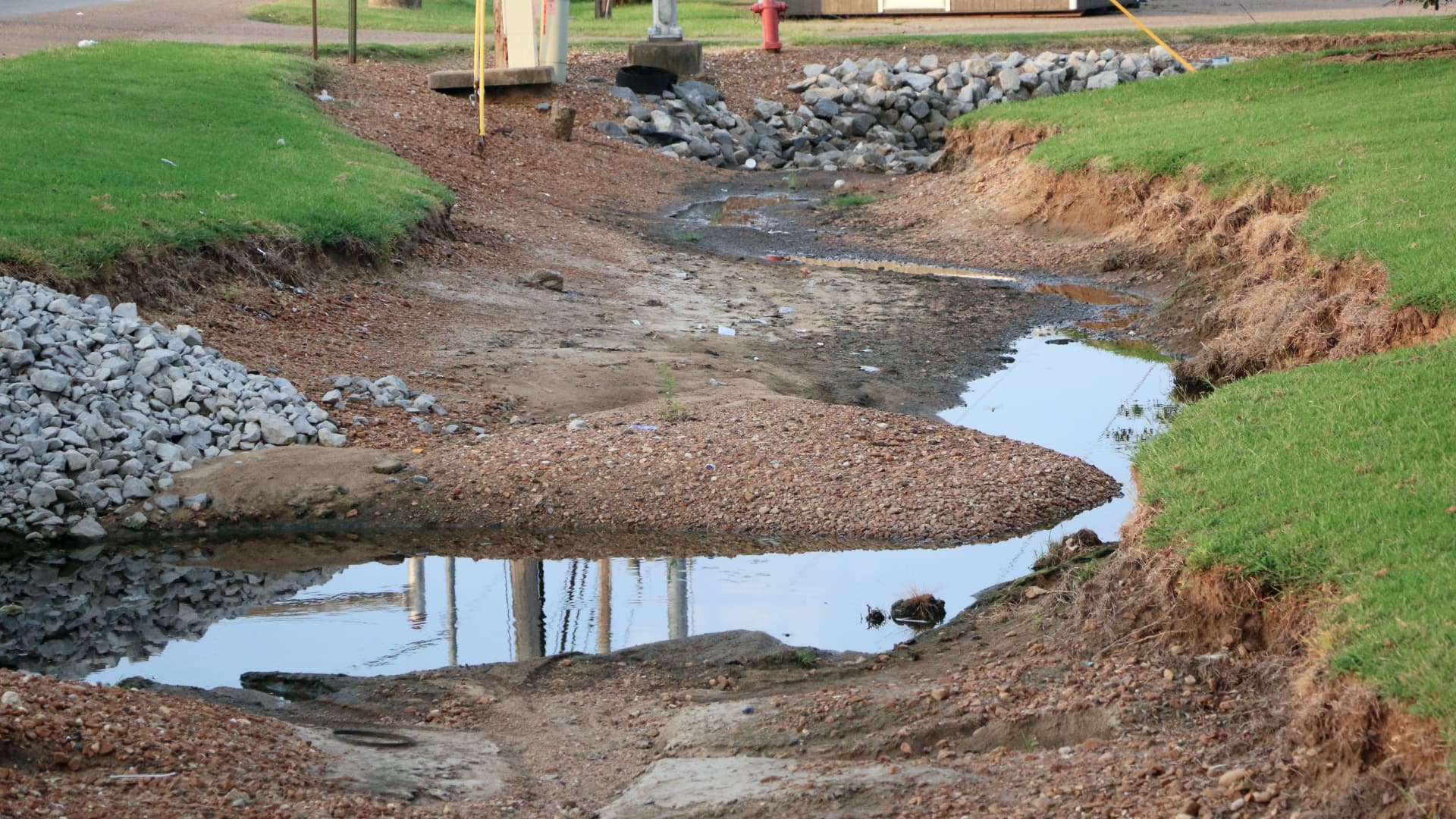
The image shows a channel with a small stream of water flowing through it. The banks of the channel are steep and show signs of erosion, with exposed soil and grass roots. Large piles of gray rocks and smaller gravel are present on the sides of the channel, likely placed there to help prevent further erosion.
🔬 Scientific Phenomena
This image illustrates the phenomenon of erosion, specifically the wearing away of land by moving water. The exposed soil and steep banks indicate that water flow has been carrying away soil particles. The presence of rocks and gravel suggests an attempt to mitigate this erosion, showcasing a design solution to a natural hazard. This is happening because moving water has the energy to pick up and carry soil and sediment, especially when the banks are not well-protected by vegetation or stable materials.
📚 Core Science Concepts
- Erosion: The process by which natural forces like water, wind, or ice wear away rocks and soil. In this image, water is the primary force causing erosion along the channel banks.
- Sediment: Small particles of rock and soil that are carried along by water, wind, or ice. The water in the channel is likely carrying sediment, and the exposed soil on the banks represents sediment that has been dislodged.
- Water Cycle: Water's continuous movement on, above, and below the surface of the Earth. This stream is a part of the larger water cycle, and its flow is influenced by precipitation and surface runoff.
- Design Solutions: Human-created ways to solve problems. The rocks and gravel are a design solution to prevent the banks from eroding further.
Pedagogical Tip: When discussing erosion with third graders, use relatable examples like how rain can wash away dirt in a garden or how a strong wind can blow sand. Connect these everyday experiences to the larger geological processes shown in the image.
UDL Suggestions: Provide visual aids such as diagrams of the water cycle and different types of erosion. Offer sentence starters for students to explain the concepts in their own words and allow them to draw or build models to demonstrate erosion and prevention methods.
🔍 Zoom In / Zoom Out Concepts
- Zoom In: At a microscopic level, erosion involves individual soil particles being dislodged by the force of flowing water molecules. These particles, like sand and silt, are then carried away, changing the structure of the soil.
- Zoom Out: This small channel is part of a larger watershed. The water flowing here collects from rain and snowmelt over a wider area and eventually flows into larger rivers, lakes, or oceans, carrying sediment with it and shaping larger landforms over geological time.
🤔 Potential Student Misconceptions
- Misconception: Erosion only happens with large rivers or oceans.
- Clarification: Erosion can happen anywhere water flows, even in small streams, ditches, or puddles, especially when the land is not protected.
- Misconception: Rocks and gravel don't do anything to stop erosion; they are just there.
- Clarification: Rocks and gravel act as a barrier, weighing down the soil and preventing water from easily dislodging and carrying it away. They are a protective layer.
🎓 NGSS Connections
- Make a claim about the merit of a design solution that reduces the impacts of a weather-related hazard.
- (Grade 2 — foundational connection) Compare multiple solutions designed to slow or prevent wind or water from changing the shape of the land.
- (Grade 4 — where this learning leads) Make observations and/or measurements to provide evidence of the effects of weathering or the rate of erosion by water, ice, wind, or vegetation.
💬 Discussion Questions
- What is happening to the sides of the channel in the picture? (Bloom's: Understand | DOK: 1 | SEP: Obtaining Evaluating and Communicating Information)
- Why do you think people put rocks and gravel along the sides of the stream? (Bloom's: Apply | DOK: 2 | SEP: Constructing Explanations and Designing Solutions)
- How might heavy rain affect the erosion in this channel? (Bloom's: Analyze | DOK: 2 | SEP: Analyzing and Interpreting Data)
📖 Vocabulary
- Erosion: The process of wearing away land by wind, water, or ice.
- Sediment: Tiny pieces of rock and soil that are carried by moving water or wind.
- Channel: A path that a river or stream follows.
- Gravel: Small stones that are larger than sand but smaller than rocks.
🌡️ Extension Activities
- Erosion in a Pan: Fill a shallow pan with soil and create a small channel. Pour water from a height into the pan and observe how the soil erodes. Then, add gravel or small rocks to the channel and repeat, observing how the protection reduces erosion.
- Planting for Protection: Discuss how plants help prevent erosion. Have students plant grass seeds or small plants on the banks of a model channel in a separate container and observe how the roots hold the soil together.
🔗 Cross-Curricular Ideas
- ELA: Read a story about a flood or a river and discuss how erosion might be a problem. Students can write their own short stories about living near a river and dealing with erosion.
- Art: Students can draw or paint the scene, focusing on the textures of the soil, grass, and rocks. They could also create 3D models of erosion prevention using clay and small stones.
- Social Studies: Discuss how communities use natural resources like water and how they manage potential problems like erosion that can affect buildings and infrastructure.
🚀 STEM Career Connection
- Environmental Engineer — Designs the systems that clean water, cut pollution and deal with waste.
- Try it: Experiment with different materials like straw, mulch, and small rocks to see which best slows down water flow and prevents soil from washing away. (Practice: Constructing Explanations and Designing Solutions)
- Tools: water treatment models, air samplers, filtration rigs, CAD software
- Where they work: treatment plants, engineering firms, environmental agencies, universities
- Meet one: Yewande Akinola — How to get clean water to places that do not have it, and how to design buildings that waste less of it.
- Median pay: /year — "Environmental engineers"
- Coastal Engineer — Designs seawalls, dunes and barriers that slow the ocean down before it takes the shore.
- Try it: Build a small barrier with sand and rocks to protect a 'shoreline' from waves made by splashing water. (Practice: Constructing Explanations and Designing Solutions)
- Tools: wave models, sediment surveys, tide gauges, CAD software
- Where they work: coastlines and harbours, engineering firms, government coastal agencies, research labs
- Meet one: Yewande Akinola — How to get clean water to places that do not have it, and how to design buildings that waste less of it.
- Median pay: /year — "Civil engineers"
Wage figures are median annual wages for the U.S. occupation named after each one, from the U.S. Bureau of Labor Statistics, Occupational Employment and Wage Statistics (OEWS), national, May 2025. Several careers share one occupation, so their figures match.