📸 Photo Description
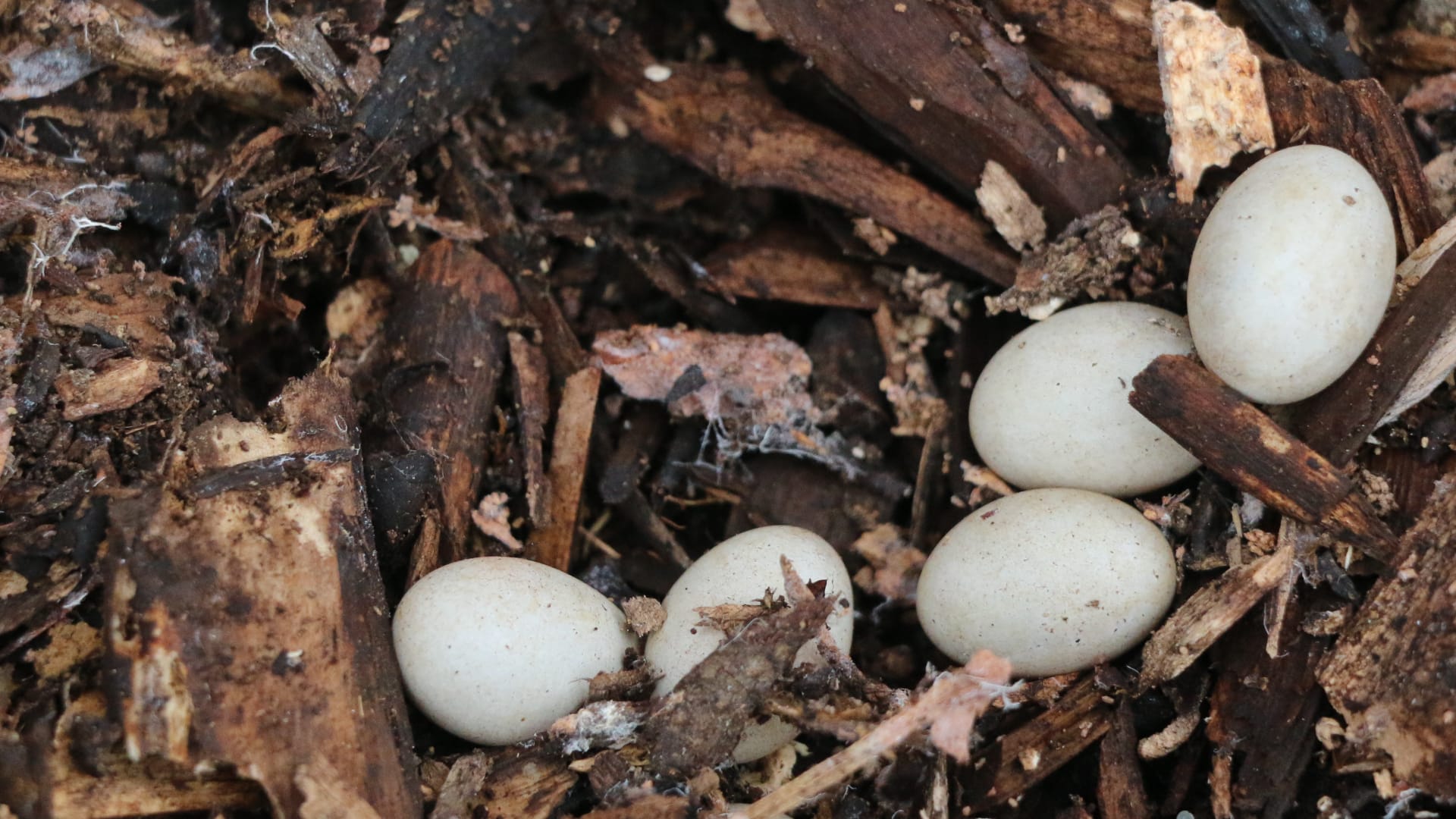
The photo shows several small, oval-shaped eggs nestled in a bed of dry leaves and wood chips. These are likely the eggs of a reptile, such as a skink, laid in a protected environment. The eggs appear to be unshaded and are camouflaged by their surroundings.
🔬 Scientific Phenomena
This image represents the life cycle of a reptile, specifically the egg stage. The eggs are carefully placed in a habitat that will provide warmth and protection. This placement is crucial for the successful development of the young, demonstrating how environmental conditions influence the survival and reproduction of organisms.
📚 Core Science Concepts
- Life Cycles: Organisms, including reptiles, go through different stages of life: birth (hatching), growth, reproduction, and eventually death. These eggs represent the beginning of a new generation.
- Reproduction: Animals reproduce in various ways. This image shows reproduction through eggs, a common method for many reptiles.
- Habitat and Survival: The environment where eggs are laid is critical for their survival. This habitat offers protection from predators and potentially maintains a suitable temperature for development.
Pedagogical Tip: Encourage students to observe the texture and color of the eggs and compare them to other types of eggs they might know (e.g., bird eggs). This can lead to discussions about different adaptations for survival.
UDL Suggestions: Provide visual aids such as diagrams of a reptile's life cycle and real or replica reptile eggs for tactile exploration. Offer sentence starters for discussions, such as "The eggs are in a good place because..." or "This is important for the baby animal because...".
- Inheritance: Young reptiles will inherit traits from their parents, influencing their appearance and behaviors.
🔍 Zoom In / Zoom Out Concepts
- Zoom In: Inside each egg, a tiny embryo is developing, receiving nutrients from the yolk. This involves cell division and differentiation to form specialized tissues and organs of the future skink.
- Zoom Out: This clutch of eggs is part of a larger ecosystem. The skinks will eventually hatch, grow, and play a role in the food web, potentially becoming prey for other animals or preying on insects, thus influencing the stability of the environment.
🤔 Potential Student Misconceptions
- Misconception: All eggs contain baby birds.
Clarification: While birds lay eggs, many other animals, including reptiles, amphibians, fish, and insects, also reproduce by laying eggs, and these eggs can look very different.
- Misconception: The eggs will hatch quickly regardless of where they are.
Clarification: The temperature and protection of the environment are very important for reptile eggs to develop properly and hatch successfully.
🎓 NGSS Connections
- 3-LS1-1: Develop models to describe that organisms have unique and diverse life cycles but all have in common birth, growth, reproduction, and death.
- 3-LS4-3: Construct an argument with evidence that in a particular habitat some organisms can survive well, some survive less well, and some cannot survive at all.
💬 Discussion Questions
- Why do you think the skink laid its eggs in this particular spot? (Bloom's: Analyze | DOK: 2 | SEP: Constructing Explanations and Designing Solutions)
- What do you predict will happen to these eggs over time? (Bloom's: Predict | DOK: 1 | SEP: Developing and Using Models)
- How is laying eggs a way for skinks to reproduce and continue their species? (Bloom's: Understand | DOK: 2 | SEP: Constructing Explanations and Designing Solutions)
📖 Vocabulary
- Life Cycle: The series of changes an organism goes through during its life.
- Eggs: The initial stage of many animals, containing the beginning of a new organism.
- Habitat: The natural home or environment of an animal, plant, or other organism.
- Reproduction: The process by which new organisms are created.
🌡️ Extension Activities
- Egg Survival Diorama: Have students create dioramas showing different possible habitats for reptile eggs, labeling the pros and cons of each for survival.
- Life Cycle Sequencing Cards: Create cards with pictures and descriptions of different stages of a skink's life cycle (egg, hatchling, juvenile, adult) and have students put them in the correct order.
🔗 Cross-Curricular Ideas
- ELA: Read books about reptiles and their life cycles, and have students write their own creative stories from the perspective of a skink egg.
- Art: Students can draw or paint detailed pictures of the skink eggs and their habitat, focusing on texture and color.
- Social Studies: Discuss how different cultures view reptiles and how human actions (like habitat destruction) can impact animal populations.
🚀 STEM Career Connection
- Herpetologist — Studies reptiles and amphibians — snakes, lizards, frogs and turtles.
- Try it: Create a model of a skink egg habitat and explain why you included each element to help the eggs survive. (Practice: Constructing Explanations and Designing Solutions)
- Tools: snake hooks, pitfall traps, temperature probes, a field notebook
- Where they work: deserts and wetlands, zoos, natural history museums, universities
- Meet one: Earyn McGee — What happens to desert lizards when the streams they live near dry up.
- Median pay: /year — "Zoologists and wildlife biologists"
- Animal Behaviourist — Watches what animals do and works out why they do it.
- Try it: Imagine you are watching the skink parents, and explain what actions they might take to protect their eggs. (Practice: Constructing Explanations and Designing Solutions)
- Tools: observation blinds, video recorders, stopwatches, behaviour checklists
- Where they work: zoos, field research stations, farms, universities
- Meet one: Rae Wynn-Grant — Where black bears and people run into each other, and how to keep both safe.
- Median pay: /year — "Zoologists and wildlife biologists"
Wage figures are median annual wages for the U.S. occupation named after each one, from the U.S. Bureau of Labor Statistics, Occupational Employment and Wage Statistics (OEWS), national, May 2025. Several careers share one occupation, so their figures match.