📸 Photo Description
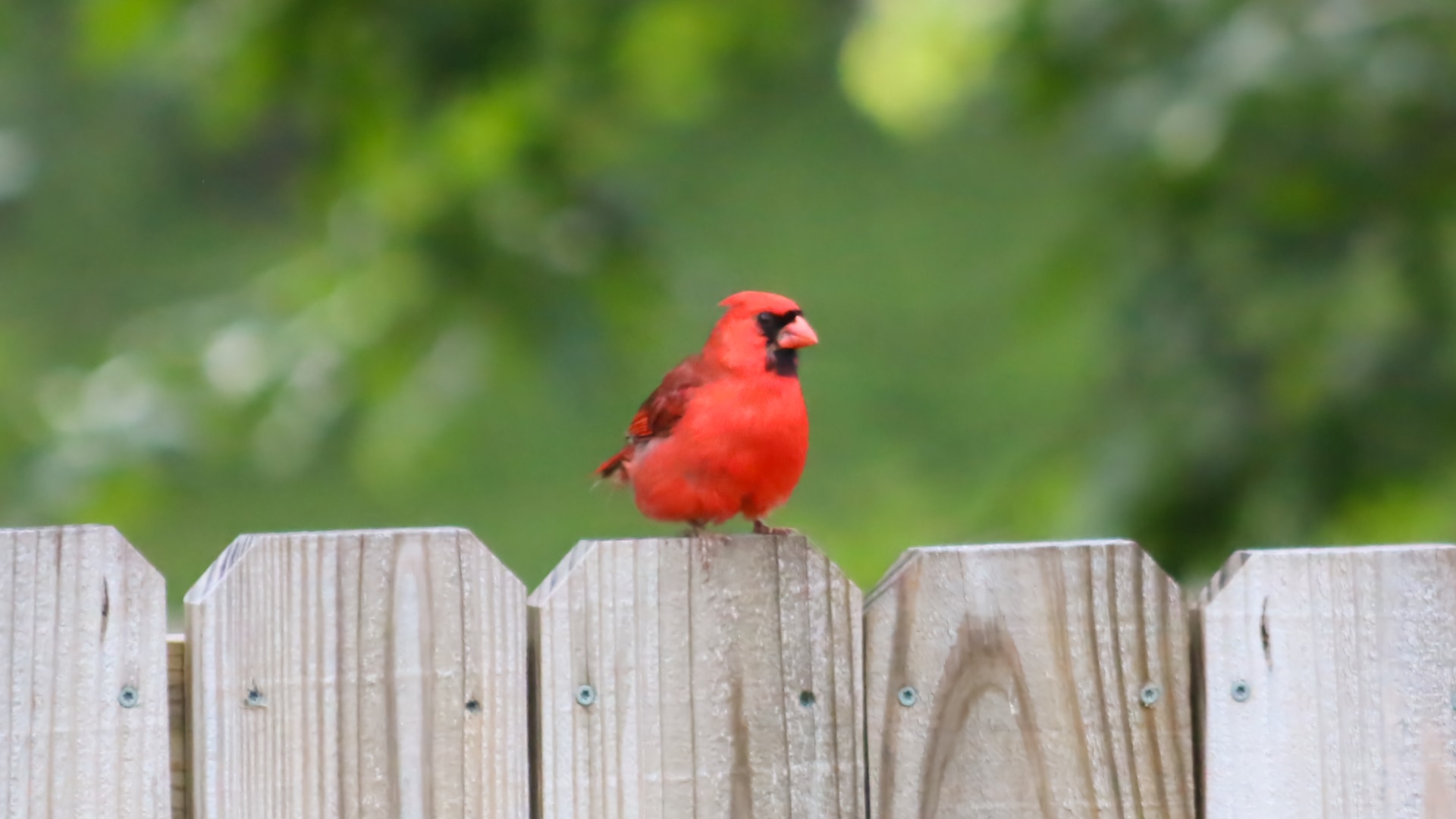
A bright red cardinal is perched on a wooden fence. The background is softly blurred with green leaves, suggesting a natural outdoor environment. The cardinal's vibrant color and clear form stand out against the softer backdrop.
🔬 Scientific Phenomena
This image showcases the concept of animal traits and their survival advantages. The striking red color of the male cardinal is a distinct trait. This trait can play a role in attracting mates and establishing territory, which are crucial for reproduction and survival. In some environments, bright colors can also make an animal more visible to predators, highlighting how traits can have both positive and negative impacts on survival.
📚 Core Science Concepts
- Observable Traits: Animals, like this cardinal, have many observable traits such as color, size, and shape. These traits are characteristics that can be seen and measured.
- Traits and Survival: Certain traits can help an animal survive better in its environment. For example, camouflage can help animals hide from predators or sneak up on prey.
- Variation in Traits: Within a group of the same animal species, there is variation in traits. Not all cardinals are exactly the same shade of red, for instance.
- Environmental Influence on Traits: While many traits are inherited, the environment can also influence how traits develop or are expressed.
Pedagogical Tip: Encourage students to observe and sketch the cardinal, focusing on its physical characteristics. This hands-on observation helps build foundational understanding of traits.
UDL Suggestions: Provide students with a checklist of observable traits (e.g., color, beak shape, size) to guide their observations of the cardinal, supporting students who benefit from structured guidance.
🔍 Zoom In / Zoom Out Concepts
- Zoom In: At a microscopic level, the cardinal's red color comes from pigments in its feathers. These pigments are molecules that absorb certain wavelengths of light and reflect others, giving the feather its specific color.
- Zoom Out: This cardinal is part of a local ecosystem. Its presence, color, and behavior (like mating displays or foraging) are interconnected with other organisms (like insects or seeds it eats, or predators) and the environment (like the presence of trees for nesting or the availability of food).
🤔 Potential Student Misconceptions
- Misconception: All birds of the same species look exactly alike.
Clarification: While birds of the same species share many similarities, there are variations in their traits, such as slight differences in color, size, or markings.
- Misconception: A trait like bright color is always good for an animal.
Clarification: While bright colors can help attract mates (which aids reproduction), they can also make an animal more visible to predators, potentially decreasing its chances of survival. The advantage or disadvantage of a trait often depends on the specific environment.
🎓 NGSS Connections
- 3-LS3-1: Analyze and interpret data to provide evidence that plants and animals have traits inherited from parents and that variation of these traits exists in a group of similar organisms. , ,
- 3-LS4-2: Use evidence to construct an explanation for how the variations in characteristics among individuals of the same species may provide advantages in surviving, finding mates, and reproducing. , ,
- 3-LS4-3: Construct an argument with evidence that in a particular habitat some organisms can survive well, some survive less well, and some cannot survive at all. , ,
💬 Discussion Questions
- What are some of the observable traits of this cardinal? (Bloom's: Remembering | DOK: 1 | SEP: Obtaining, Evaluating, and Communicating Information)
- How might the cardinal's bright red color help it survive or reproduce? (Bloom's: Analyzing | DOK: 2 | SEP: Constructing Explanations and Designing Solutions)
- Why do you think not all male cardinals are the exact same shade of red? (Bloom's: Analyzing | DOK: 2 | SEP: Analyzing and Interpreting Data)
- Imagine a predator that hunts by sight. How might the cardinal's color affect its chances of survival? (Bloom's: Applying | DOK: 2 | SEP: Constructing Explanations and Designing Solutions)
📖 Vocabulary
- Cardinal: A type of bird known for the male's bright red color.
- Traits: Observable characteristics or features of an organism.
- Variation: Differences in traits among individuals of the same species.
- Habitat: The natural home or environment of an animal.
- Survival: The state of continuing to live or exist.
🌡️ Extension Activities
- Cardinal Observation Journal: Have students observe cardinals (or other local birds) in their schoolyard or from a window. They can draw the birds and record observable traits in a journal, noting any variations they see.
- Trait Match-Up: Create cards with different animal traits and cards with different environmental challenges (e.g., camouflage for hiding, sharp claws for climbing). Students match the traits to the environmental challenges they help overcome.
- "Survivor" Game: Simulate a habitat where students have different traits. Some traits might help them "survive" (e.g., find food, avoid a "predator"), while others might make it harder.
🔗 Cross-Curricular Ideas
- ELA: Read and discuss books about birds, focusing on descriptive language used to portray their features and behaviors. Students can write their own descriptive paragraphs about the cardinal.
- Art: Students can draw or paint the cardinal, focusing on color mixing to achieve the vibrant red and contrasting it with the green background.
- Social Studies: Discuss how animals and habitats are important to different communities and how people can protect wildlife.
- Math: Measure and compare the lengths of different bird beaks (from pictures or models) and discuss how beak shape relates to diet and survival.
🚀 STEM Career Connection
- Ornithologist — Studies birds — how they fly, what they eat, where they nest, and where they travel.
- Try it: Compare the red color of the male cardinal to other red objects and describe the differences. (Practice: Analyzing and Interpreting Data)
- Tools: binoculars, spotting scopes, leg bands, sound recorders
- Where they work: wildlife refuges, bird observatories, parks, universities
- Meet one: Corina Newsome — How seaside sparrows in salt marshes lose nests to rising water — nests built higher escape the flooding but become easier for predators to find.
- Median pay: /year — "Zoologists and wildlife biologists"
- Ecologist — Studies how living things depend on each other and on the place they live.
- Try it: List all the things a cardinal might eat and all the things that might eat a cardinal in its environment. (Practice: Analyzing and Interpreting Data)
- Tools: quadrat frames, measuring tapes, GPS units, a field notebook
- Where they work: forests, grasslands, wetlands, universities
- Meet one: Sandra Díaz — What a plant's leaves, wood and shape tell you about how it lives — and how those traits add up across a whole ecosystem.
- Median pay: /year — "Environmental scientists and specialists, including health"
Wage figures are median annual wages for the U.S. occupation named after each one, from the U.S. Bureau of Labor Statistics, Occupational Employment and Wage Statistics (OEWS), national, May 2025. Several careers share one occupation, so their figures match.