📸 Photo Description
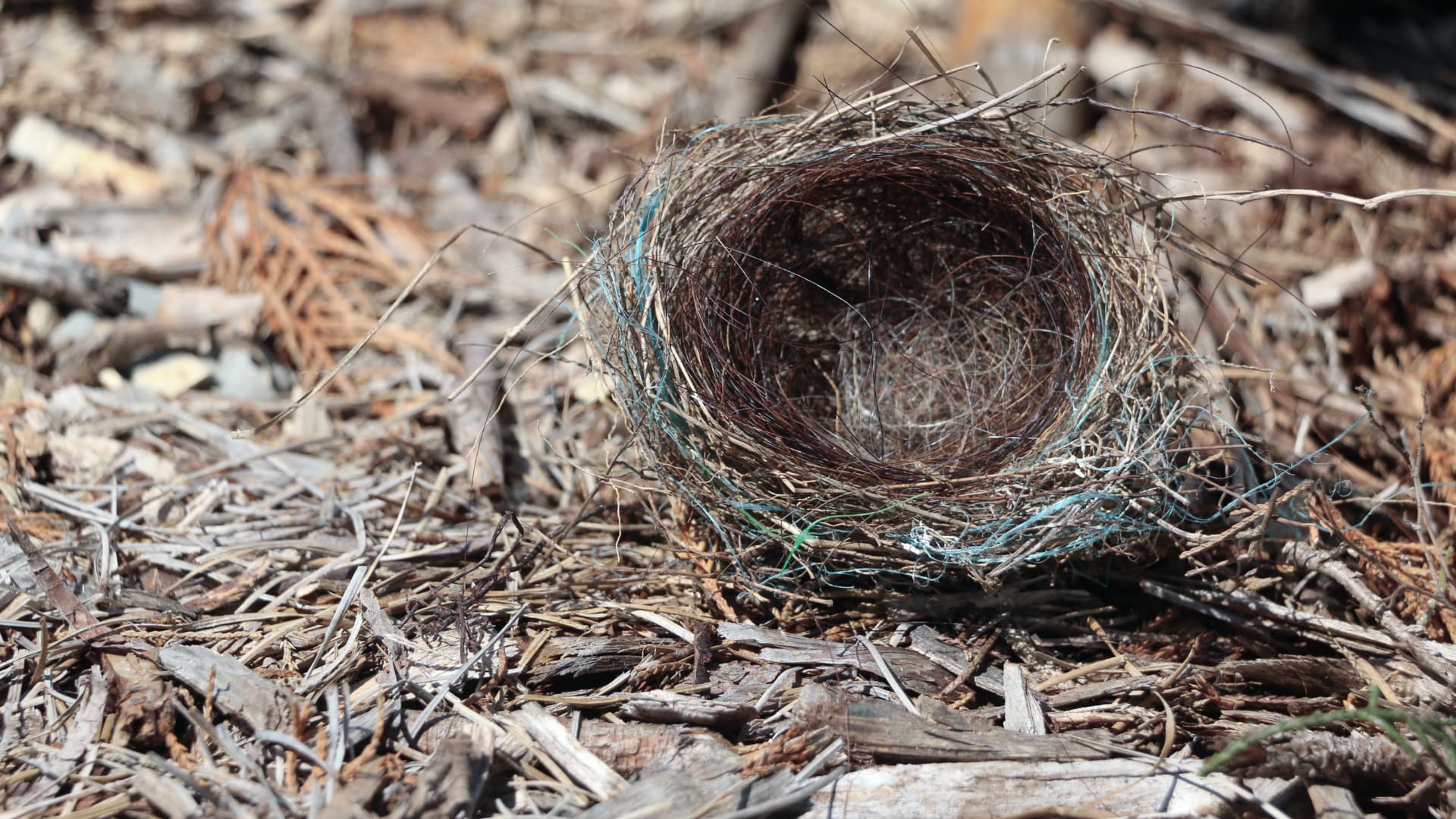
This photo shows an empty bird's nest made of twigs, grass, and other natural materials. It is resting on the ground among dry leaves and small branches. Nests are important structures built by birds.
🔬 Scientific Phenomena
This image represents the phenomenon of animal structures and their functions within a habitat. Birds build nests as specialized structures to support their life cycle, particularly for reproduction and raising young. The nest's construction and placement are adaptations that help ensure the survival of the offspring.
📚 Core Science Concepts
- Animal Structures for Survival: Birds build nests as specialized external structures to protect their eggs and young from predators and the elements.
- Life Cycles: Nests are a crucial part of the bird life cycle, specifically related to reproduction and the care of offspring.
- Habitat and Adaptation: The materials used to build the nest and its location are often chosen based on what is available in the bird's habitat and what provides the best protection.
Pedagogical Tip: Encourage students to brainstorm different types of animal homes and discuss how their structures help them survive. This can lead to a discussion about how different animals have different needs and therefore build different kinds of homes.
UDL Suggestions: Provide students with a variety of images of different animal homes (e.g., beaver dams, spider webs, ant hills) to compare and contrast. Offer sentence starters or graphic organizers to help students structure their thoughts about the function of each home.
🔍 Zoom In / Zoom Out Concepts
- Zoom In: The intricate weaving of small twigs, grasses, and perhaps even some synthetic materials by the bird's beak and feet. Each fiber is manipulated and placed to create a strong, cup-shaped structure.
- Zoom Out: This nest is part of a larger ecosystem. The bird that built it relies on the surrounding environment for food, water, and shelter. The nest itself can also provide shelter for insects or other small creatures after it is no longer in use.
🤔 Potential Student Misconceptions
- Misconception: Nests are just messy piles of sticks.
Clarification: Nests are carefully constructed homes built by birds using specific materials and techniques. They are designed to protect eggs and young birds, serving a vital function in the bird's life cycle.
- Misconception: All birds build nests in trees.
Clarification: While many birds build nests in trees, some build them on the ground, on cliffs, or in other locations depending on the species and its habitat.
🎓 NGSS Connections
- 3-LS1-1: Develop models to describe that organisms have unique and diverse life cycles but all have in common birth, growth, reproduction, and death.
- 3-LS4-3: Construct an argument with evidence that in a particular habitat some organisms can survive well, some survive less well, and some cannot survive at all.
💬 Discussion Questions
- What materials do you observe in this bird's nest, and what purpose do they serve? (Bloom's: Understand | DOK: 1 | SEP: Obtaining Evaluating and Communicating Information)
- How is this nest like a home for a human family? (Bloom's: Analyze | DOK: 2 | SEP: Constructing Explanations and Designing Solutions)
- Why do you think a bird would choose these specific materials and this shape to build its nest? (Bloom's: Analyze | DOK: 2 | SEP: Constructing Explanations and Designing Solutions)
📖 Vocabulary
- Nest: A structure built by birds to hold their eggs and raise their young.
- Habitat: The natural home or environment of an animal, plant, or other organism.
- Life Cycle: The series of changes that an organism undergoes during its life, from birth to death.
- Reproduction: The process by which new living organisms are created.
🌡️ Extension Activities
- Nest Building Challenge: Provide students with various natural materials (twigs, leaves, grass, mud) and have them design and build their own miniature bird nests. They can then explain how their nests would protect eggs.
- Animal Homes Research: Students can research different types of bird nests or other animal homes (e.g., beaver lodges, termite mounds) and present their findings on how these structures help the animal survive.
🔗 Cross-Curricular Ideas
- ELA: Read stories about birds and their nests. Students can write their own stories from the perspective of a bird building a nest or raising its young.
- Art: Students can create artistic representations of bird nests using various media, such as drawing, painting, or collage with natural materials.
- Social Studies: Discuss how different cultures or people build homes for themselves using materials found in their environment, drawing parallels to animal nesting behaviors.
🚀 STEM Career Connection
- Ornithologist — Studies birds — how they fly, what they eat, where they nest, and where they travel.
- Try it: Construct a small model nest using craft sticks, yarn, and cotton balls, and explain how your model would protect eggs from wind and rain. (Practice: Constructing Explanations and Designing Solutions)
- Tools: binoculars, spotting scopes, leg bands, sound recorders
- Where they work: wildlife refuges, bird observatories, parks, universities
- Meet one: Corina Newsome — How seaside sparrows in salt marshes lose nests to rising water — nests built higher escape the flooding but become easier for predators to find.
- Median pay: /year — "Zoologists and wildlife biologists"
- Conservation Biologist — Works out which plants and animals are in trouble, and what would help them recover.
- Try it: Research a local bird species and design a birdhouse that provides a safe nesting place, considering the materials and location that would best suit the bird's needs. (Practice: Constructing Explanations and Designing Solutions)
- Tools: population surveys, GPS trackers, habitat maps, trail cameras
- Where they work: nature reserves, conservation charities, government agencies, universities
- Meet one: Tierra Curry — Which plants and animals are closest to disappearing, and what it takes to save them.
- Median pay: /year — "Zoologists and wildlife biologists"
Wage figures are median annual wages for the U.S. occupation named after each one, from the U.S. Bureau of Labor Statistics, Occupational Employment and Wage Statistics (OEWS), national, May 2025. Several careers share one occupation, so their figures match.