📸 Photo Description
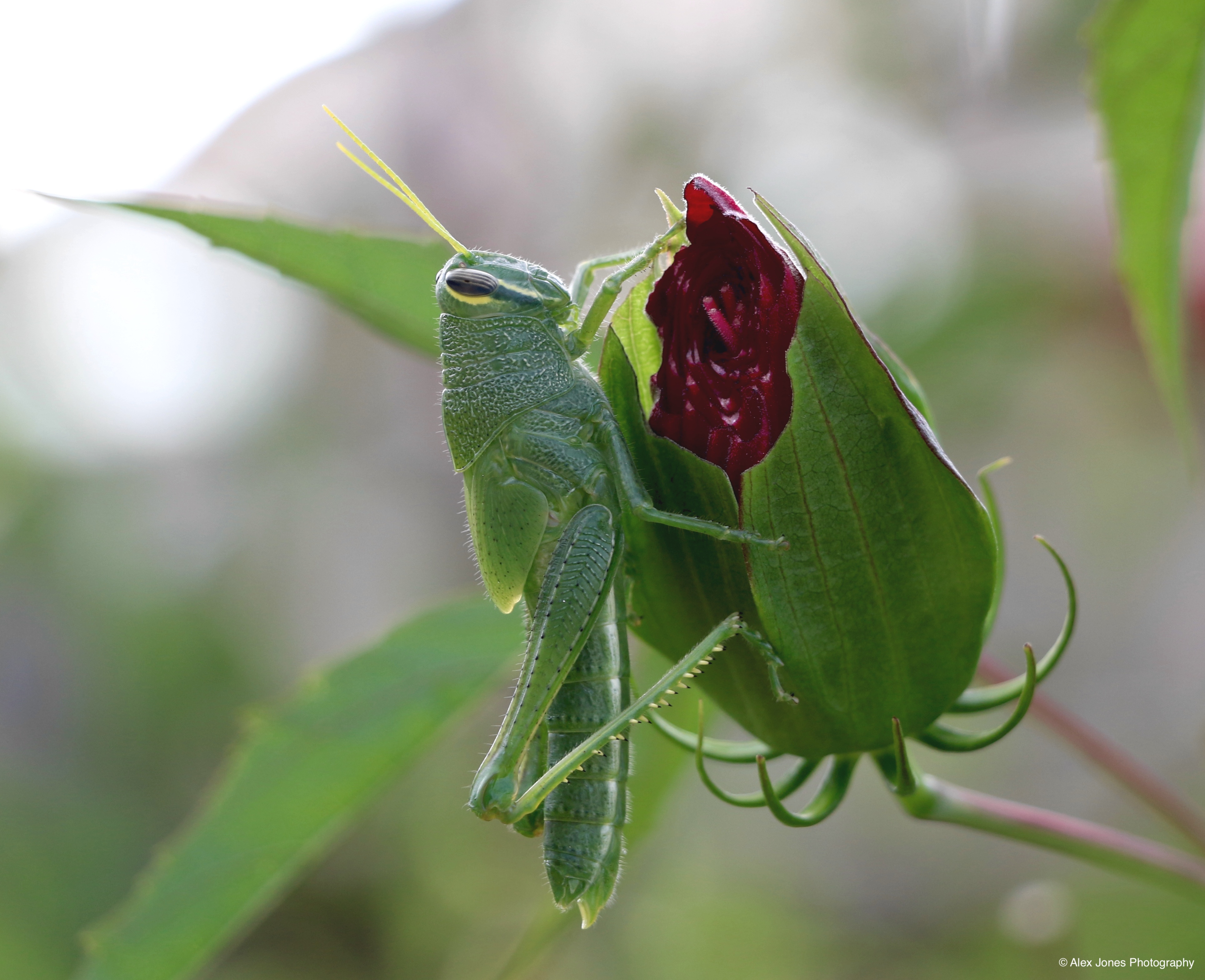
A green grasshopper is eating a red flower bud from a plant. The grasshopper has long back legs and is using its mouth to bite into the colorful flower. The plant has green leaves and stems around the flower bud.
🔬 Scientific Phenomena
The Anchoring Phenomenon shown here is herbivory - when animals eat plants for food. The grasshopper is demonstrating primary consumer behavior in a food web. This is happening because the grasshopper needs energy and nutrients to survive, and it has specialized mouthparts (mandibles) designed for chewing plant material. The hibiscus bud provides carbohydrates, proteins, and other essential nutrients that fuel the grasshopper's life processes including growth, movement, and reproduction.
📚 Core Science Concepts
- Food Webs and Energy Transfer - The grasshopper is a primary consumer that gets energy by eating plants (producers)
- Animal Adaptations - Grasshoppers have powerful mandibles for chewing and strong hind legs for jumping to escape predators
- Plant-Animal Interactions - This shows how animals depend on plants for food, while plants have developed defenses against being eaten
- Life Cycles and Growth - Both the grasshopper and plant need nutrients to grow and complete their life cycles
Pedagogical Tip: Use the "See-Think-Wonder" thinking routine with this image. Have students first observe what they see, then share what they think is happening, and finally ask questions about what they wonder. This builds observation skills and scientific questioning.
UDL Suggestions: Provide multiple ways for students to demonstrate their understanding: drawing food webs, acting out predator-prey relationships, or creating digital presentations. This supports different learning preferences and abilities while maintaining scientific rigor.
🔍 Zoom In / Zoom Out Concepts
Zoom In: At the cellular level, the grasshopper's digestive system breaks down plant cellulose using special enzymes. The plant cells contain chloroplasts that captured sunlight energy through photosynthesis, and now that stored energy is being transferred to the grasshopper's cells.
Zoom Out: This interaction is part of a larger ecosystem where energy flows from the sun to plants to herbivores to carnivores. The grasshopper may become food for birds, spiders, or other predators, continuing the energy transfer through the food web and maintaining ecosystem balance.
🤔 Potential Student Misconceptions
- "Grasshoppers are bad because they eat plants" - Actually, grasshoppers play an important role in ecosystems by transferring energy and serving as food for other animals.
- "Plants don't fight back" - Plants have many defenses like thorns, bitter tastes, or toxic chemicals to protect themselves from being eaten.
- "Only big animals are predators" - Small animals like grasshoppers can also be prey for many other creatures including birds, spiders, and frogs.
🎓 NGSS Connections
Performance Expectation: 3-LS4-3 - Construct an argument that some animals form groups that help members survive.
Disciplinary Core Ideas:
- - Being part of a group helps animals obtain food, defend themselves, and cope with changes
- - Sometimes the differences in characteristics between individuals of the same species provide advantages in surviving and reproducing
Crosscutting Concepts:
- - Students can identify the cause (need for food) and effect (grasshopper eating plant)
💬 Discussion Questions
- "What might happen to this grasshopper if there were no plants to eat?" (Bloom's: Analyze | DOK: 2)
- "How do you think the grasshopper's mouth parts help it eat different types of plants?" (Bloom's: Apply | DOK: 2)
- "What other animals might want to eat this grasshopper, and how might it protect itself?" (Bloom's: Evaluate | DOK: 3)
- "If you were designing a garden, how would you balance helping plants grow while providing food for insects?" (Bloom's: Create | DOK: 4)
📖 Science Vocabulary
- Herbivore: An animal that only eats plants for food.
- Primary consumer: The first animal in a food chain that eats plants.
- Adaptation: Special body parts or behaviors that help animals survive.
- Predator: An animal that hunts and eats other animals.
- Food web: All the connected food chains in one place showing who eats whom.
- Producer: A living thing, like a plant, that makes its own food.
🔗 Cross-Curricular Ideas
- Math - Counting and Measurement: Have students count how many grasshoppers they observe in the schoolyard over several days and create a bar graph to show the data. They can also measure the length of grasshoppers using rulers and compare sizes. This connects to measurement and data representation standards.
- ELA - Creative Writing and Storytelling: Students can write a short story from the grasshopper's perspective titled "A Day in My Life" or create a "day in the life" comic strip showing what the grasshopper eats, where it hides, and how it stays safe. This builds narrative writing skills while reinforcing science concepts.
- Art - Nature Sketching and Observation Drawing: Students can create detailed observational drawings of grasshoppers and flowers, focusing on colors, textures, and proportions. They can use colored pencils or watercolors to capture the green and red colors in the photo, developing fine motor skills and visual representation abilities.
- Social Studies - Community Gardens: Connect this to a local community garden unit by discussing how farmers and gardeners manage pest insects while growing food for their communities. Students can learn about sustainable farming practices and interview local gardeners about their experiences with grasshoppers.
🚀 STEM Career Connection
- Entomologist — Studies insects — how they live, what they eat, and the jobs they do in an ecosystem.
- Try it: Design a simple experiment to see if a grasshopper prefers one type of plant over another. (Practice: Constructing explanations and designing solutions)
- Tools: insect nets, a hand lens, pinning boards, microscopes
- Where they work: museums, farms, insect labs, universities
- Meet one: Corrie Moreau — How ants evolved together with the bacteria that live inside them.
- Median pay: /year — "Zoologists and wildlife biologists"
- Conservation Biologist — Works out which plants and animals are in trouble, and what would help them recover.
- Try it: Propose a way to protect grasshoppers from predators while they are eating. (Practice: Constructing explanations and designing solutions)
- Tools: population surveys, GPS trackers, habitat maps, trail cameras
- Where they work: nature reserves, conservation charities, government agencies, universities
- Meet one: Tierra Curry — Which plants and animals are closest to disappearing, and what it takes to save them.
- Median pay: /year — "Zoologists and wildlife biologists"
Wage figures are median annual wages for the U.S. occupation named after each one, from the U.S. Bureau of Labor Statistics, Occupational Employment and Wage Statistics (OEWS), national, May 2025. Several careers share one occupation, so their figures match.