📸 Photo Description
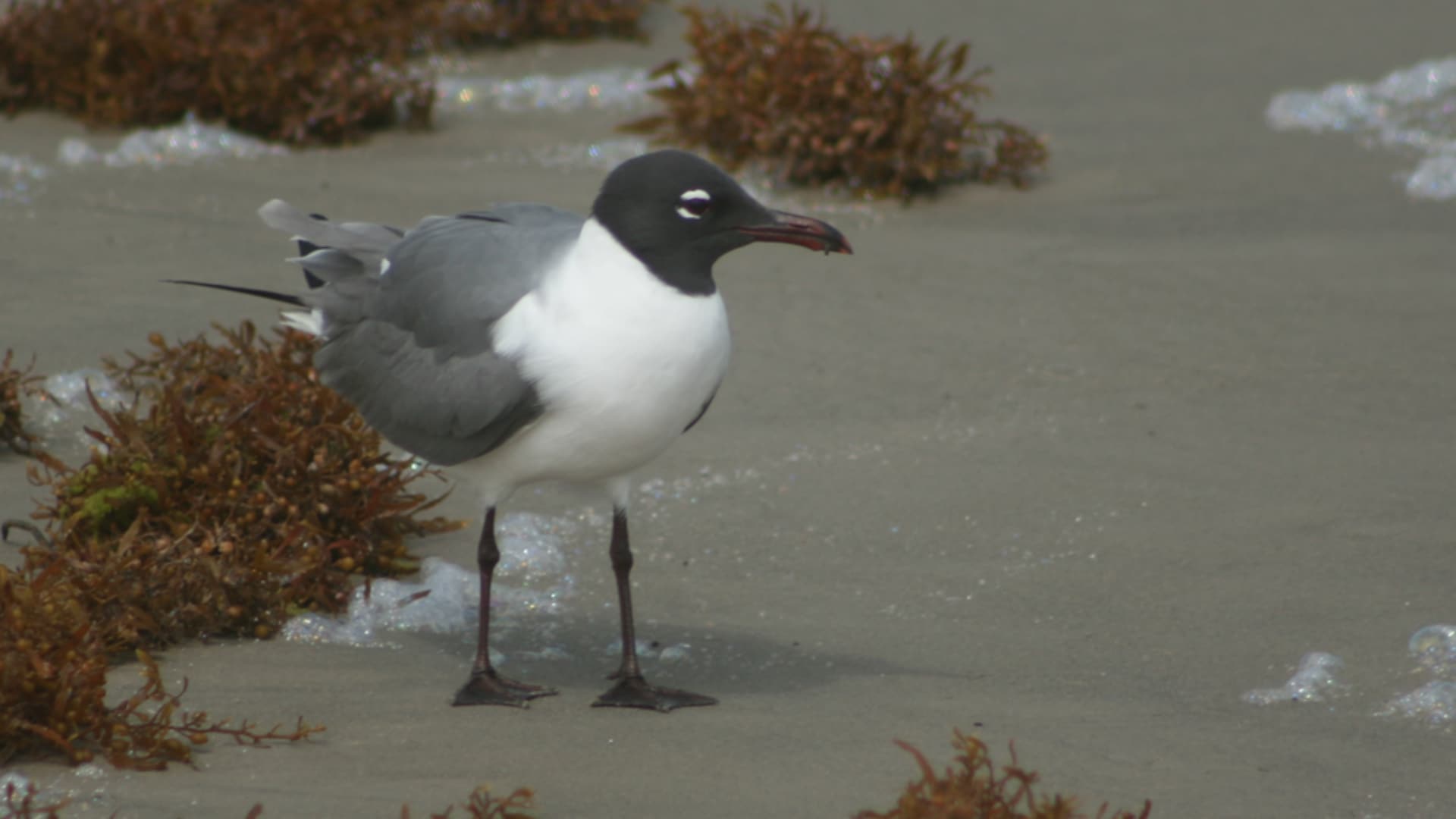
This photo shows a seagull standing on a sandy beach with seaweed and some foamy water. The seagull is a bird with black and white feathers and a dark head. It is near the ocean, which is its natural home.
🔬 Scientific Phenomena
This image depicts an organism in its natural habitat. The seagull is an animal adapted to live in a coastal environment. It is able to survive in this habitat because it has specific physical traits and behaviors that help it find food, avoid predators, and reproduce in the beach and ocean ecosystem.
📚 Core Science Concepts
- Organisms and Environments: This image shows a seagull, which is an organism, in its natural environment, the beach. Different environments support different kinds of life.
- Traits for Survival: Seagulls have traits like wings for flying, webbed feet for swimming, and a beak for catching food, which help them survive in their habitat.
- Behavior for Survival: Animals often exhibit behaviors, like searching for food along the shore, that help them survive.
Pedagogical Tip: Encourage students to observe the image closely and brainstorm what the seagull might be doing and why. Prompt them to think about what the seagull needs to survive.
UDL Suggestions: Provide a word bank with key vocabulary for students who may struggle with writing. Allow students to draw or verbally describe their ideas instead of writing.
🔍 Zoom In / Zoom Out Concepts
- Zoom In: Microscopic organisms like plankton and small fish live in the ocean and are a food source for seagulls. Their tiny bodies are essential parts of the marine food web.
- Zoom Out: The seagull is part of a larger coastal ecosystem, interacting with the ocean, the air, the sand, and other living things like crabs and smaller fish. Changes in any part of this ecosystem, like pollution or overfishing, can affect the seagull's ability to survive.
🤔 Potential Student Misconceptions
- Misconception: Seagulls are found everywhere and can live in any environment.
Clarification: While seagulls are adaptable, they are specifically adapted to coastal environments where they can find food (fish, invertebrates) and water. Their physical traits help them thrive in these specific habitats.
- Misconception: All seagulls look exactly the same.
Clarification: Seagulls, like many animals, have variations in their traits. For example, some might have slightly different markings or sizes, which can be influenced by genetics and environmental factors. ,
🎓 NGSS Connections
- 3-LS4-3: Construct an argument with evidence that in a particular habitat some organisms can survive well, some survive less well, and some cannot survive at all.
- 3-LS2-1: Construct an argument that some animals form groups that help members survive.
- 3-LS4-2: Use evidence to construct an explanation for how the variations in characteristics among individuals of the same species may provide advantages in surviving, finding mates, and reproducing.
💬 Discussion Questions
- What are some things the seagull needs to survive on the beach? (Bloom's: Remembering | DOK: 1)
- How might the seagull's feathers help it live near the ocean? (Bloom's: Analyzing | DOK: 2)
- If the amount of fish in the ocean decreased, how might that affect the seagull population? (Bloom's: Analyzing | DOK: 2)
- Why do you think seagulls live near the ocean and not in the middle of a desert? (Bloom's: Understanding | DOK: 2)
📖 Vocabulary
- Organism: A living thing, like a plant or animal.
- Habitat: The natural home or environment where an animal or plant lives.
- Traits: Special features or characteristics that an animal or plant has.
- Ecosystem: A community of living things interacting with their non-living environment.
🌡️ Extension Activities
- Habitat Diorama: Students create a shoebox diorama of a seagull's beach habitat, including sand, water, seaweed, and other relevant features.
- Seagull Adaptations Drawing: Students draw a seagull and label its different body parts (beak, feet, wings) explaining how each part helps it survive in its environment.
🔗 Cross-Curricular Ideas
- ELA: Read books about ocean animals and their habitats. Students can write a short story from the perspective of the seagull.
- Art: Students can paint or draw seagulls, focusing on their colors and shapes.
- Social Studies: Discuss coastal communities and how humans interact with marine environments.
🚀 STEM Career Connection
- Conservation Biologist — Works out which plants and animals are in trouble, and what would help them recover.
- Try it: Explain how the seagull's traits help it survive in its coastal habitat and suggest one thing that might make its habitat unhealthy. (Practice: Constructing Explanations and Designing Solutions)
- Tools: population surveys, GPS trackers, habitat maps, trail cameras
- Where they work: nature reserves, conservation charities, government agencies, universities
- Meet one: Tierra Curry — Which plants and animals are closest to disappearing, and what it takes to save them.
- Median pay: /year — "Zoologists and wildlife biologists"
- Wildlife Biologist — Studies wild animals — what they eat, where they go, and what they need to survive.
- Try it: Propose a solution to help ensure seagulls can continue to find food along the coast, based on their observed behaviors. (Practice: Constructing Explanations and Designing Solutions)
- Tools: binoculars, radio collars, trail cameras, a field notebook
- Where they work: national parks, wildlife refuges, state wildlife agencies, universities
- Meet one: Rae Wynn-Grant — Where black bears and people run into each other, and how to keep both safe.
- Median pay: /year — "Zoologists and wildlife biologists"
Wage figures are median annual wages for the U.S. occupation named after each one, from the U.S. Bureau of Labor Statistics, Occupational Employment and Wage Statistics (OEWS), national, May 2025. Several careers share one occupation, so their figures match.