📸 Photo Description
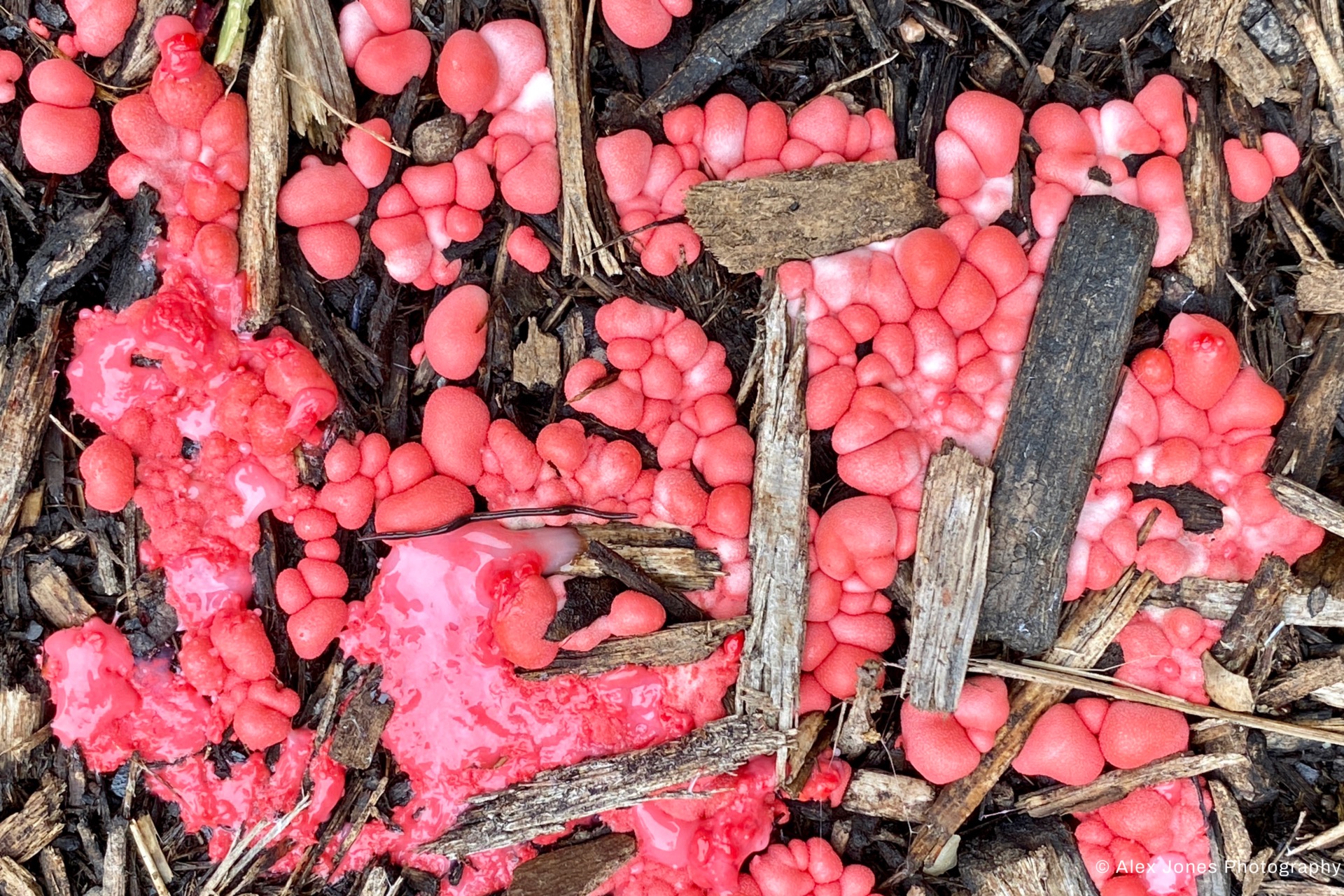
This image shows bright pink, round structures growing on dead wood and plant materials on the forest floor. These small, ball-like objects are clustered together in groups. They are a type of fungus that helps break down old plant parts in nature.
🔬 Scientific Phenomena
The anchoring phenomenon is decomposition by fungi. These pink fungal structures are fruiting bodies (reproductive parts) of decomposer fungi that are breaking down dead organic matter. The fungi secrete enzymes that break down complex materials like cellulose and lignin in the wood, converting them into simpler nutrients that can be recycled back into the ecosystem. This process is essential for nutrient cycling and preventing the accumulation of dead plant material in forests.
📚 Core Science Concepts
- Decomposition Process: Fungi break down dead plants and animals, turning them into nutrients that living plants can use again.
- Fungal Life Cycles: The pink structures are fruiting bodies that produce spores, which are like seeds that help fungi reproduce and spread.
- Ecosystem Roles: Fungi are decomposers that clean up the forest by recycling dead materials into food for new plants.
- Habitat Requirements: Fungi need moisture, organic matter, and the right temperature to grow and survive.
Pedagogical Tip: Use a "before and after" comparison by showing students fresh wood versus decomposed wood to help them visualize the decomposition process over time.
UDL Suggestions: Provide tactile experiences by letting students feel different stages of decomposing wood (safely collected) and use graphic organizers to show the decomposition cycle visually for different learning styles.
🔍 Zoom In / Zoom Out Concepts
Zoom In: At the microscopic level, fungal hyphae (thread-like structures) are releasing powerful enzymes that break chemical bonds in dead plant cells, converting complex molecules into simpler sugars and nutrients that the fungi absorb.
Zoom Out: This decomposition is part of the larger forest ecosystem's nutrient cycle, where decomposers like fungi work alongside bacteria to recycle all dead organic matter, supporting the entire food web and maintaining soil health across the forest.
🤔 Potential Student Misconceptions
- Misconception: "Fungi are plants because they don't move."
Clarification: Fungi are their own kingdom - they can't make their own food like plants and instead get energy by breaking down other materials.
- Misconception: "These pink things are bad because they're growing on dead wood."
Clarification: Decomposer fungi are helpful because they clean up the forest and make nutrients available for new plants to grow.
- Misconception: "Mushrooms and fungi are the same thing."
Clarification: Mushrooms are just the fruiting bodies (reproductive parts) of fungi - most of the fungus lives underground or inside what it's decomposing.
🎓 NGSS Connections
Performance Expectation: 3-LS4-3 - Construct an argument that some animals form groups that help members survive.
Disciplinary Core Ideas:
- - Being part of a group helps animals obtain food, defend themselves, and cope with changes
- - The food of almost any kind of animal can be traced back to plants
Crosscutting Concepts:
-
-
💬 Discussion Questions
- What do you think would happen to the forest floor if there were no fungi to break down dead wood? (Bloom's: Evaluate | DOK: 3)
- How are these pink fungi similar to and different from the plants growing nearby? (Bloom's: Analyze | DOK: 2)
- Where do you predict you might find similar fungi in your neighborhood, and why? (Bloom's: Apply | DOK: 2)
- What evidence from the photo shows that these fungi are doing their job as decomposers? (Bloom's: Analyze | DOK: 2)
📖 Science Vocabulary
- Decomposer: A living thing that breaks down dead plants and animals into smaller parts.
- Fungi: Living things that get energy by breaking down dead materials (not plants or animals).
- Spores: Tiny parts that fungi use to make new fungi, like seeds for plants.
- Nutrient: Food that living things need to grow and stay healthy.
- Fruiting body: The part of a fungus that makes spores, like the pink structures in the photo.
- Ecosystem: All the living and non-living things in an area that work together.
🔗 Cross-Curricular Ideas
- Math - Counting and Graphing: Have students count the pink fruiting bodies in different sections of the photo and create a bar graph showing which areas have the most fungi. This reinforces counting, data collection, and visual representation skills while analyzing the photo scientifically.
- ELA - Descriptive Writing: Ask students to write a short story or poem from the perspective of a decomposer fungus breaking down wood on the forest floor. Students can use sensory words (pink, soft, moist, dark) to describe the fungus's journey and role in the ecosystem.
- Social Studies - Community Helpers: Connect decomposers to community helpers by discussing how fungi are "nature's cleanup crew." Students can compare this to sanitation workers and other community members who help keep neighborhoods clean, understanding that all living things have important jobs.
- Art - Nature Textures and Colors: Have students create mixed-media artwork inspired by the photo using natural materials (leaves, twigs, bark) and paint or colored paper to represent the decomposition process. This helps them appreciate the beauty and patterns found in nature's cycles.
🚀 STEM Career Connection
- Biologist — Studies living things of every kind and what keeps them alive.
- Try it: Build a model of a slime mold's life cycle, showing how it grows, feeds, and makes spores. (Practice: Developing and Using Models)
- Tools: microscopes, sample jars, measuring tools, a field notebook
- Where they work: laboratories, field sites, museums, universities
- Meet one: Sandra Díaz — What a plant's leaves, wood and shape tell you about how it lives — and how those traits add up across a whole ecosystem.
- Median pay: /year — "Biological scientists, all other"
- Mycologist — Studies fungi — mushrooms, moulds and yeasts, and the hidden threads that connect them underground.
- Try it: Construct a 3D model of a slime mold fruiting body using craft materials, labeling its parts. (Practice: Developing and Using Models)
- Tools: spore prints, petri dishes, microscopes, collecting baskets
- Where they work: forests, laboratories, botanical gardens, universities
- Meet one: Giuliana Furci — Fungi nobody had catalogued before, and getting them protected the way animals and plants are.
- Median pay: /year — "Microbiologists"
Wage figures are median annual wages for the U.S. occupation named after each one, from the U.S. Bureau of Labor Statistics, Occupational Employment and Wage Statistics (OEWS), national, May 2025. Several careers share one occupation, so their figures match.