📸 Photo Description
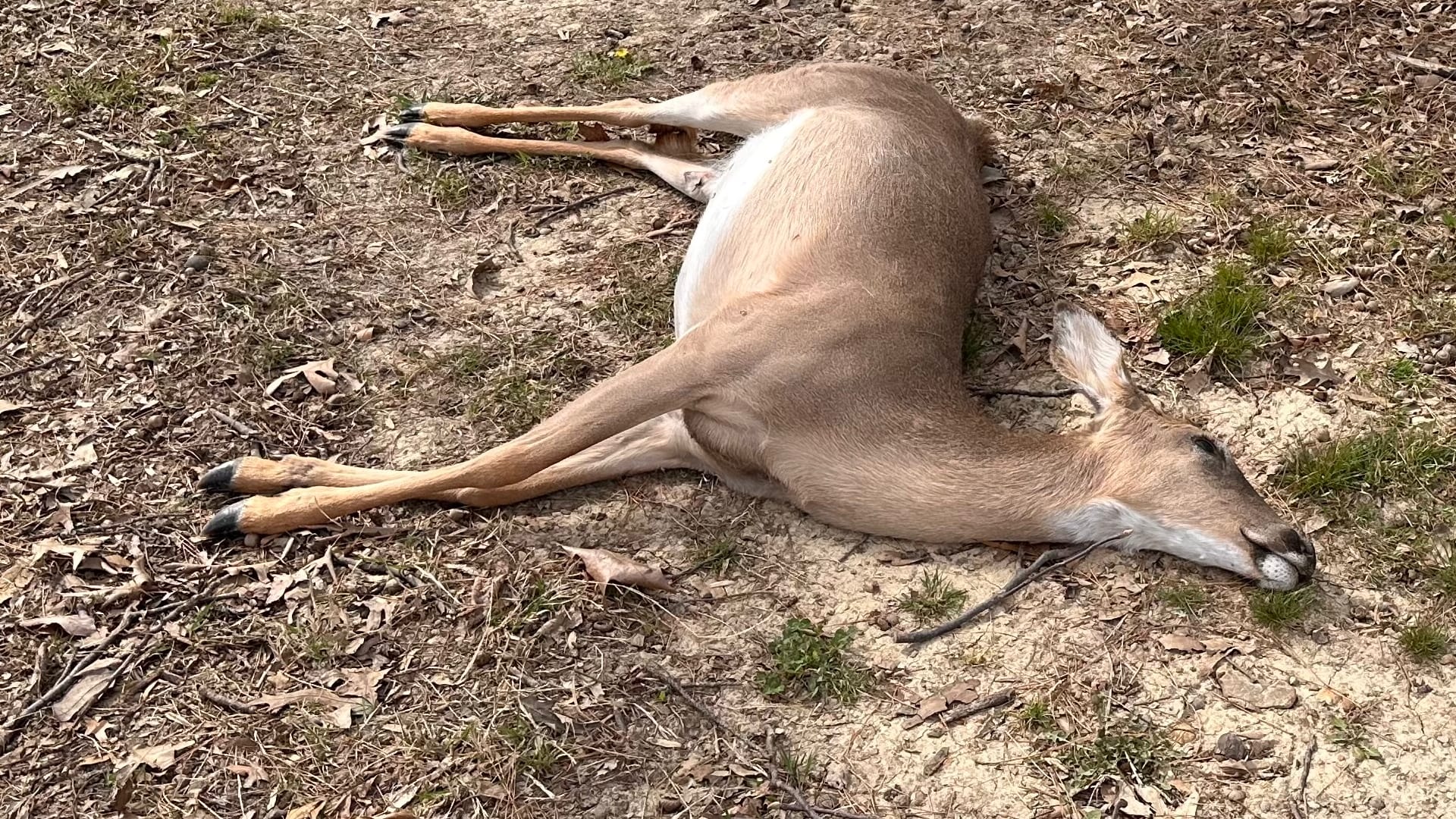
This image shows a deer that is no longer alive, lying on the ground in a natural outdoor setting. We can see the deer's body, its four long legs, and its head. The ground around the deer has soil, leaves, small plants, and twigs—all natural things that help animals survive in nature.
🔬 Scientific Phenomena
Anchoring Phenomenon: This image represents death and decomposition in nature—a critical part of the life cycle that all living things experience.
Why This Happens Scientifically: All living organisms go through stages: birth, growth, and eventually death. When an animal dies, its body returns to the soil and becomes food for other living things like insects, bacteria, and plants. This is nature's way of recycling materials so new plants and animals can grow. This process is called decomposition, and it is a normal and necessary part of ecosystems. Nothing in nature is wasted—everything becomes part of the cycle again.
📚 Core Science Concepts
- Life Cycles: All animals (including deer and humans) are born, grow, change, and eventually die. This is the natural cycle of life.
- Habitats and Survival: Deer need food, water, and shelter to survive while they are alive. When they die, their bodies become part of the habitat, providing nutrients for soil and other organisms.
- Decomposition and Nutrient Cycling: Dead organisms break down and return nutrients to the soil, helping plants grow. Tiny organisms (like bacteria and fungi) and insects help break down dead material.
- Interdependence in Nature: All living things are connected. Decomposers (bacteria, fungi, insects) depend on dead organisms for food, just as living animals depend on plants and other animals.
Pedagogical Tip:
When teaching Kindergarteners about death and decomposition, use honest, matter-of-fact language without fear. Avoid euphemisms like "the deer is sleeping"—instead, say "the deer has died." This normalizes death as a natural part of life. Frame it positively: "The deer's body helps feed the soil and helps new plants grow." This builds scientific literacy and emotional resilience in young learners.
UDL Suggestions:
To support diverse learners, provide multiple means of representation: use real photographs, drawing activities, and sensory exploration (safely examining decomposing leaves outdoors). Offer choice in how students demonstrate learning—through drawing, dramatic play, verbal discussion, or building a model ecosystem. Use concrete, observable examples from the classroom garden or outdoor area when possible, and scaffold abstract concepts with hands-on materials.
🔍 Zoom In / Zoom Out Concepts
Zoom In: Microscopic Level
Beneath the soil around this deer, billions of microorganisms (bacteria, fungi, and tiny creatures called decomposers) are breaking down the deer's body into smaller and smaller pieces. These invisible living things are like nature's cleanup crew. They eat the dead material and transform it into nutrients that roots can absorb. Without these microscopic decomposers, dead plants and animals would pile up forever!
Zoom Out: Ecosystem Level
This single deer is part of a larger ecosystem or forest community. When it was alive, it ate plants and was prey for predators. Now that it has died, it feeds decomposers and helps fertilize the forest soil. The nutrients from its body will eventually grow new plants, which will feed new deer and other animals. The deer's death is part of a large, interconnected cycle that keeps the whole forest healthy and balanced.
🤔 Potential Student Misconceptions
- Misconception: "Dead things are scary and bad."
- Clarification: Death is a normal, natural part of life. When animals die, they help the earth by feeding plants and soil. Every living thing dies eventually, and that's okay. It's part of how nature works.
- Misconception: "The deer is just sleeping."
- Clarification: The deer is not sleeping. The deer has died, which means its body no longer works and it cannot wake up. When something dies, it stops breathing, moving, and feeling. But the deer's body still helps nature by returning to the soil.
- Misconception: "Nothing can use a dead animal."
- Clarification: Many tiny creatures, insects, and decomposers use dead animals for food. Bacteria, fungi, worms, and bugs break down the body and turn it into soil nutrients. This helps new plants and animals grow.
🎓 NGSS Connections
K-LS1-1: Use observations to describe patterns of what plants and animals (including humans) need to survive.
Disciplinary Core Ideas:
- All organisms have basic needs (air, water, food, shelter). They obtain food from plants or other animals, and they need water and appropriate temperatures to grow and survive.
Crosscutting Concepts:
- Patterns of what plants and animals need to survive can be observed in nature.
- Living things have basic needs; when these needs are not met (as in death), organisms no longer survive, but their matter returns to the environment.
💬 Discussion Questions
- What do you think happened to this deer? (Bloom's: Remember | DOK: 1)
- What do you think will happen to the deer's body over time, and why? (Bloom's: Predict | DOK: 2)
- How do you think the deer's body helps other living things in the forest? (Bloom's: Analyze | DOK: 3)
- All living things eventually die. What do you think happens to the materials in a dead animal's body? (Bloom's: Evaluate | DOK: 3)
📖 Vocabulary
- Life Cycle: All the stages a living thing goes through: being born, growing, changing, and dying.
- Decompose/Decomposer: When dead things break down into smaller pieces; tiny creatures (like bacteria and fungi) that break down dead material and help return it to soil.
- Habitat: The place where an animal or plant lives and finds food, water, and shelter.
- Nutrients: Special materials in soil and food that help plants and animals grow strong and healthy.
- Ecosystem: All the living things (plants, animals, insects) and non-living things (soil, water, rocks) in one area that work together.
🌡️ Extension Activities
- "Dead Leaf Detective" (Outdoor Exploration)
Safely collect leaves at various stages of decomposition from outdoors. Use hand lenses to observe them closely. Have students draw or photograph the differences between a fresh leaf, a partly decomposed leaf, and a nearly-decomposed leaf. Discuss how tiny creatures are breaking down the leaves over time. Safety note: Wash hands after outdoor exploration.
- "Build a Decomposer Habitat" (Hands-On Model)
Create a clear container "ecosystem" with layers of soil, small plants, and decomposing materials (dead leaves, twigs). Add safe, visible decomposers like pill bugs or earthworms (if age-appropriate and district-approved). Observe over weeks as decomposition happens. Draw pictures of changes. Ensure proper ethics and return all creatures to nature afterward.
- "Life Cycle Story Circle" (Dramatic Play & Storytelling)
Use stuffed animals or props to act out the life cycle of a forest animal (birth, living, death, decomposition). Create a circular "life cycle" on the classroom floor with pictures or drawings. Students move around the circle as they tell the story. Emphasize that all living things go through these stages, and each stage is important and natural.
🔗 Cross-Curricular Ideas
- Math: Create a Venn diagram comparing "Living Animals" vs. "Dead Animals." Count or sort pictures of things that decompose (leaves, fruits, wood) vs. things that don't (plastic, metal, rocks). This builds classification skills and connects to environmental awareness.
- ELA & Storytelling: Read age-appropriate books about animal life cycles and death (see resource list). Ask students to draw and dictate stories about "The Life of a Forest Animal" from birth to death. Create a class book or bulletin board displaying their narratives.
- Social Studies & Community: Invite a local naturalist, park ranger, or wildlife educator to visit and discuss how death and decomposition help forests stay healthy. Connect to the idea of people caring for nature and being part of natural cycles.
- Art & Nature Crafts: Create collages using natural materials (leaves, twigs, bark, seeds) that are decomposing or have decomposed. Display them and discuss how these materials were once part of living plants. Paint or draw the invisible decomposers (bacteria, fungi) using imagination and bright colors to make them visible.
🚀 STEM Career Connection
- Conservation Biologist — Works out which plants and animals are in trouble, and what would help them recover.
- Try it: Research a local animal and explain what would happen to the ecosystem if it disappeared. (Practice: Constructing Explanations and Designing Solutions)
- Tools: population surveys, GPS trackers, habitat maps, trail cameras
- Where they work: nature reserves, conservation charities, government agencies, universities
- Meet one: Tierra Curry — Which plants and animals are closest to disappearing, and what it takes to save them.
- Median pay: /year — "Zoologists and wildlife biologists"
- Wildlife Biologist — Studies wild animals — what they eat, where they go, and what they need to survive.
- Try it: Draw a picture of a deer's habitat and label the plants and other animals that share its environment. (Practice: Constructing Explanations and Designing Solutions)
- Tools: binoculars, radio collars, trail cameras, a field notebook
- Where they work: national parks, wildlife refuges, state wildlife agencies, universities
- Meet one: Rae Wynn-Grant — Where black bears and people run into each other, and how to keep both safe.
- Median pay: /year — "Zoologists and wildlife biologists"
Wage figures are median annual wages for the U.S. occupation named after each one, from the U.S. Bureau of Labor Statistics, Occupational Employment and Wage Statistics (OEWS), national, May 2025. Several careers share one occupation, so their figures match.
---
Teacher Note: This is a sensitive topic. Assess your classroom community and family context before implementing this lesson. Many families have cultural, religious, or personal beliefs about death. Send a brief note home explaining the life science learning objective, invite questions, and offer alternative activities if needed. Frame the lesson as part of understanding "how nature works" rather than focusing on the specific animal shown in the image.