📸 Photo Description
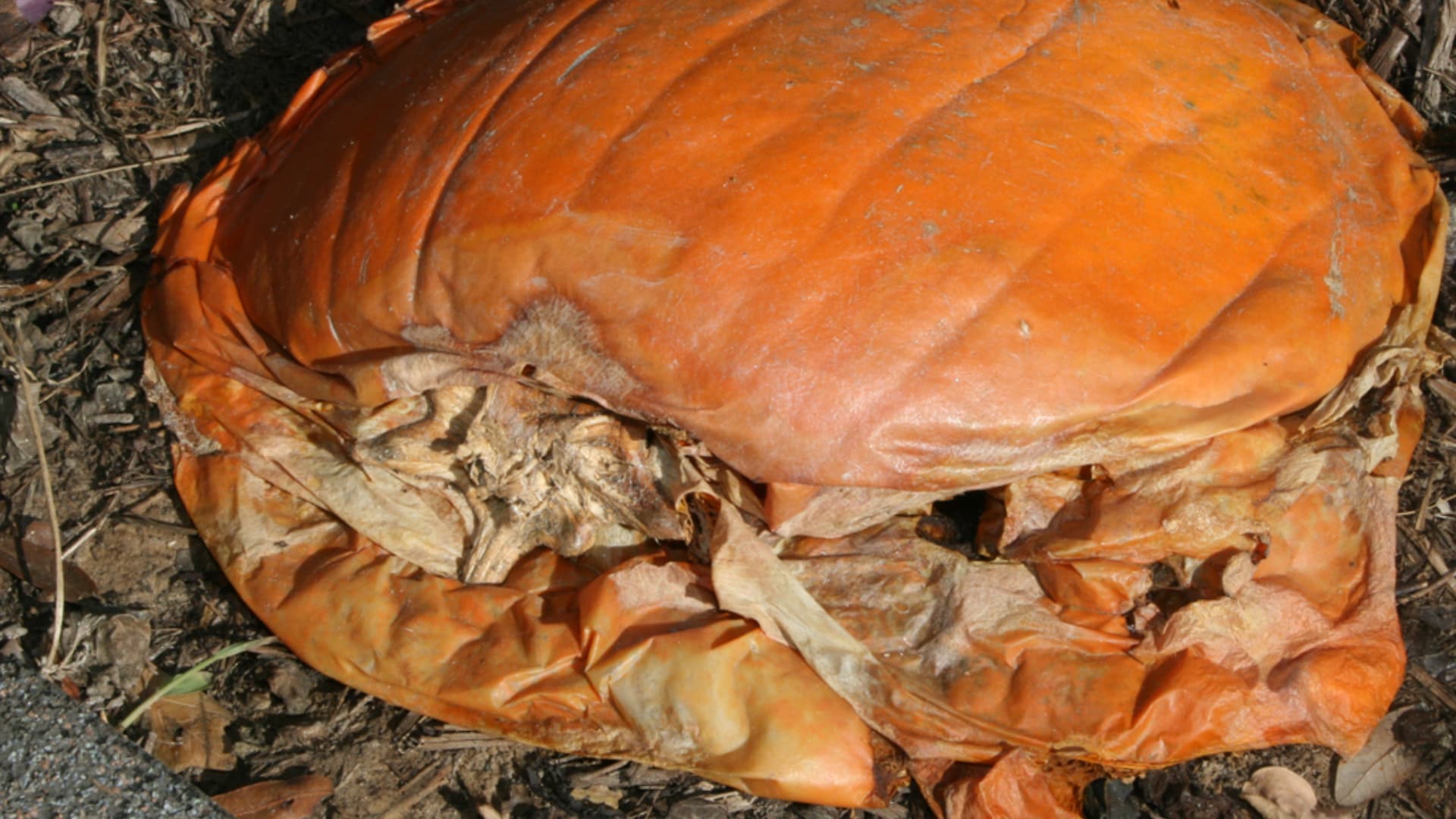
The image shows a decomposing pumpkin on the ground. The pumpkin has lost its shape and is shriveled, with dry, brown outer layers. It is surrounded by leaves and dirt, indicating it has been left outdoors.
🔬 Scientific Phenomena
This image depicts the natural process of decomposition, which is a crucial part of the life cycle of organisms. The pumpkin, once a living plant part, is now breaking down, returning nutrients to the soil. This process is driven by decomposers like bacteria and fungi, which consume the organic matter.
📚 Core Science Concepts
- Life Cycles: Organisms, including plants like pumpkins, have a life cycle that includes birth, growth, reproduction, and eventually death and decomposition. This pumpkin is in the death and decomposition stage.
- Decomposition: This is the process by which organic substances are broken down into simpler organic or inorganic matter. It is essential for recycling nutrients in an ecosystem.
- Role of Decomposers: Organisms like fungi and bacteria are decomposers. They break down dead plants and animals.
Pedagogical Tip: Encourage students to observe changes in the pumpkin over time, prompting them to record their observations through drawings, writing, or even short videos to capture the dynamic nature of decomposition.
UDL Suggestions: Provide various ways for students to express their understanding of decomposition. This could include drawing, writing a story from the pumpkin's perspective, creating a model of the process, or acting out the stages of decomposition.
🔍 Zoom In / Zoom Out Concepts
- Zoom In: Microscopic organisms, such as bacteria and fungi (like mold), are actively breaking down the pumpkin's cells and tissues. They release enzymes that digest the complex organic molecules, absorbing the nutrients for their own survival.
- Zoom Out: The decomposing pumpkin returns essential nutrients (like carbon, nitrogen, and phosphorus) to the soil. These nutrients are then available for new plants to absorb and use for growth, demonstrating the cyclical nature of matter in an ecosystem.
🤔 Potential Student Misconceptions
- Misconception: Students might think the pumpkin is just "rotting" and that it's a bad thing.
- Clarification: Decomposition is a natural and necessary process. It's how dead things break down and become food for new life, recycling nutrients back into the environment.
- Misconception: Students might think that only large animals eat dead things.
- Clarification: While some animals scavenge, most decomposition is done by tiny living things called decomposers, like bacteria and fungi, which are too small to see without a microscope.
🎓 NGSS Connections
- 3-LS1-1: Develop models to describe that organisms have unique and diverse life cycles but all have in common birth, growth, reproduction, and death.
- 3-LS4-3: Construct an argument with evidence that in a particular habitat some organisms can survive well, some survive less well, and some cannot survive at all.
💬 Discussion Questions
- What is happening to the pumpkin in the picture? (Bloom's: Remember | DOK: 1)
- How is the pumpkin's life cycle different now compared to when it was growing on the vine? (Bloom's: Understand | DOK: 2)
- Why is decomposition important for the environment? (Bloom's: Analyze | DOK: 3)
📖 Vocabulary
- Decomposition: The process of breaking down dead plants or animals into smaller parts.
- Life Cycle: The series of changes that an organism goes through from birth to death.
- Decomposers: Living things, like fungi and bacteria, that break down dead organic matter.
- Nutrients: Substances that living things need to grow and stay healthy.
🌡️ Extension Activities
- Pumpkin Decomposition Observation: Place a pumpkin (or a piece of it) in a container outdoors and observe it over several weeks, documenting changes with drawings and notes.
- Decomposer Detectives: Create magnifying stations with different soil samples, leaf litter, and compost. Have students observe and sketch any tiny organisms they find.
- Life Cycle Models: Have students create models (drawings, dioramas, 3D models) representing the complete life cycle of a pumpkin, from seed to decomposition.
🔗 Cross-Curricular Ideas
- ELA: Read books about life cycles and decomposition. Write a narrative from the perspective of the pumpkin as it decomposes.
- Art: Draw or paint the pumpkin at different stages of decomposition. Create sculptures using natural materials found around the decomposing pumpkin.
- Social Studies: Discuss how different cultures have used pumpkins historically and how they are part of seasonal traditions.
🚀 STEM Career Connection
- Ecologist — Studies how living things depend on each other and on the place they live.
- Try it: Create a model showing how the pumpkin breaks down and returns nutrients to the soil. (Practice: Developing and Using Models)
- Tools: quadrat frames, measuring tapes, GPS units, a field notebook
- Where they work: forests, grasslands, wetlands, universities
- Meet one: Sandra Díaz — What a plant's leaves, wood and shape tell you about how it lives — and how those traits add up across a whole ecosystem.
- Median pay: /year — "Environmental scientists and specialists, including health"
- Food Scientist — Studies what food is made of, why it spoils, and how to keep it safe and nourishing.
- Try it: Build a simple model to show how decomposers break down the pumpkin. (Practice: Developing and Using Models)
- Tools: pH meters, test kitchens, incubators, texture analysers
- Where they work: food companies, testing laboratories, government safety agencies, universities
- Meet one: Mario Ferruzzi — How the body takes in nutrients from food, and how to make everyday foods more nourishing.
- Median pay: /year — "Food scientists and technologists"
Wage figures are median annual wages for the U.S. occupation named after each one, from the U.S. Bureau of Labor Statistics, Occupational Employment and Wage Statistics (OEWS), national, May 2025. Several careers share one occupation, so their figures match.