📸 Photo Description
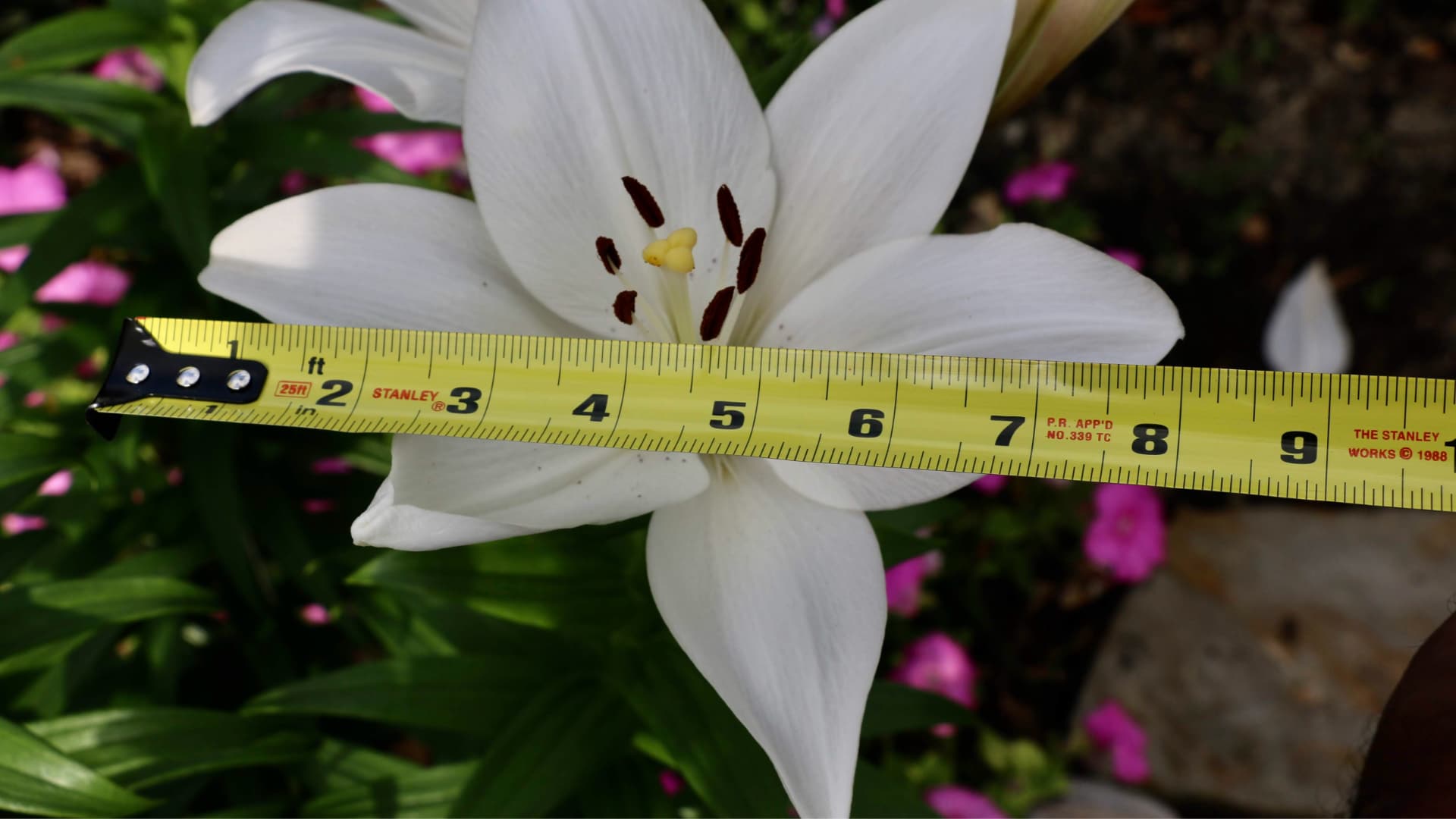
The photo shows a large white lily flower being measured with a yellow tape measure. The tape measure shows inches and feet, indicating a measurement is being taken of the flower's size. Other plants and green leaves are visible in the background.
🔬 Scientific Phenomena
This image represents the observable traits of living organisms, specifically the size and structure of a plant. The lily flower displays characteristics like petal shape, color, and size. These traits are inherited from its parent plants and can vary among individual lilies.
📚 Core Science Concepts
- Inherited Traits: Organisms, like this lily, inherit traits from their parents. For plants, these traits include the size, shape, and color of their flowers, leaves, and stems.
- Variation: Even within the same species of plant, there can be variations in traits. For example, one lily might have slightly larger petals than another, or a different shade of white.
- Measurement: Tools like a tape measure can be used to observe and quantify the size of different parts of a plant, providing data for comparison.
Pedagogical Tip: When discussing inherited traits, it can be helpful to use familiar examples of how children resemble their parents. This helps make the abstract concept of heredity more concrete for third graders.
UDL Suggestions: Provide multiple ways for students to express their understanding of plant traits. This could include drawing, building models, or writing descriptions, in addition to verbal explanations.
🔍 Zoom In / Zoom Out Concepts
- Zoom In: At a microscopic level, the traits of the lily are determined by its genes, which are segments of DNA within its cells. These genes contain the instructions for building proteins that influence everything from petal color to flower size.
- Zoom Out: The lily flower is part of a larger ecosystem. Its size and beauty might attract pollinators like bees or butterflies, which play a vital role in the plant's reproduction and the health of the overall environment.
🤔 Potential Student Misconceptions
- Misconception: Students might believe that all flowers of the same type are exactly identical.
Clarification: While they share many similarities, individual plants, like this lily, have slight differences or variations in their traits, just like people are not identical.
- Misconception: Students might think that a plant's size is solely due to how much it is watered.
Clarification: While water is essential for growth, a plant's size and other features are also determined by its inherited traits (genetics) and the quality of the soil and sunlight it receives.
🎓 NGSS Connections
- 3-LS1-1: Develop models to describe that organisms have unique and diverse life cycles but all have in common birth, growth, reproduction, and death.
- 3-LS3-1: Analyze and interpret data to provide evidence that plants and animals have traits inherited from parents and that variation of these traits exists in a group of similar organisms.
- 3-LS3-2: Use evidence to support the explanation that traits can be influenced by the environment.
💬 Discussion Questions
- What observable traits does the lily flower have? (Bloom's: Remembering | DOK: 1)
- How could you use the tape measure to compare this lily to another flower? (Bloom's: Applying | DOK: 2)
- Why do you think individual flowers of the same type might have slightly different sizes or appearances? (Bloom's: Analyzing | DOK: 2)
📖 Vocabulary
- Trait: A specific characteristic of an organism, like the color or size of a flower petal.
- Variation: Differences in traits among individuals of the same species.
- Heredity: The passing of traits from parents to offspring.
- Measurement: The process of finding a number that shows the size or amount of something.
🌡️ Extension Activities
- Flower Measurement Station: Provide students with various flowers and tape measures to measure different parts (petals, stem height, diameter). They can record their data and compare.
- Trait Observation Journal: Have students observe different plants around the schoolyard or at home and draw or write about their observable traits, noting any variations they see.
🔗 Cross-Curricular Ideas
- Math: Measure the circumference, diameter, and petal length of different flowers and graph the data.
- ELA: Write descriptive paragraphs about the lily flower, using sensory details and vocabulary related to its traits.
- Art: Draw or paint the lily flower, focusing on its colors, shapes, and textures.
🚀 STEM Career Connection
- Botanist — Studies plants — how they grow, how they reproduce, and how they survive where they live.
- Try it: Compare the measurements of two different lily flowers and describe how they are similar or different. (Practice: Analyzing and Interpreting Data)
- Tools: a hand lens, a plant press, a soil probe, field guides
- Where they work: botanical gardens, herbariums, forests and fields, universities
- Meet one: Robin Wall Kimmerer — Mosses — which she calls the coral reefs of the forest — and what Indigenous knowledge teaches about bringing plants back.
- Median pay: /year — "Soil and plant scientists"
- Gardener — Plants and tends growing things, and learns by watching what thrives where.
- Try it: Record observations about how the lily changes over a week, noting any new growth or wilting. (Practice: Analyzing and Interpreting Data)
- Tools: trowels, watering systems, compost, pruning shears
- Where they work: public gardens, school grounds, parks, private gardens
- Meet one: Carlos Magdalena — How to bring the world's rarest plants back from the edge, including the smallest water lily on Earth after it vanished from the wild.
- Median pay: /year — "Landscaping and groundskeeping workers"
Wage figures are median annual wages for the U.S. occupation named after each one, from the U.S. Bureau of Labor Statistics, Occupational Employment and Wage Statistics (OEWS), national, May 2025. Several careers share one occupation, so their figures match.