📸 Photo Description
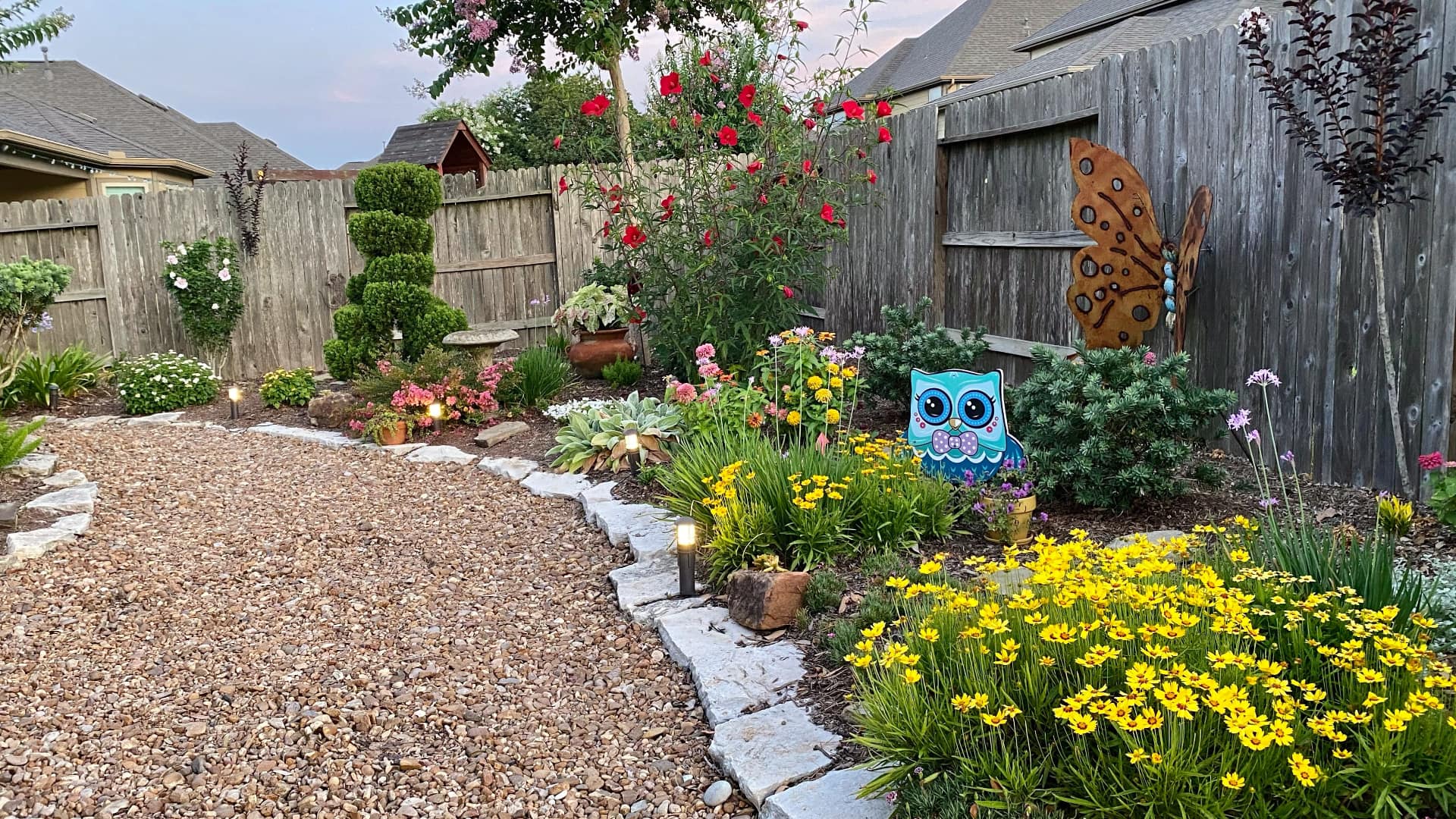
This image shows a garden with many different types of plants and flowers. There are colorful blooms, green bushes, and a gravel pathway. Decorative elements like a butterfly and an owl are also present, along with small lights that illuminate the garden.
🔬 Scientific Phenomena
This image represents the concept of a habitat, specifically a backyard habitat designed to support various living organisms. This phenomenon occurs because the garden provides essential elements for life, such as food (nectar from flowers), water (through rain or watering), shelter (from bushes and the wooden fence), and places to raise young (like nesting spots in plants or under structures). These elements collectively create an environment where different plants and animals can survive and thrive.
📚 Core Science Concepts
- Biodiversity: The garden showcases a variety of plant species, which contributes to biodiversity. Different plants offer various food sources and habitats for different animals.
Pedagogical Tip: Encourage students to observe and sketch different plant species in the garden, noting any observable differences in their structures (leaves, flowers, stems).
- Interdependence: The plants in the garden provide resources for potential animal inhabitants (insects, birds, small mammals). For example, flowers provide nectar for pollinators, and bushes offer shelter.
- Habitat Components: The garden illustrates key components of a habitat: food (flowers, plants), water (implied by the presence of plants, potentially from rain or irrigation), shelter (bushes, fence), and space for living and reproduction.
UDL Suggestions: Provide visual aids with clear labels for each habitat component (food, water, shelter, space) and allow students to point to or match these labels to elements in the garden image or a real garden.
- Adaptation: While not explicitly visible, the types of plants chosen for the garden are likely suited to the local climate and soil conditions, representing adaptations to their environment.
🔍 Zoom In / Zoom Out Concepts
- Zoom In: At a microscopic level, the vibrant colors of the flowers are due to pigments within their cells, which play a role in attracting pollinators. The intricate structures of leaves and petals are designed for photosynthesis and reproduction.
- Zoom Out: This backyard garden is a small part of a larger ecosystem. It connects to surrounding neighborhoods, local parks, and eventually larger natural areas, influencing the movement of organisms and resources within the broader landscape.
🤔 Potential Student Misconceptions
- Misconception: Students might think that only large, wild areas are habitats.
Clarification: Habitats can be found in many places, including backyards, parks, and even small patches of green space. These smaller habitats are important for supporting local wildlife.
- Misconception: Students may believe that decorative elements like the butterfly or owl are living creatures.
Clarification: The decorative items are not living organisms; they are human-made objects. Real butterflies and owls are living animals that need specific resources to survive, which a garden can provide.
🎓 NGSS Connections
- 3-LS2-1: Construct an argument that some animals form groups that help members survive.
*
*
- 3-LS4-3: Construct an argument with evidence that in a particular habitat some organisms can survive well, some survive less well, and some cannot survive at all.
*
*
- 3-LS4-4: Make a claim about the merit of a design solution to a problem caused when the environment changes and the types of plants and animals that live there may change.
*
*
💬 Discussion Questions
- What do you think animals might find in this garden that would help them survive? (Bloom's: Understand | DOK: 1)
- How are the different plants in this garden similar, and how are they different? (Bloom's: Analyze | DOK: 2)
- If you were a bird looking for a place to build a nest, would this garden be a good place? Why or why not? (Bloom's: Evaluate | DOK: 3)
- Why do you think someone would put decorations like the butterfly and owl in their garden? (Bloom's: Understand | DOK: 2)
📖 Vocabulary
- Habitat: A place where an animal or plant naturally lives and grows.
- Biodiversity: The variety of different plants and animals in a particular place.
- Pollinator: An animal, like a bee or butterfly, that carries pollen from one flower to another, helping the flowers make seeds.
- Interdependence: When living things rely on each other for survival.
- Adaptation: A special body part or behavior that helps a living thing survive in its environment.
🌡️ Extension Activities
- Habitat Diorama: Students can create shoebox dioramas representing different types of habitats, including a backyard habitat, using craft materials. They should include essential components like food sources, water, and shelter.
- Plant Observation Journal: If possible, take students to a garden or a park. Have them observe and sketch different plants, noting details about their leaves, flowers, and stems. They can record observations in a journal over a week to see how plants change.
- "Build-a-Habitat" Challenge: Provide students with various natural and craft materials (e.g., twigs, leaves, small rocks, construction paper, pipe cleaners) and challenge them to design and build a model habitat for a specific animal, ensuring all its needs are met.
🔗 Cross-Curricular Ideas
- ELA: Read books about different habitats and animals. Students can write descriptive paragraphs about the garden, using sensory details (colors, smells, textures).
- Art: Students can draw or paint their own backyard garden scenes, focusing on the variety of plants and colors. They can also create their own garden decorations from clay or recycled materials.
- Math: Measure the lengths of different plants or the area of different sections of the garden (if in a real setting). Students can also count the number of different types of flowers or plants visible.
- Social Studies: Discuss how humans create and modify habitats, like building gardens or parks, and how these actions impact local wildlife.
🚀 STEM Career Connection
- Animal Behaviourist — Watches what animals do and works out why they do it.
- Try it: Watch a squirrel or bird in your backyard for 15 minutes and record its actions, looking for patterns in its behavior. (Practice: Analyzing and Interpreting Data)
- Tools: observation blinds, video recorders, stopwatches, behaviour checklists
- Where they work: zoos, field research stations, farms, universities
- Meet one: Rae Wynn-Grant — Where black bears and people run into each other, and how to keep both safe.
- Median pay: /year — "Zoologists and wildlife biologists"
- Wildlife Biologist — Studies wild animals — what they eat, where they go, and what they need to survive.
- Try it: Create a chart of the plants and animals you see in your backyard, noting which plants provide food or shelter for which animals. (Practice: Analyzing and Interpreting Data)
- Tools: binoculars, radio collars, trail cameras, a field notebook
- Where they work: national parks, wildlife refuges, state wildlife agencies, universities
- Meet one: Rae Wynn-Grant — Where black bears and people run into each other, and how to keep both safe.
- Median pay: /year — "Zoologists and wildlife biologists"
Wage figures are median annual wages for the U.S. occupation named after each one, from the U.S. Bureau of Labor Statistics, Occupational Employment and Wage Statistics (OEWS), national, May 2025. Several careers share one occupation, so their figures match.