📸 Photo Description
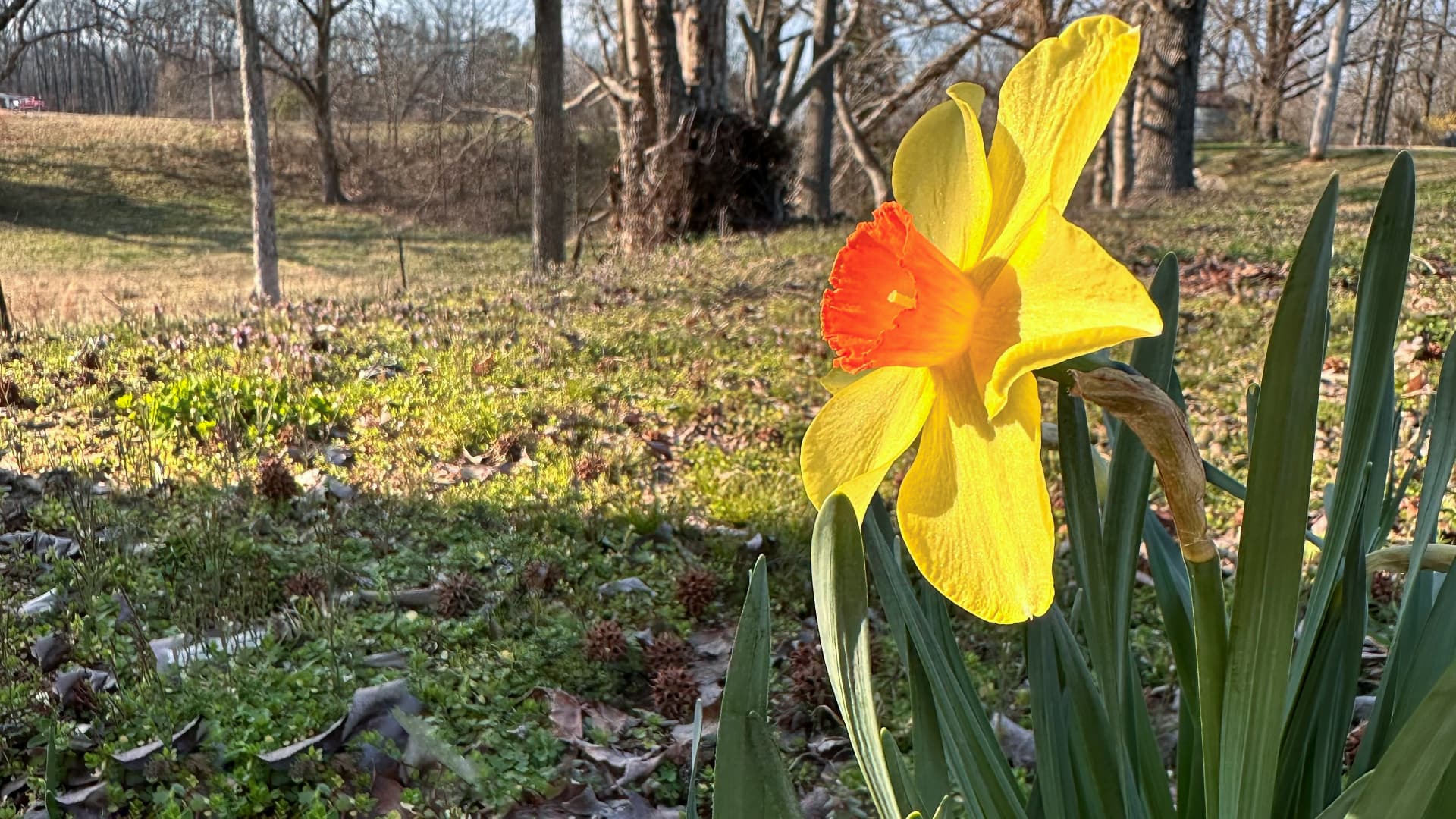
The photo shows a bright yellow daffodil flower blooming in a grassy area with trees in the background. The daffodil has long green leaves and a distinct orange trumpet-shaped center. It is a beautiful example of a plant that grows in the spring.
🔬 Scientific Phenomena
This image captures the phenomenon of plant growth and blooming, specifically a daffodil in spring. This occurs because as temperatures rise and days get longer after winter, the plant's stored energy in its bulb is used to produce new leaves and a flower. This blooming is a crucial part of the plant's life cycle, preparing it for reproduction.
📚 Core Science Concepts
- Plant Needs: Daffodils, like all plants, need certain things to survive and grow. These include sunlight for energy, water from the soil, and nutrients from the soil.
Pedagogical Tip: Encourage students to observe plants in the schoolyard or at home and discuss what they see the plants needing (e.g., watering, sunlight from a window).
- Life Cycles: The daffodil is showing a stage in its life cycle: blooming. Plants go through stages like seed, sprout, growth, flowering, and producing new seeds.
- Seasonal Changes: The blooming daffodil is a strong indicator of spring, demonstrating how plants respond to changes in the environment like temperature and sunlight duration throughout the year.
UDL Suggestions: Provide varied ways for students to demonstrate their understanding of plant needs and life cycles. This could include drawing, building a model plant with craft supplies, acting out the plant life cycle, or verbally describing it.
🔍 Zoom In / Zoom Out Concepts
- Zoom In: Inside the daffodil flower, there are tiny parts called stamen and pistil that are involved in making new seeds. Pollen, a powder from the stamen, needs to reach the pistil to start the process of making seeds.
- Zoom Out: This daffodil is part of a larger ecosystem. It grows in the soil, which is part of the Earth's surface. It needs sunlight from the sun and water from the Earth's water cycle. Its blooms may attract insects, which are also part of the living community.
🤔 Potential Student Misconceptions
- Misconception: Plants magically grow without needing anything.
Clarification: Plants need specific things like sunlight, water, and nutrients from the soil to grow and stay healthy, just like humans need food and water.
- Misconception: All plants look the same and have the same needs.
Clarification: Plants have many different shapes, sizes, and colors. Different plants might have slightly different needs or grow in different places, but they all generally need light, water, and nutrients.
🎓 NGSS Connections
K-LS1-1: Use observations to describe patterns of what plants and animals (including humans) need to survive.
💬 Discussion Questions
- What do you observe about this daffodil? (Bloom's: Remember | DOK: 1)
- What does this flower need to grow and bloom? (Bloom's: Understand | DOK: 1)
- How do you think this daffodil is similar to other plants you have seen? (Bloom's: Analyze | DOK: 2)
📖 Vocabulary
- Bloom: When a flower opens up.
- Plant: A living thing that grows in the ground, usually with leaves and stems.
- Needs: Things that are important for staying alive and healthy.
- Sunlight: Light that comes from the sun, which plants use to make food.
- Water: A clear liquid that plants and animals need to live.
🌡️ Extension Activities
- Plant a Seed: Have students plant daffodil bulbs or other fast-growing seeds (like beans) in small pots. They can observe the seeds sprout and grow over time, documenting the changes and what the plants need.
- Nature Walk Observation: Take students on a walk around the schoolyard to observe different plants. They can draw the plants and then discuss what each plant might need to survive based on where it is growing.
🔗 Cross-Curricular Ideas
- Art: Students can draw or paint daffodils, focusing on their colors and shapes. They could also create collages using natural materials found around plants.
- ELA: Read books about plants and flowers. Students can write a sentence or two about what a daffodil needs to live, using new vocabulary words.
- Math: Measure the height of plants over time. Students can create simple bar graphs to show growth.
🚀 STEM Career Connection
- Botanist — Studies plants — how they grow, how they reproduce, and how they survive where they live.
- Try it: Explain how a daffodil's bright petals might help it attract pollinators. (Practice: Constructing Explanations and Designing Solutions)
- Tools: a hand lens, a plant press, a soil probe, field guides
- Where they work: botanical gardens, herbariums, forests and fields, universities
- Meet one: Robin Wall Kimmerer — Mosses — which she calls the coral reefs of the forest — and what Indigenous knowledge teaches about bringing plants back.
- Median pay: /year — "Soil and plant scientists"
- Horticulturist — Grows and cares for plants on purpose — choosing what will thrive in a particular place.
- Try it: Experiment with giving two identical plants different amounts of water and record which one grows best. (Practice: Constructing Explanations and Designing Solutions)
- Tools: pruning shears, soil test kits, grafting knives, greenhouses
- Where they work: botanical gardens, plant nurseries, city parks, farms and orchards
- Meet one: Carlos Magdalena — How to bring the world's rarest plants back from the edge, including the smallest water lily on Earth after it vanished from the wild.
- Median pay: /year — "Soil and plant scientists"
Wage figures are median annual wages for the U.S. occupation named after each one, from the U.S. Bureau of Labor Statistics, Occupational Employment and Wage Statistics (OEWS), national, May 2025. Several careers share one occupation, so their figures match.