📸 Photo Description
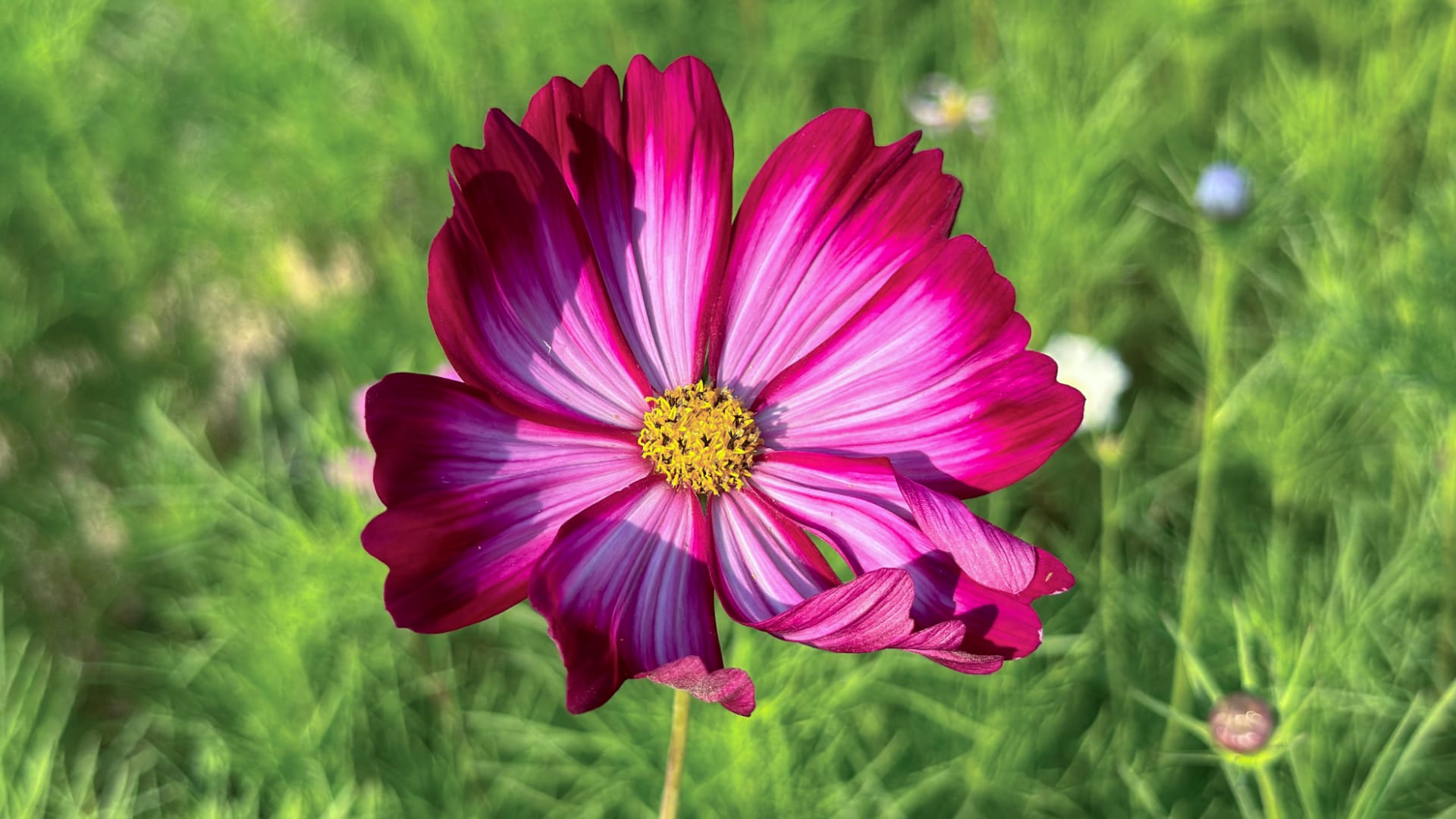
The image shows a vibrant pink and white cosmos flower in the center, with a fuzzy green background of grass and other plants. The flower has many petals and a yellow center. It appears to be growing outdoors in a garden or field.
🔬 Scientific Phenomena
This image represents the phenomenon of plant growth and survival. The cosmos flower, with its colorful petals and visible parts, is a living organism that requires specific conditions to thrive. This relates to the fundamental need for plants to obtain resources from their environment to grow, reproduce, and survive. The flower's structure is a result of these survival needs, attracting pollinators and enabling reproduction.
📚 Core Science Concepts
- Needs of Plants: Plants, like this cosmos flower, have essential needs for survival, including sunlight, water, air, and nutrients from the soil.
- Plant Structures: Flowers are a key structure of many plants, serving the purpose of reproduction. The petals attract pollinators, while the center contains the parts necessary for seed production.
- Patterns in Nature: Observing this flower allows us to see patterns in how plants grow and develop, demonstrating that living things have predictable life cycles.
Pedagogical Tip: Encourage students to observe and sketch the flower, focusing on its different parts. This hands-on observation reinforces understanding of plant structures and their functions.
UDL Suggestions: Provide multiple ways for students to explore the needs of plants. This could include growing their own plants in the classroom, reading books about plants, or watching short videos about plant life cycles.
🔍 Zoom In / Zoom Out Concepts
- Zoom In: At a microscopic level, the flower's petals are made of cells that capture sunlight for photosynthesis, and the vibrant colors are due to pigments within these cells. The yellow center contains pollen and ovules, the reproductive cells of the plant.
- Zoom Out: This flower is part of a larger ecosystem. It provides food and habitat for insects and other small animals, and its seeds can spread to create new plants, contributing to the biodiversity of the area. It also relies on the surrounding soil, water, and air for its survival.
🤔 Potential Student Misconceptions
- Misconception: Plants are not alive because they don't move like animals.
Clarification: While plants don't move around, they are living organisms that grow, need food and water, and reproduce. Their growth and life cycles are evidence of them being alive.
- Misconception: Plants only need sunlight to survive.
Clarification: Plants need more than just sunlight. They also require water, air (carbon dioxide), and nutrients from the soil to grow and stay healthy.
🎓 NGSS Connections
- K-LS1-1: Use observations to describe patterns of what plants and animals (including humans) need to survive.
💬 Discussion Questions
- What does this flower need to live and grow? (Bloom's: Remembering | DOK: 1)
- What do you observe about the different parts of the flower? (Bloom's: Observing | DOK: 1)
- How is this flower similar to or different from other plants you have seen? (Bloom's: Analyzing | DOK: 2)
📖 Vocabulary
- Petals: The colorful parts of a flower that attract pollinators.
- Pollinators: Animals, like bees or butterflies, that help plants reproduce by carrying pollen.
- Nutrients: Substances in soil, water, and air that plants need to grow and stay healthy.
- Photosynthesis: The process plants use to make their own food using sunlight, water, and carbon dioxide.
🌡️ Extension Activities
- Plant a Seed: Have students plant seeds (like cosmos seeds) in small pots and observe their growth over time. They can record changes in a science journal.
- Flower Dissection: Carefully dissect a flower with students to identify and label its different parts (petals, stem, stamen, pistil).
- Needs of Plants Chart: Create a classroom chart illustrating what plants need to survive, using drawings and words.
🔗 Cross-Curricular Ideas
- ELA: Read books about flowers and plants, and have students write their own stories or poems about flowers.
- Art: Students can draw or paint the cosmos flower, focusing on its colors and shapes, or create flower collages.
- Math: Measure the height of plants as they grow and create simple bar graphs to show the growth over time.
🚀 STEM Career Connection
- Horticulturist — Grows and cares for plants on purpose — choosing what will thrive in a particular place.
- Try it: Build a model of a flower using craft supplies, showing its reproductive parts. (Practice: Developing and Using Models)
- Tools: pruning shears, soil test kits, grafting knives, greenhouses
- Where they work: botanical gardens, plant nurseries, city parks, farms and orchards
- Meet one: Carlos Magdalena — How to bring the world's rarest plants back from the edge, including the smallest water lily on Earth after it vanished from the wild.
- Median pay: /year — "Soil and plant scientists"
- Biologist — Studies living things of every kind and what keeps them alive.
- Try it: Create a model to show how a bee might transfer pollen from one flower to another. (Practice: Developing and Using Models)
- Tools: microscopes, sample jars, measuring tools, a field notebook
- Where they work: laboratories, field sites, museums, universities
- Meet one: Sandra Díaz — What a plant's leaves, wood and shape tell you about how it lives — and how those traits add up across a whole ecosystem.
- Median pay: /year — "Biological scientists, all other"
Wage figures are median annual wages for the U.S. occupation named after each one, from the U.S. Bureau of Labor Statistics, Occupational Employment and Wage Statistics (OEWS), national, May 2025. Several careers share one occupation, so their figures match.