📸 Photo Description
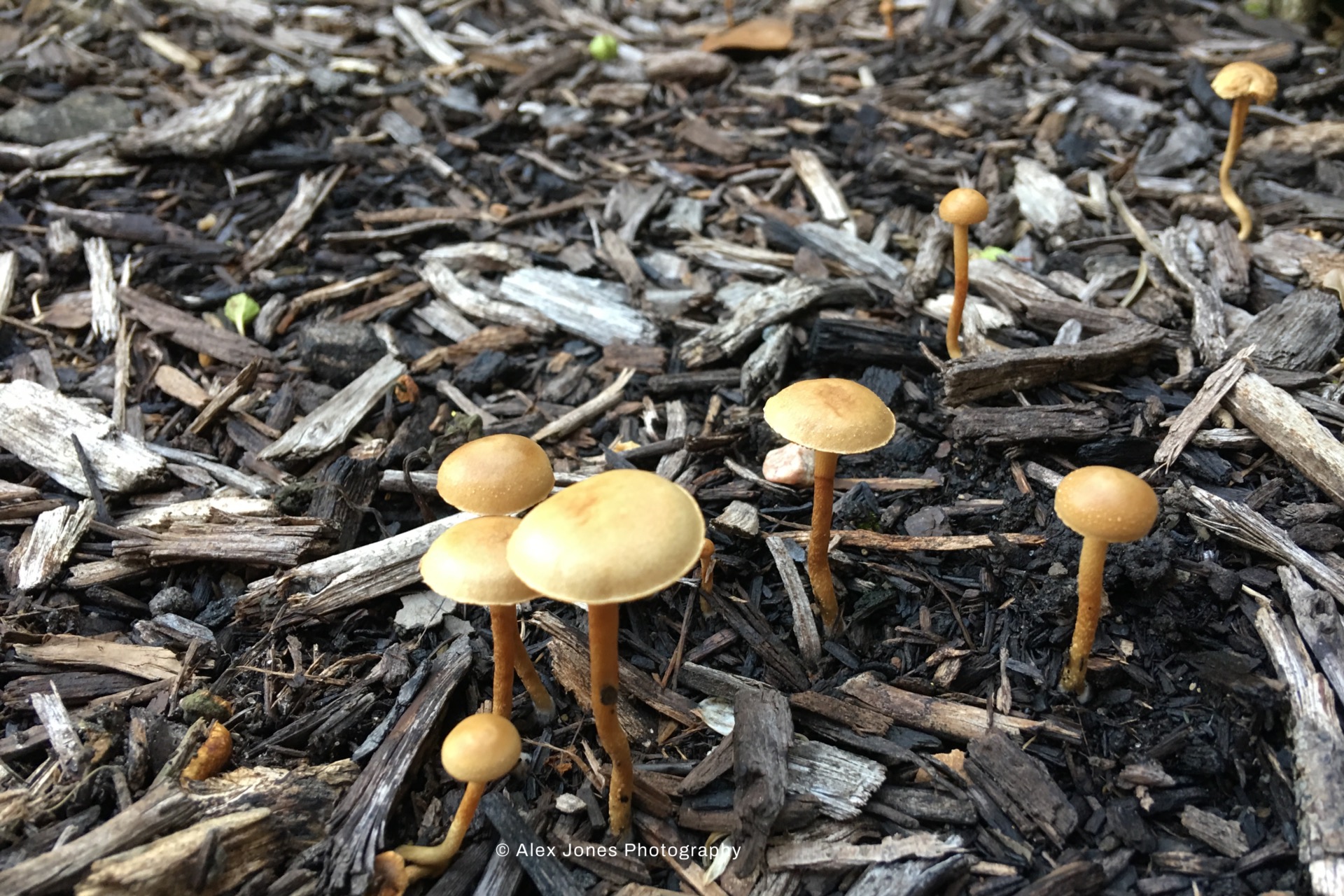
Small brown mushrooms with round caps and thin stems are growing from the forest floor. The mushrooms are surrounded by pieces of old wood, bark, and plant materials that have fallen to the ground. These fungi are breaking down the dead materials around them.
🔬 Scientific Phenomena
The Anchoring Phenomenon is decomposition in action. These fungi are acting as nature's recyclers, breaking down dead organic matter on the forest floor. The mushrooms we see are the fruiting bodies of larger fungal networks growing underground and throughout the decaying wood. They release enzymes that break down complex materials like cellulose and lignin in dead wood, converting them into simpler nutrients that can be used by other forest organisms. This process is essential for nutrient cycling in forest ecosystems.
📚 Core Science Concepts
- Decomposition: Fungi break down dead plants and animals, returning nutrients to the soil for new plants to use.
- Life Cycles: The mushrooms are one stage in the fungal life cycle, producing spores that will grow into new fungi.
- Interdependence: Fungi depend on dead organic matter for food, while plants depend on fungi to create rich soil.
- Habitat Requirements: Fungi need moisture, organic matter, and the right temperature to survive and grow.
Pedagogical Tip: Have students observe the same outdoor area weekly to document changes in decomposing materials. This helps them see that decomposition is an ongoing process, not a single event.
UDL Suggestions: Provide multiple ways for students to record observations: drawing, photography, voice recordings, or simple check-off sheets. This supports different learning preferences and abilities while maintaining scientific rigor.
🔍 Zoom In / Zoom Out Concepts
Zoom In: At the microscopic level, fungal threads called hyphae are growing through the dead wood like tiny root systems. These hyphae release special chemicals (enzymes) that break apart the wood's tough fibers, allowing the fungi to absorb nutrients molecule by molecule.
Zoom Out: This decomposition process is happening throughout the entire forest ecosystem. As fungi break down fallen trees, leaves, and dead animals, they create nutrient-rich soil that feeds living trees, which eventually provide habitat for animals, create oxygen, and continue the cycle of life and death in the forest.
🤔 Potential Student Misconceptions
- Misconception: Mushrooms are plants because they grow from the ground.
Clarification: Fungi are neither plants nor animals - they're their own group of living things that get energy by breaking down other organisms.
- Misconception: Decomposition only happens to things that are already completely dead and brown.
Clarification: Decomposition is a gradual process that begins as soon as a leaf falls or a tree dies, even if it still looks fresh.
- Misconception: Mushrooms and fungi are harmful or "yucky."
Clarification: Most fungi are helpful decomposers that keep ecosystems healthy by recycling nutrients.
🎓 NGSS Connections
Performance Expectation: 3-LS4-3 - Construct an argument that some animals form groups that help members survive.
Disciplinary Core Ideas:
- - Environmental changes affect organisms
- - Variation of traits over time
Crosscutting Concepts:
- - Students can observe how environmental conditions cause fungi to grow and decompose materials
- - The forest ecosystem depends on decomposers to function properly
💬 Discussion Questions
- What do you think would happen to a forest if there were no fungi to break down fallen trees and leaves? (Bloom's: Evaluate | DOK: 3)
- How are these mushrooms similar to and different from the plants growing around them? (Bloom's: Analyze | DOK: 2)
- What conditions do you think these fungi need to survive and grow? (Bloom's: Apply | DOK: 2)
- Why might finding fungi be a sign of a healthy forest ecosystem? (Bloom's: Synthesize | DOK: 3)
📖 Science Vocabulary
- Fungi: Living things that break down dead materials and absorb nutrients from them.
- Decomposition: The process of breaking down dead plants and animals into smaller parts.
- Nutrients: Chemical substances that living things need to grow and stay healthy.
- Ecosystem: All the living and non-living things in an area that work together.
- Spores: Tiny reproductive cells that fungi release to make new fungi.
- Organic matter: Materials that come from things that were once alive.
🔗 Cross-Curricular Ideas
Math - Measurement & Data: Have students measure the height of mushrooms over several days using rulers or string. Create a simple bar graph showing how mushroom heights change. This connects to measurement standards and data representation while reinforcing the concept that fungi grow over time.
ELA - Descriptive Writing: Ask students to write or dictate detailed descriptions of the mushrooms and decomposing materials using sensory words (soft, damp, dark, crumbly). Create a class "Fungi Field Guide" with student illustrations and descriptions, building vocabulary and observation skills.
Social Studies - Community Helpers: Discuss how fungi are "nature's cleanup crew" that help keep forests healthy, similar to how sanitation workers help keep communities clean. This introduces the concept of roles and responsibilities in both natural and human communities.
Art - Nature Collage: Students can create artwork using fallen leaves, twigs, bark, and other natural materials to represent decomposition and nutrient cycling. This helps them appreciate natural materials and understand how everything in nature has value and purpose.
🚀 STEM Career Connection
- Mycologist — Studies fungi — mushrooms, moulds and yeasts, and the hidden threads that connect them underground.
- Try it: Design an experiment to test what conditions (like moisture or darkness) help mold grow on bread. (Practice: Constructing Explanations and Designing Solutions)
- Tools: spore prints, petri dishes, microscopes, collecting baskets
- Where they work: forests, laboratories, botanical gardens, universities
- Meet one: Giuliana Furci — Fungi nobody had catalogued before, and getting them protected the way animals and plants are.
- Median pay: /year — "Microbiologists"
- Soil Scientist — Studies dirt seriously — what it is made of, what lives in it, and what will grow in it.
- Try it: Explain how fungi help make soil healthier by breaking down dead plants and animals. (Practice: Constructing Explanations and Designing Solutions)
- Tools: soil augers, pH meters, sieve stacks, sample bags
- Where they work: farms and fields, testing laboratories, government agencies, universities
- Meet one: Asmeret Asefaw Berhe — How soil stores carbon, and why that makes dirt part of the climate story.
- Median pay: /year — "Soil and plant scientists"
Wage figures are median annual wages for the U.S. occupation named after each one, from the U.S. Bureau of Labor Statistics, Occupational Employment and Wage Statistics (OEWS), national, May 2025. Several careers share one occupation, so their figures match.