📸 Photo Description
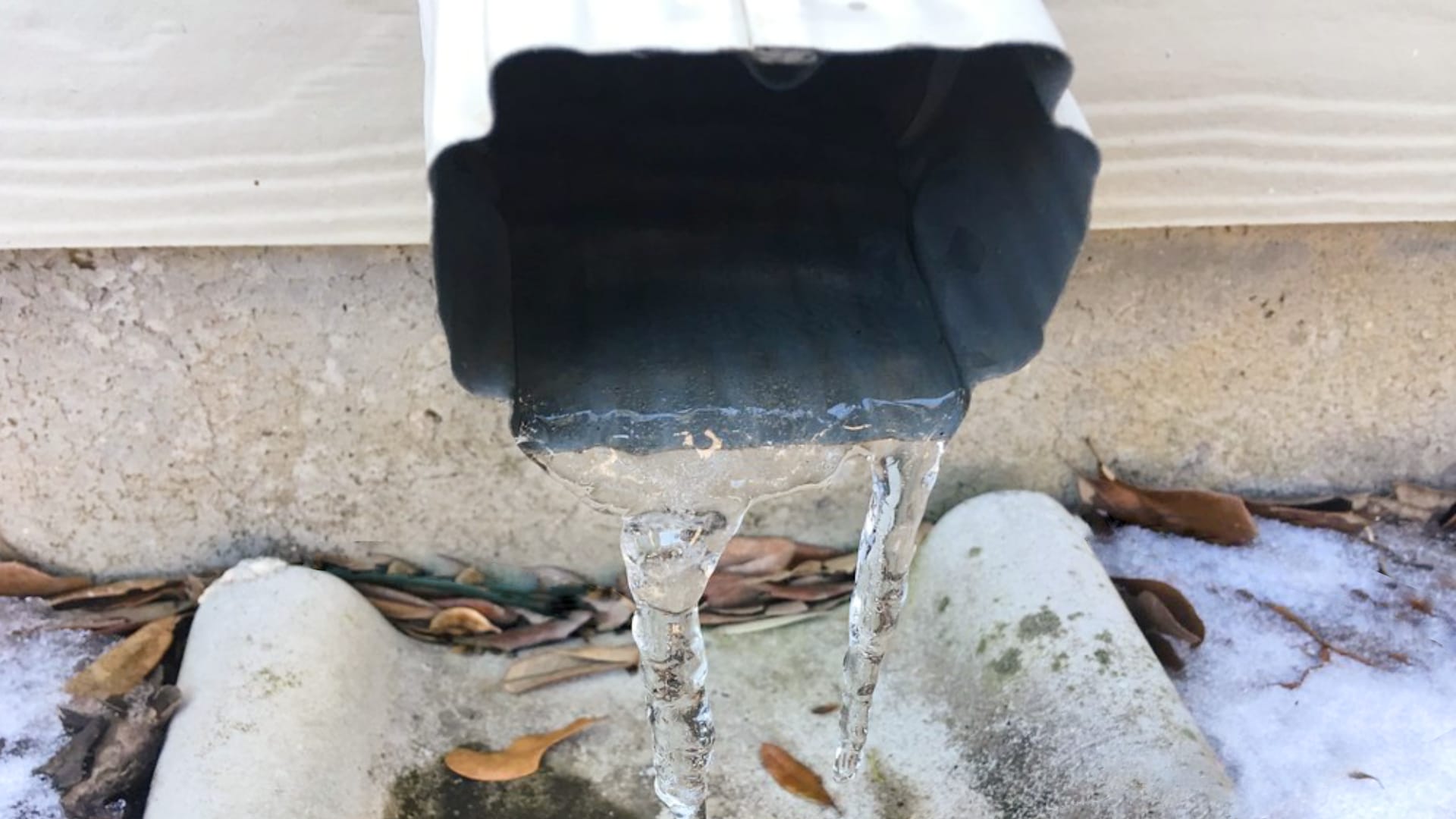
Water is freezing into solid ice as it drips from a black container. You can see clear icicles hanging down, with snow and leaves on the ground below. The water has changed from a liquid that flows into a solid that stays in one shape.
🔬 Scientific Phenomena
This image captures the phase change from liquid to solid, specifically the freezing of water into ice. When water gets very cold (below 32°F or 0°C), the water molecules slow down and arrange themselves into a fixed, solid structure. This is a fundamental physical change where the material transforms from a flowing liquid state to a rigid solid state. At this age, students can observe and describe that temperature affects whether water is liquid (drinkable, flows) or solid (ice, holds its shape).
📚 Core Science Concepts
- Temperature and State Change: Water can be a liquid or solid depending on how cold it is. When it gets cold enough, liquid water becomes solid ice.
- Properties of Materials: Solids have a definite shape and don't flow like liquids do. The ice holds the shape of the icicle, while liquid water would have dripped straight down.
- Observation and Description: Students can see, touch (carefully!), and describe the differences between liquid water and solid ice—color, hardness, shape, and how they behave.
- Sun's Effect on Matter: This connects to K-PS3-1 because the reverse process (melting) happens when the sun warms ice and turns it back into liquid water.
Pedagogical Tip:
Kindergarteners learn best through direct sensory experience. Bring in ice cubes and let students hold them (with adult supervision) while they're still frozen, then observe what happens as the ice melts in their hands or in a warm cup. This concrete experience makes the abstract concept of "freezing" real and memorable.
UDL Suggestions:
Multiple Means of Representation: Provide pictures showing water in different states side-by-side (liquid water, ice cubes, icicles). Use simple language like "bendy water" (liquid) vs. "hard water" (solid) to scaffold understanding. Multiple Means of Engagement: Let students predict: "Will this ice stay hard or turn into water?" by moving to different areas of the classroom. This gets them physically involved in the prediction process.
🔍 Zoom In / Zoom Out Concepts
Zoom In — Molecular Level:
At a size we cannot see, water is made of tiny molecules. When water is warm, these molecules move fast and bounce around freely (liquid state). When it gets very cold, the molecules move slowly and lock into place next to each other in an organized pattern, creating solid ice. The molecules don't disappear—they just stop moving and hold still.
Zoom Out — Environmental System:
In winter, freezing affects whole landscapes and how animals survive. When water freezes in ponds and rivers, it creates ice that animals can walk on, but it also changes where fish and aquatic animals live. The frozen water stays frozen as long as temperatures stay cold. When spring comes and the sun's warmth returns, all that ice melts back into water, flowing into streams and soaking into soil to help plants grow.
🤔 Potential Student Misconceptions
- Misconception: "Ice and water are two completely different things, not related to each other."
- Clarification: Ice is frozen water. It's the same material (H₂O), just in a different form. When water gets cold enough, it becomes ice. When ice gets warm, it melts back into water.
- Misconception: "Ice is made from freezers or cold places, not from water."
- Clarification: Ice forms when liquid water gets cold enough. You can make ice at home by putting water in a freezer. The cold temperature makes the water turn into ice.
- Misconception: "Once water turns to ice, it will always stay ice."
- Clarification: Ice melts back into water when it gets warm. If you leave ice in a warm room, it will turn back into liquid water. Heat makes ice melt.
🎓 NGSS Connections
K-PS3-1: Make observations to determine the effect of sunlight on Earth's surface.
- Connection: Sunlight warming can reverse the freezing process—ice melts when the sun shines on it.
K-PS3-2: Use tools and materials to design and build a structure that will reduce the warming effect of sunlight on an area.
- Connection: Students could investigate how shade or coverings (like the black container shown) prevent ice from melting quickly, exploring how materials interact with heat.
Disciplinary Core Ideas:
- Energy can be observed in many ways (heat, light, motion). Temperature changes cause materials to change state.
- Humans can design solutions to problems by using tools and materials. A structure can be built to reduce warming effects.
Crosscutting Concepts:
- Cold temperature causes water to freeze; warm temperature causes ice to melt.
- Water molecules are too small to see, but their behavior creates the observable changes in ice and water.
💬 Discussion Questions
- "What do you think will happen to this ice if we leave it in the warm classroom?" (Bloom's: Predict | DOK: 1)
- "Why is the water turning hard? What do you think is making it freeze?" (Bloom's: Analyze | DOK: 2)
- "If we collected all this melted ice water, would we have the same amount of water as before, or would some water disappear?" (Bloom's: Evaluate | DOK: 3)
- "How is the icicle different from the liquid water that was in the container?" (Bloom's: Compare | DOK: 2)
📖 Vocabulary
- Freeze/Freezing: When liquid water gets so cold that it turns into solid ice and stops flowing.
- Ice: Frozen water that is hard and holds its shape instead of flowing like water does.
- Liquid: A material that flows and takes the shape of its container, like water or juice.
- Solid: A material that has its own shape and doesn't flow, like ice or a rock.
- Temperature: How hot or cold something is; when temperature drops, water can freeze into ice.
- Melt: When solid ice gets warm and turns back into liquid water.
🌡️ Extension Activities
Activity 1: Freezing Race
Place small cups of water in the freezer and check on them every 15-30 minutes. Students observe and draw pictures showing the water turning from liquid to solid ice. Discuss: "How did the water change? Was it fast or slow?" This builds observation skills and understanding of the freezing process over time.
Activity 2: Melting Observation
Bring frozen ice cubes or icicles inside to a warm classroom. Place them on dark paper so students can see the water droplets as it melts. Ask: "Where is the water coming from? Is it new water or the same ice turning back into water?" Students can draw before-and-after pictures to show the transformation.
Activity 3: Freeze It Yourself
Fill small containers with water and food coloring. Have students predict which will freeze faster: a shallow pan of water or a deep container. Place both in the freezer and check daily. This teaches that the amount and depth of water affects freezing time, introducing the concept that thickness matters.
🔗 Cross-Curricular Ideas
- Math — Measurement & Graphing: Track the temperature each day using a simple thermometer. Students can make a picture graph showing "cold days" (when ice stays frozen) vs. "warm days" (when ice melts). Introduce the number 32°F as the magic freezing point.
- ELA — Descriptive Language: Read "Stranger in the Woods" by Carl R. Sams II and read aloud descriptions of winter. Then have students use sensory words to describe ice: "hard," "cold," "smooth," "clear." Create a class chart of ice words and use them in simple sentences.
- Social Studies — Seasonal Changes: Discuss how animals and people prepare for winter when water freezes. Talk about how freezing ice affects where people live and how they play (ice skating, sledding). Create a class calendar showing when freezing happens in your area.
- Art — Ice Sculptures: Create temporary ice art by freezing water in interesting molds or shapes. Students observe the transformation and discuss how the frozen water looks different from liquid water. Take photos before melting to document the change.
🚀 STEM Career Connection
- Environmental Engineer — Designs the systems that clean water, cut pollution and deal with waste.
- Try it: Explain how freezing temperatures can affect the pipes in a house and design a solution to prevent them from breaking. (Practice: Constructing Explanations and Designing Solutions)
- Tools: water treatment models, air samplers, filtration rigs, CAD software
- Where they work: treatment plants, engineering firms, environmental agencies, universities
- Meet one: Yewande Akinola — How to get clean water to places that do not have it, and how to design buildings that waste less of it.
- Median pay: /year — "Environmental engineers"
- Chemist — Studies what substances are made of and what happens when you combine them.
- Try it: Explain why ice floats on water by observing how ice cubes behave in a glass of water. (Practice: Constructing Explanations and Designing Solutions)
- Tools: fume hoods, balances, spectrometers, glassware
- Where they work: laboratories, manufacturing plants, testing facilities, universities
- Meet one: Tebello Nyokong — Dyes that can be switched on by laser light to destroy cancer cells and leave healthy ones alone.
- Median pay: /year — "Chemists"
Wage figures are median annual wages for the U.S. occupation named after each one, from the U.S. Bureau of Labor Statistics, Occupational Employment and Wage Statistics (OEWS), national, May 2025. Several careers share one occupation, so their figures match.