📸 Photo Description
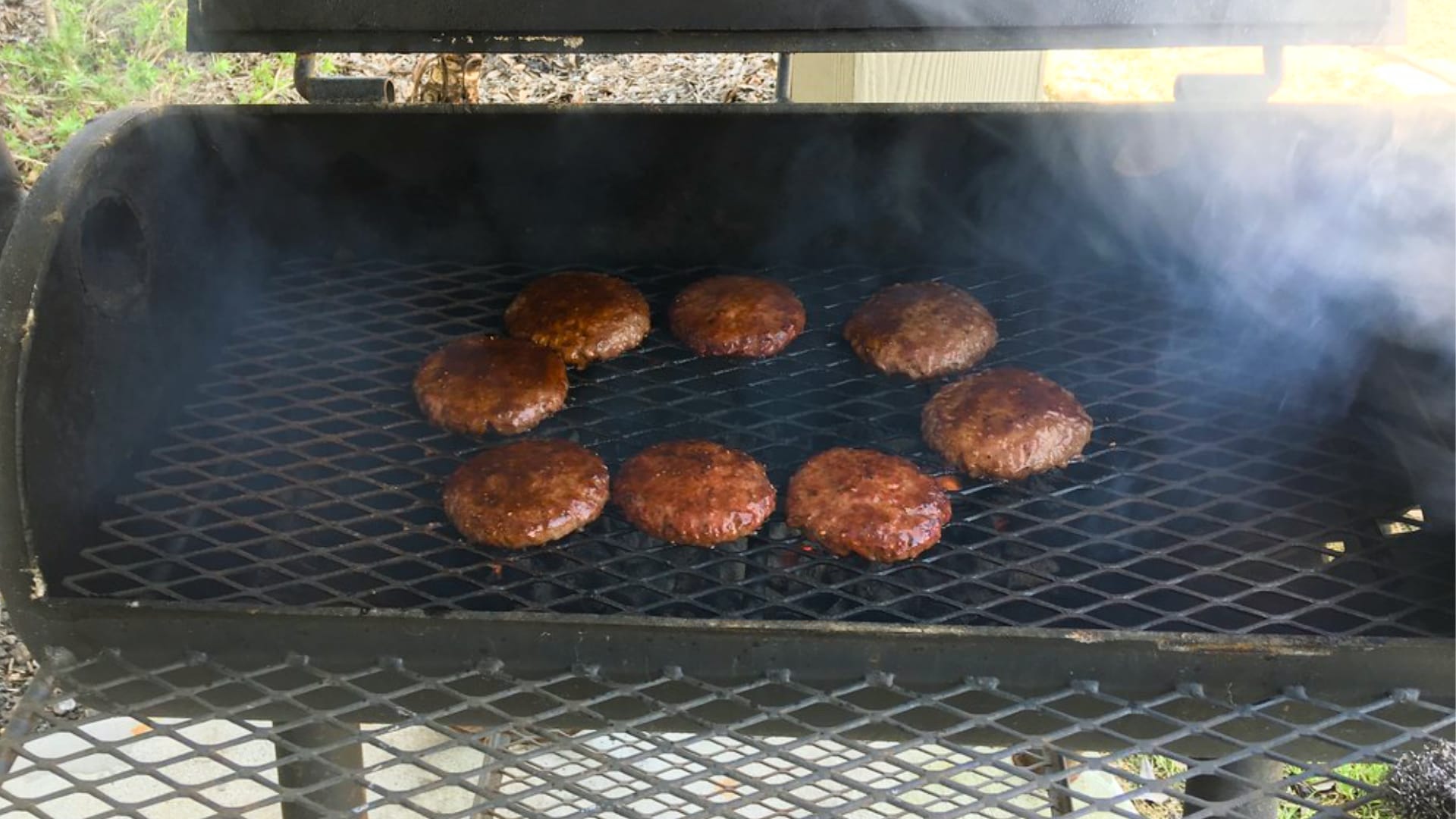
Hamburger patties are cooking on a grill, and you can see smoke coming off them. The meat is turning brown and getting darker as heat from the grill cooks it. The patties look different now than they did before they started cooking.
🔬 Scientific Phenomena
This image shows heat energy changing the properties of matter. When the raw hamburger meat is placed on the hot grill, thermal energy from the heat source transfers into the meat. This causes the proteins and fats in the meat to break apart and bond in new ways, creating permanent changes in color, texture, and shape. The browning you see is evidence that a chemical change has occurred—the meat has been transformed into something new that cannot be changed back to its raw state.
📚 Core Science Concepts
- Heat Energy Transfer: The hot grill surface transfers thermal energy to the cold hamburger patties, warming them up and causing visible changes to happen.
- Observable Changes from Heat: When objects are heated, we can observe changes like color changes (raw pink to cooked brown), texture changes (soft and mushy to firm), and steam or smoke being released.
- Irreversible Changes: Unlike ice melting back to water, cooked meat cannot be turned back into raw meat just by cooling it down—this is a permanent change.
- Temperature and Motion: The heat from the grill causes molecules in the meat to move faster and faster, which is why we see bubbling, sizzling, and smoke.
Pedagogical Tip:
For kindergarteners, focus on the observable sensations and changes rather than molecular explanations. Ask students about what they see (color change), hear (sizzling sounds), and smell (cooking aroma). This concrete, sensory approach helps young learners anchor heat energy concepts to real-world experiences they can understand.
UDL Suggestions:
Representation: Provide a side-by-side picture comparison of raw vs. cooked hamburger patties so students can visually identify the differences without needing to remember details. Engagement: Invite students to share their own experiences cooking or eating food at home—making the science personal and relevant. Action & Expression: Allow students to use hand motions to show heat moving from the grill into the patties, or have them draw pictures of what they observe.
🔍 Zoom In / Zoom Out Concepts
Zoom In (Microscopic Level):
At a scale too small to see, the heat energy is making the atoms and molecules in the hamburger meat vibrate faster and faster. The proteins (long chains of tiny molecules) are breaking apart and linking up in brand new ways. This is why the meat changes color and texture—the new arrangements of molecules reflect light differently and feel different when we touch them.
Zoom Out (Larger System Connection):
This grill is part of a larger energy system. The heat energy comes from burning fuel (charcoal or gas), which releases energy that was stored in that fuel. That energy transfers to the food we eat, and our bodies use that food energy to play, grow, and stay warm. Cooking food is one way humans use energy from Earth's resources to prepare meals and stay healthy.
🤔 Potential Student Misconceptions
- Misconception: "If I let the cooked hamburger cool down in the refrigerator, it will turn back to raw."
- Clarification: Heat changes some things permanently. When heat cooks meat, the proteins change in a way that cannot be undone by just cooling it down. Cooked meat will stay cooked.
- Misconception: "The smoke means the hamburger is burning away and disappearing."
- Clarification: The smoke is actually water vapor and gases escaping from the meat as it cooks. The meat itself is still there on the grill—it's just changing form as water leaves it.
- Misconception: "All the brown color comes from the grill leaving marks on the food."
- Clarification: The brown color is actually created by heat changing the proteins and sugars in the meat itself. The heat causes a chemical change that makes the meat brown, not just marks from the grill surface.
🎓 NGSS Connections
K-PS3-1: Make observations to determine the effect of sunlight on Earth's surface.
- This standard applies because the grill demonstrates how thermal energy affects the properties and appearance of objects on a surface.
K-PS3-2: Use tools and materials to design and build a structure that will reduce the warming effect of sunlight on an area.
- Understanding how heat affects hamburger patties helps students recognize the power of thermal energy, which connects to designing solutions that manage heat.
💬 Discussion Questions
- What do you notice is different about the hamburgers now compared to before they started cooking? (Bloom's: Remember | DOK: 1)
- Why do you think the hamburgers changed color and texture when we put them on the hot grill? (Bloom's: Understand | DOK: 2)
- What would happen if we took a cooked hamburger and put it in a very cold freezer—would it turn back into raw meat? Why or why not? (Bloom's: Analyze | DOK: 2)
- How is the heat from this grill similar to or different from the heat from the sun on a hot day? (Bloom's: Compare | DOK: 3)
📖 Vocabulary
- Heat: The energy that makes things warm and can cause changes to objects.
- Temperature: How hot or cold something is; we can measure it with a thermometer.
- Cooking: Using heat to change the way food looks, feels, and tastes.
- Change: When something becomes different from how it was before.
- Thermal Energy: The energy that moves from hot things to cold things and makes things warmer.
🌡️ Extension Activities
- Hot and Cold Sensory Exploration: Gather safe materials (ice cubes, warm water in cups, room-temperature objects). Ask students to touch each item carefully and describe how they feel. Ask: "Which things have more heat energy? How do you know?" This helps them understand that heat is a form of energy they can sense.
- Before and After Picture Sort: Show students pictures of raw and cooked versions of different foods (eggs, toast, apples before/after baking, etc.). Have students sort the pictures into "raw" and "cooked" piles. Discuss what heat did to each food and whether the changes could be reversed.
- Design a Heat Shield: Give students materials like cardboard, foil, and fabric scraps. Challenge them to design a small "shelter" or structure that could protect a thermometer from getting too warm in direct sunlight or near a heat source. Test their designs and observe which materials work best at reducing heat transfer. This connects to K-PS3-2.
🔗 Cross-Curricular Ideas
- Math: Have students count the hamburger patties on the grill and practice addition or subtraction ("If there are 8 patties and we take 2 off, how many are left?"). Create a simple bar graph showing favorite foods to cook.
- ELA: Read the book Click, Clack, Moo: Let's Get to Work by Doreen Cronin (farm animals) or The Hungry Caterpillar by Eric Carle (which includes a picture of the caterpillar eating food). Discuss how food gives animals energy to grow and play, just like the hamburgers give people energy.
- Social Studies: Talk about different cultures and the foods families cook together. Create a classroom chart of favorite family meals and discuss how heat is used to prepare them around the world.
- Art: Have students paint or draw pictures of raw vs. cooked foods, using different colors to show how heat changed the appearance. Display these as a visual reminder of how heat changes matter.
🚀 STEM Career Connection
- Chemist — Studies what substances are made of and what happens when you combine them.
- Try it: Mix baking soda and vinegar in a bottle and observe the bubbles that form, drawing a model of what you think is happening. (Practice: Developing and Using Models)
- Tools: fume hoods, balances, spectrometers, glassware
- Where they work: laboratories, manufacturing plants, testing facilities, universities
- Meet one: Tebello Nyokong — Dyes that can be switched on by laser light to destroy cancer cells and leave healthy ones alone.
- Median pay: /year — "Chemists"
- Physicist — Works out the rules that matter and energy follow, from the very small to the whole universe.
- Try it: Use a magnifying glass to observe the changes in a sugar cube as it dissolves in water, drawing a model of the tiny particles. (Practice: Developing and Using Models)
- Tools: lasers, detectors, vacuum chambers, computer simulations
- Where they work: research laboratories, particle accelerators, observatories, universities
- Meet one: Chanda Prescod-Weinstein — Dark matter — the invisible material that makes up most of the universe.
- Median pay: /year — "Physicists"
Wage figures are median annual wages for the U.S. occupation named after each one, from the U.S. Bureau of Labor Statistics, Occupational Employment and Wage Statistics (OEWS), national, May 2025. Several careers share one occupation, so their figures match.