📸 Photo Description
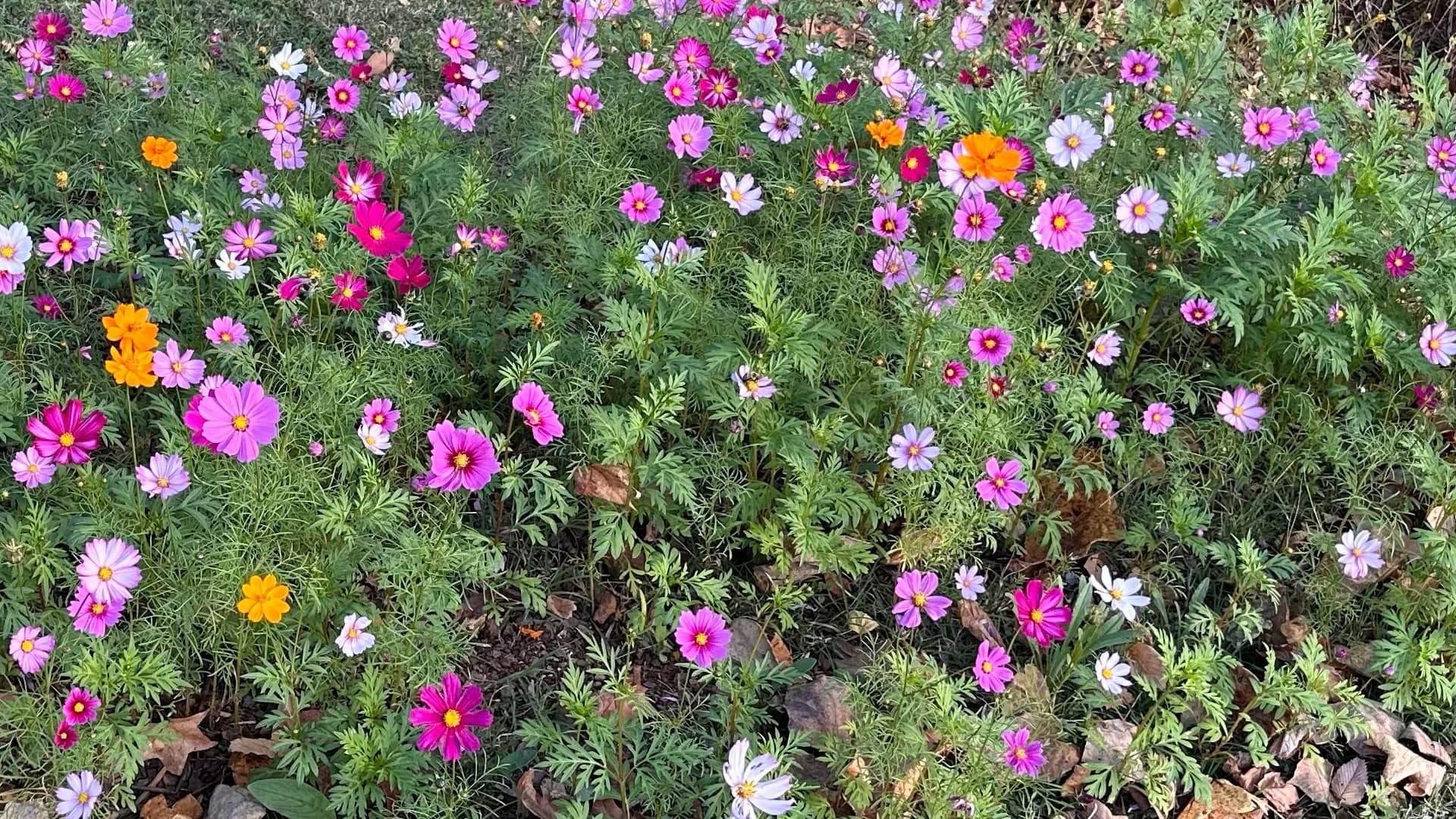
This image shows a beautiful flower garden filled with many colorful flowers in pink, purple, orange, and white. The flowers grow close together in green plants and soil. These flowers are special because they help feed and support bugs and insects that visit them, which is very important for nature.
🔬 Scientific Phenomena
Anchoring Phenomenon: A pollinator waystation is a garden purposefully planted with flowering plants that attract and support pollinators and other beneficial insects.
Why This Happens: Flowers produce nectar and pollen that insects like bees, butterflies, and beetles need for food and energy. When insects visit flowers to eat, pollen sticks to their bodies. As they fly to other flowers, this pollen rubs off, helping plants make seeds and new flowers. This is a symbiotic relationship—the insects get food, and the plants get help making new plants. Pollinator waystations are created because many natural habitats have been lost, so humans plant gardens to provide food and shelter for these important insects.
📚 Core Science Concepts
- Plants Have Structures for Survival: Flowers are a plant structure that produces nectar and pollen. These colorful petals attract insects and birds that help plants survive and reproduce.
- Living Things Need Food: Insects and pollinators need nectar and pollen from flowers to survive. Plants need pollinators to help them make seeds.
- Habitats Support Living Things: A garden with many flowering plants creates a habitat where insects can find food, shelter, and places to lay eggs. Different plants and animals live together in this space.
- Patterns in Nature: Plants flower at different times, and insects visit flowers following patterns based on seasons and weather. This timing helps both plants and pollinators survive.
Pedagogical Tip:
For Kindergarten, use the word "helpers" instead of "pollinators" initially. You might say: "Bees are flower helpers! They drink the sweet juice (nectar) inside flowers, and when they do, yellow powder (pollen) sticks to them. When they visit another flower, the pollen falls off and helps make new flowers grow." This concrete language helps young learners understand cause and effect.
UDL Suggestions:
Universal Design for Learning (UDL) Strategy: Provide multiple means of representation by offering tactile exploration. Create a sensory bin with fake flowers, real flower petals (pesticide-free), silk insects, and soil for students to explore while discussing the image. This addresses kinesthetic learners and gives all students hands-on access to the concepts. For visual learners, use enlarged photos or a projector to examine flower parts closely. For verbal learners, record descriptions of pollinator visits and play them during the activity.
🔍 Zoom In / Zoom Out Concepts
Zoom In: Microscopic Level
When you look very closely at a flower's center (with a magnifying glass), you can see tiny yellow grains called pollen. These are so small you cannot see them with just your eyes! Inside the pollen are instructions that help make new plants. When an insect's body gets covered in this pollen dust and carries it to another flower, something amazing happens—a new seed can grow!
Zoom Out: Ecosystem Level
This flower garden is part of a larger ecosystem. Beyond this garden, there are fields, forests, and neighborhoods where many animals live. Pollinators like bees, butterflies, and hummingbirds need gardens like this one to survive because their natural homes (meadows and forests) have gotten smaller. When we plant flowers for these helpers, we are helping entire food chains—insects eat pollen, birds eat insects, and bigger animals eat those birds. Everything is connected!
🤔 Potential Student Misconceptions
- Misconception: "Flowers are just pretty decorations. They don't do anything important."
- Scientific Clarification: Flowers are where plants make food and seeds. They are super important! Flowers feed insects, birds, and other animals. Without flowers, many creatures would have nothing to eat.
- Misconception: "Bees and butterflies just like the pretty colors; that's why they visit flowers."
- Scientific Clarification: Insects visit flowers because they need to eat the sweet nectar and pollen inside. The bright colors help insects find flowers, but insects are really looking for food to survive.
- Misconception: "All the bugs in a garden are bad and should be removed."
- Scientific Clarification: Many insects like bees, butterflies, and ladybugs are helpers! They eat pollen, drink nectar, and help plants make seeds. Some bugs are pests, but most insects are our friends and help gardens grow.
🎓 NGSS Connections
K-LS1-1: Use observations to describe patterns of what plants and animals (including humans) need to survive.
- Connection to Image: Students observe that flowers and insects in this waystation have a relationship where each needs the other. Flowers need insects to help them make seeds (through pollination), and insects need flowers for food (nectar and pollen). By observing this garden, students can describe these survival needs.
- Disciplinary Core Idea: All organisms have external parts. Different animals use their body parts in different ways to see, hear, grasp objects, protect themselves, move from place to place, and seek, find, and take in food and water. Plants also have different parts (roots, stems, leaves, flowers, fruits) that help them survive, grow, and produce seeds.
- Crosscutting Concept: - Students observe patterns in which insects visit flowers and when different flowers bloom.
- Crosscutting Concept: - When insects visit flowers (cause), pollen moves to other flowers, helping plants make seeds (effect).
💬 Discussion Questions
- "What do you think the insects are doing when they visit these flowers?" (Bloom's: Remember | DOK: 1)
- "Why do you think someone planted so many different flowers in this garden together?" (Bloom's: Analyze | DOK: 2)
- "How do the insects help the flowers, and how do the flowers help the insects?" (Bloom's: Analyze | DOK: 3)
- "If all the flowers disappeared, what would happen to the insects that live here?" (Bloom's: Evaluate | DOK: 3)
📖 Vocabulary
- Flower: The colorful part of a plant that makes seeds and produces sweet juice called nectar that insects drink.
- Pollen: Tiny yellow dust-like grains inside flowers that help make new plants grow when insects carry them from flower to flower.
- Nectar: Sweet juice inside flowers that gives insects and birds energy so they can move and live.
- Pollinator: An animal (like a bee, butterfly, or hummingbird) that visits flowers to eat and accidentally helps plants make seeds.
- Habitat: A place where plants and animals live that gives them everything they need like food, water, and shelter.
- Waystation: A special garden that people plant with flowers to give insects food and a safe place to live.
🌡️ Extension Activities
- "Plant a Butterfly Garden" (Indoors or Outdoors)
- Provide small pots, potting soil, and seeds of flowers that attract pollinators (zinnias, marigolds, cosmos). Students plant seeds and care for them over weeks. As flowers bloom, observe and record which insects visit. Create a simple chart with drawings of flowers and insects that visit them. This reinforces plant life cycles and pollinator relationships.
- "Make a Pollinator Craft"
- Provide construction paper, markers, and craft materials. Students design and create their own "insect" (bee, butterfly, ladybug). Attach a small magnet or velcro piece to the craft insect. Create a large flower garden display with paper flowers that have magnets. Students move their insects around the garden, practicing the concept that insects visit flowers for food. Discuss what each insect needs and how it helps flowers.
- "Observe Real Pollinators" (Outdoor Exploration)
- Take students outside to observe flowers (in your school garden, local park, or around the classroom). Provide simple magnifying glasses and observation clipboards. Ask: "Can you see any insects visiting flowers? What color are they? What are they doing?" Record observations with drawings or tallies. Return indoors to discuss findings. This develops observation skills and real-world connection to the phenomenon.
🔗 Cross-Curricular Ideas
- Mathematics: Create a color graph of the flowers in the garden. Students sort flower pictures or real flower images by color (pink, purple, orange, white) and arrange them in a bar graph. Count which color has the most flowers. This builds sorting, counting, and data representation skills.
- English Language Arts: Read aloud "The Bee Tree" by Patricia Polacco or "Flower Garden" by Eve Bunting. Create a shared writing activity where students dictate sentences about what they see in the photo: "I see pink flowers. Bees visit flowers. Flowers need bees." Create a class book with student illustrations.
- Social Studies: Discuss "helping in community." Explain that the person who planted this garden is helping insects and plants in their community. Ask: "How can we help insects in our neighborhood? Where could we plant flowers?" This connects caring for nature to community responsibility.
- Art: Create a mixed-media flower collage. Provide tissue paper, watercolors, real flower petals (pesticide-free), and markers. Students tear and glue paper to create a garden scene. Paint or color insects visiting the flowers. Display as a class mural to celebrate pollinators and plant science learning.
🚀 STEM Career Connection
- Conservation Biologist — Works out which plants and animals are in trouble, and what would help them recover.
- Try it: Design a small pollinator-friendly garden for your classroom, explaining why you chose specific plants. (Practice: Constructing Explanations and Designing Solutions)
- Tools: population surveys, GPS trackers, habitat maps, trail cameras
- Where they work: nature reserves, conservation charities, government agencies, universities
- Meet one: Tierra Curry — Which plants and animals are closest to disappearing, and what it takes to save them.
- Median pay: /year — "Zoologists and wildlife biologists"
- Ecologist — Studies how living things depend on each other and on the place they live.
- Try it: Draw a diagram showing the relationship between a flower, a bee, and the seeds produced. (Practice: Constructing Explanations and Designing Solutions)
- Tools: quadrat frames, measuring tapes, GPS units, a field notebook
- Where they work: forests, grasslands, wetlands, universities
- Meet one: Sandra Díaz — What a plant's leaves, wood and shape tell you about how it lives — and how those traits add up across a whole ecosystem.
- Median pay: /year — "Environmental scientists and specialists, including health"
Wage figures are median annual wages for the U.S. occupation named after each one, from the U.S. Bureau of Labor Statistics, Occupational Employment and Wage Statistics (OEWS), national, May 2025. Several careers share one occupation, so their figures match.