📸 Photo Description
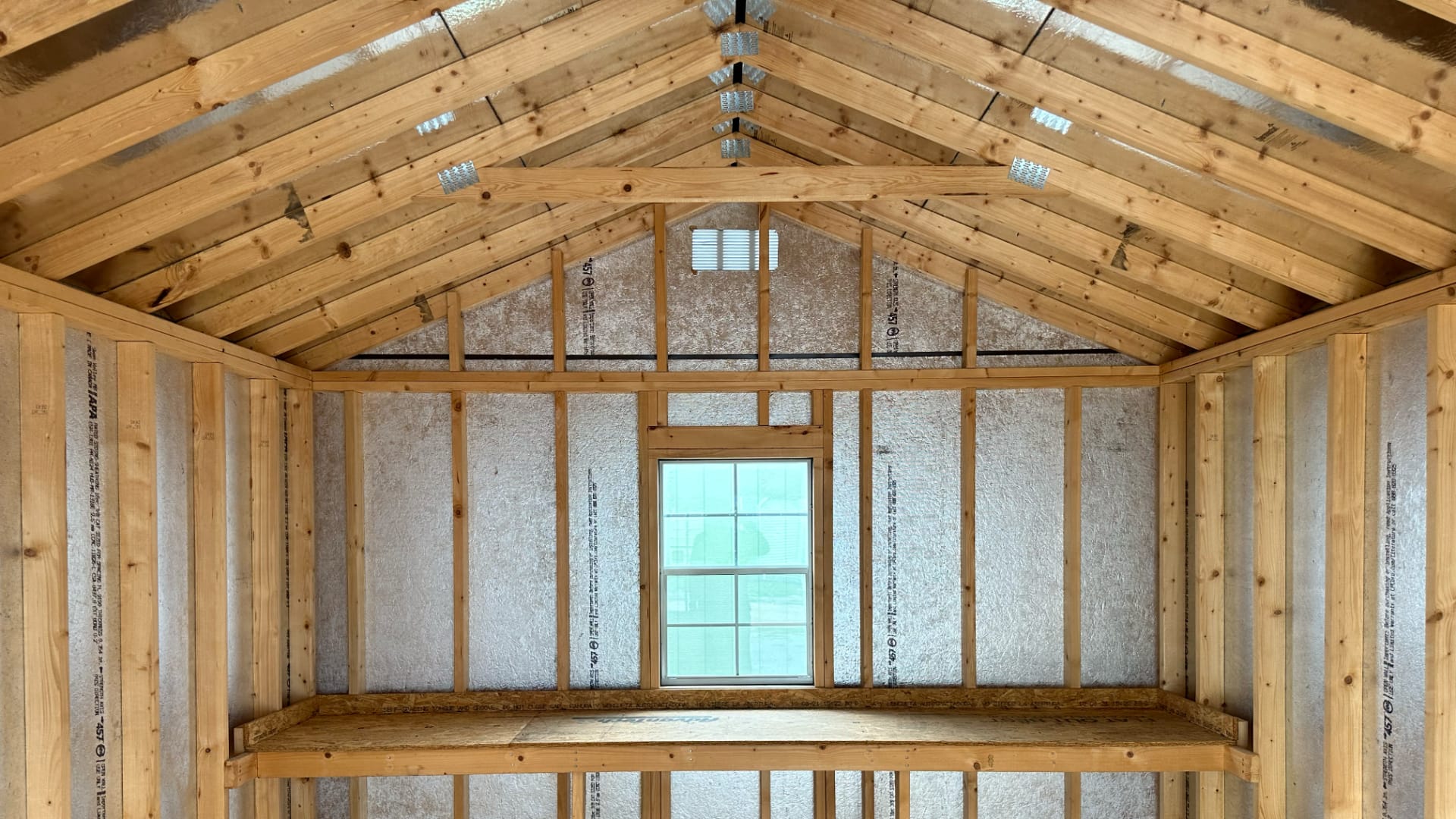
This image shows the inside of a wooden building under construction. The walls are made of wooden frames with insulation (fluffy material) between them, and there is a window that lets light in. Wood beams hold up the roof, showing how trees can be turned into materials that help build homes and other structures.
🔬 Scientific Phenomena
Anchoring Phenomenon: Using renewable resources (wood) to build shelter
This image demonstrates how wood—a renewable natural resource—is harvested from trees and transformed into building materials. Wood is renewable because trees can grow back after they are cut down, making it a sustainable material compared to non-renewable resources like coal or oil. The building process shown here illustrates how humans use Earth's natural materials to meet their needs for shelter, warmth, and safety. The insulation (the gray/tan material between the wooden frames) provides another example of how natural or recycled materials help protect buildings from temperature changes.
📚 Core Science Concepts
- Renewable Resources: Wood comes from trees, and trees can grow back, making wood a renewable resource that can be used again and again.
- Natural Materials: Wood is a natural material that comes directly from trees; humans can use natural materials from Earth to build things we need.
- Properties of Wood: Wood is strong, durable, and can be shaped into different forms (beams, frames, boards), making it useful for building structures.
- Shelter and Survival: Humans need shelter to stay warm, safe, and dry. Wood is one material that helps us build homes and protect ourselves from weather.
Pedagogical Tip:
For Kindergarteners, focus on the observable characteristics of wood rather than abstract concepts of sustainability. Let students touch real wood samples, compare them to other materials (plastic, metal), and discuss what they notice (hard, brown, rough, smooth). Ask "Where did this come from?" to begin building the connection between trees and building materials. Avoid overwhelming them with terminology; instead, use sensory exploration and concrete comparisons.
UDL Suggestions:
Multiple Means of Representation: Display pictures of trees growing → logs being cut → wood being used in buildings. Create a visual sequence chart. Multiple Means of Action/Expression: Allow students to build with wooden blocks, manipulate small wood pieces, or sort materials (wood vs. plastic vs. metal) rather than only listening to a lesson. Multiple Means of Engagement: Connect to students' personal experiences by asking, "What is your home made of?" or "Do you have wooden furniture at home?" This makes the learning relevant and emotionally engaging.
🔍 Zoom In / Zoom Out Concepts
Zoom In: The Microscopic Perspective
Inside the wood are tiny cells (like little boxes) that were once part of a living tree. These cells carried water and nutrients up from the roots to help the tree grow. When the tree is cut and the wood dries, those cells give wood its strength. The insulation material (likely fiberglass or cellulose) has tiny air pockets that trap warm air and keep the building comfortable—a property that happens at a scale we cannot see without a magnifying glass.
Zoom Out: The Larger System Perspective
This building is part of a human ecosystem that depends on forests. Trees grow in forests and provide wood for building, paper, and fuel. When we harvest trees responsibly and plant new ones, we maintain the forest system. This building will also affect the local environment—it provides shelter for people, which is connected to community, water systems (drainage), and even local wildlife that lives near human settlements. At the planetary level, forests absorb carbon dioxide and produce oxygen, so protecting forests (including through sustainable harvesting) helps Earth's entire life-support system.
🤔 Potential Student Misconceptions
- Misconception: "Wood just comes from the store; it's made, not grown."
- Clarification: Wood comes from real trees that grow in the ground. People cut down trees carefully, and then other people shape the wood into boards and beams for building. New trees can grow in place of the ones we cut down.
- Misconception: "All wood is the same."
- Clarification: Different trees make different kinds of wood. Some wood is harder and stronger (good for building), and some is softer. The type of tree matters for what we use the wood for.
- Misconception: "Once a tree is cut down, it's gone forever."
- Clarification: When we cut down a tree, we can plant a new tree in that place, and it will grow and become big. This is why wood is called a renewable resource—we can make more of it!
🎓 NGSS Connections
Performance Expectation: K-ESS3-1 (Use a model to represent the relationship between the needs of different plants and animals and the places they live)
Disciplinary Core Ideas:
- - Living things need water, air, and resources from the land, and they live in places where their needs are met.
- - Different materials have different properties.
Crosscutting Concepts:
- - The wood's structure (made of strong fibers) relates to its function (holding up buildings).
- - Cutting down trees has an effect on the forest; planting new trees causes the forest to regrow.
💬 Discussion Questions
- "Where does the wood in this building come from?" (Bloom's: Remember | DOK: 1)
- Helps students recall the connection between trees and building materials.
- "Why do you think people use wood to build houses instead of something else?" (Bloom's: Analyze | DOK: 2)
- Encourages students to think about the properties and benefits of wood (strong, available, natural).
- "If we cut down all the trees, what would happen to us? What could we do differently?" (Bloom's: Evaluate | DOK: 3)
- Promotes critical thinking about renewable resources and sustainable practices.
- "What other things in your home are made of wood? How are they the same as or different from this building?" (Bloom's: Analyze | DOK: 2)
- Connects learning to students' lived experiences and helps them recognize patterns in material use.
📖 Vocabulary
- Renewable resource: Something from nature that we can use again and again because it grows back (like trees for wood).
- Wood: The hard material that comes from inside trees; it can be shaped into boards, beams, and other building materials.
- Insulation: Material (like thick blankets) put inside walls to keep buildings warm in winter and cool in summer.
- Shelter: A safe, protected place where people can live and stay warm and dry.
- Building materials: Things that people use to build structures like houses, such as wood, bricks, metal, or plastic.
🌡️ Extension Activities
- Wood Exploration Station: Provide students with various wood pieces (smooth boards, rough bark, thin twigs, wooden blocks) and other materials (plastic, metal, fabric). Let them feel, compare, and sort by texture and properties. Ask: "Which feels hard? Which is rough? Which do you think would be good for building?"
- Build with Blocks: Give students wooden blocks and challenge them to build a small "house" or "shelter." As they build, discuss why wood is good for building (strong, stackable, doesn't break easily). Compare their creations and talk about what makes a sturdy structure.
- Tree-to-Table Activity: Show pictures or a short sequence of a tree → lumber mill → building → finished home. Create a "flip chart" or use picture cards that students arrange in order to show how a tree becomes a house. Discuss each step with simple language.
🔗 Cross-Curricular Ideas
- Math - Sorting and Patterns: Sort wood pieces by size, shape, color, or texture. Create patterns with different types of wood or building materials. Count the number of wooden items in the classroom.
- ELA - Storytelling and Vocabulary: Read books about trees and houses. Have students draw a picture of a tree and label it with words (roots, trunk, branches, leaves). Create a class book titled "From Tree to Home" with student drawings and dictated sentences.
- Social Studies - Community Helpers: Invite a carpenter, builder, or construction worker to visit (virtually or in-person) and explain how they use wood. Discuss how different community members help build homes and structures. Create a "community helpers" chart.
- Art - Nature Collage: Collect safe natural materials (leaves, twigs, bark rubbing from paper) and create a collage. Discuss how artists use materials from nature. Paint or color pictures of trees, forests, and houses.
🚀 STEM Career Connection
- Conservation Scientist — Looks after land, forests and water so they stay healthy for the people and animals who use them.
- Try it: Research and share information about different types of trees and how long it takes them to grow to harvestable size. (Practice: Obtaining, Evaluating, and Communicating Information)
- Tools: soil samplers, aerial photographs, measuring tapes, mapping software
- Where they work: forests and rangelands, parks departments, government agencies, land trusts
- Meet one: Tierra Curry — Which plants and animals are closest to disappearing, and what it takes to save them.
- Median pay: /year — "Conservation scientists"
Wage figures are median annual wages for the U.S. occupation named after each one, from the U.S. Bureau of Labor Statistics, Occupational Employment and Wage Statistics (OEWS), national, May 2025. Several careers share one occupation, so their figures match.
---
Instructional Tip: This lesson works best when students can interact with real wood samples and see the progression from tree → lumber → building material. Use photographs and concrete objects rather than abstract diagrams. Keep discussions short (2–3 minutes) and use repetition of key vocabulary across multiple days to support Kindergarten learners' developing language skills.