📸 Photo Description
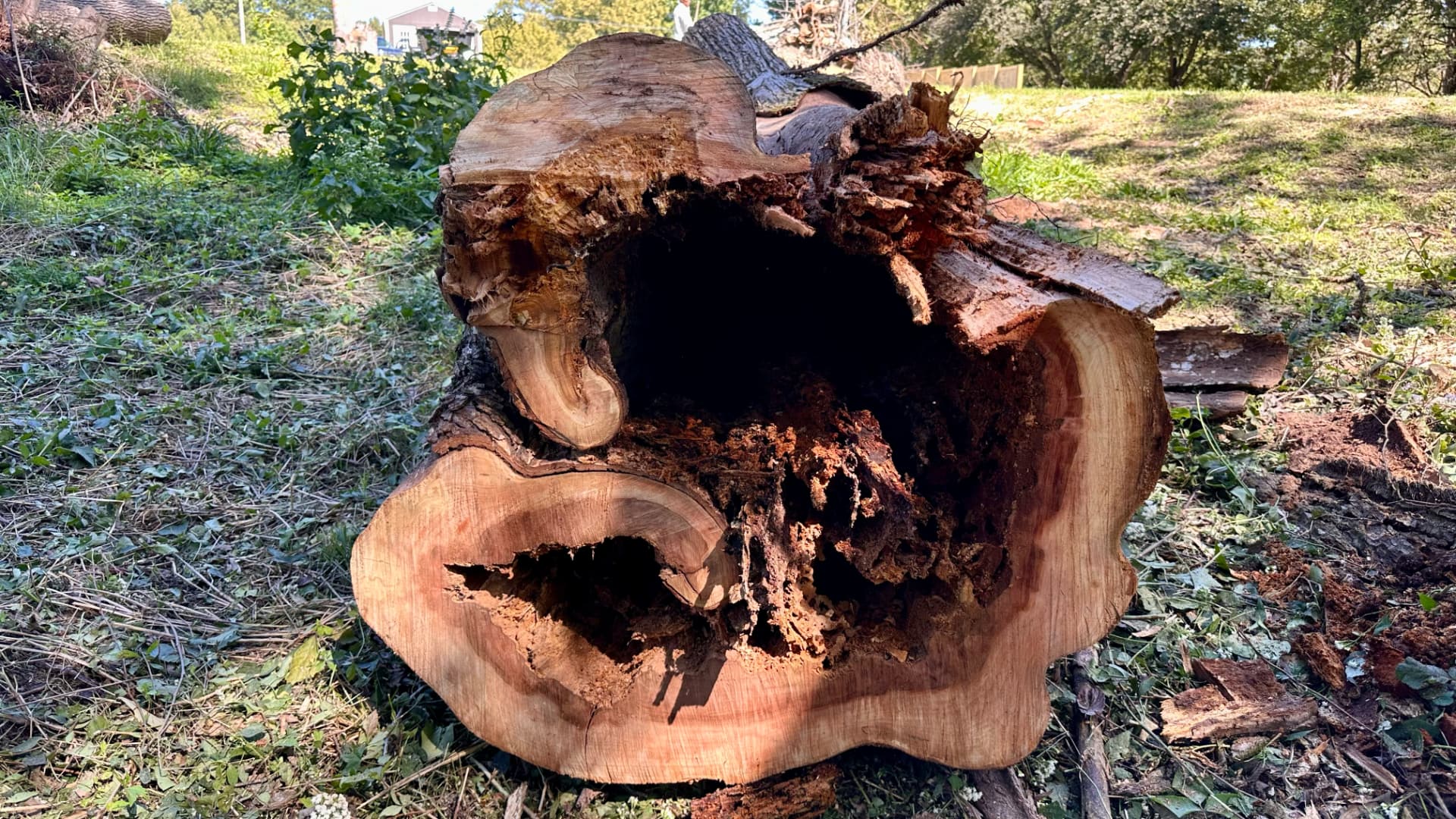
This image shows a large, hollow tree log lying on the ground in a forest. The wood is rotting and breaking down, with parts that are crumbly and dark inside. You can see fresh, light-colored wood where it has been cut, and plants and other trees growing around it.
🔬 Scientific Phenomena
Anchoring Phenomenon: Decomposition and Nutrient Cycling in Forest Ecosystems
This log is decomposing—breaking down into smaller and smaller pieces. When trees fall, they don't just disappear. Instead, tiny living things called decomposers (bacteria, fungi, and insects) eat the dead wood, breaking it apart. As the wood breaks down, it returns nutrients to the soil. This "nurse log" then becomes a home and food source for new plants, insects, and other forest creatures. This is nature's recycling system—nothing goes to waste in a forest!
📚 Core Science Concepts
- Decomposition: Dead organisms break down into simpler materials that enrich the soil and help new life grow.
- Habitat and Shelter: Fallen logs provide homes for insects, small animals, fungi, and other organisms that live in and around the decaying wood.
- Nutrient Cycling: As the log rots, nutrients return to the soil, which feeds new plants and completes the life cycle.
- Living vs. Nonliving Things: Students observe that while the log is no longer a living tree, it supports many living things (insects, fungi, plants) that depend on it.
Pedagogical Tip:
Use a sensory-rich approach: Bring a small piece of rotting wood to class (if safely obtained) so students can feel the crumbly texture, observe the color changes, and perhaps spot small insects. This hands-on experience makes the abstract concept of decomposition concrete and memorable for 5-6-year-olds.
UDL Suggestions:
UDL Checkpoint 2.4 (Maximize effort and persistence): Provide multiple ways to explore the concept: hands-on observation of wood samples, photographs, diagrams, and a video clip of time-lapse decomposition. Some students may excel with tactile exploration, while others benefit from visual or auditory explanations. Offer both individual and small-group investigations to support different learning preferences.
🔍 Zoom In / Zoom Out Concepts
Zoom In: Microscopic Level
At a microscopic level, bacteria and fungi are doing the real work of decomposition. These tiny organisms (too small to see without a microscope) break down the wood fibers into even smaller pieces. Insects like termites and beetles also tunnel through and chew the wood, creating pathways for fungi to grow deeper inside. These decomposers release chemicals that soften the hard wood, making it crumbly and easy to break apart.
Zoom Out: Forest Ecosystem
When you zoom out, this single nurse log is just one small part of a vast forest system. Fallen logs feed the entire forest floor, enriching the soil for thousands of plants. They create highways and homes for countless creatures—from microscopic organisms to deer and bears. The nutrients released from the log feed trees, shrubs, and wildflowers. In turn, these plants provide food and shelter for animals. The nurse log connects all living things in the forest together in a web of life.
🤔 Potential Student Misconceptions
- Misconception: "The log is dead, so nothing lives in it anymore."
- Clarification: The log's wood is no longer alive, but it becomes a home and food source for millions of living things! Insects, fungi, and plants all depend on the fallen log. It's full of life, just in a different way.
- Misconception: "Decomposition is the same as garbage rotting in the trash."
- Clarification: Decomposition in nature is healthy and helpful—it recycles nutrients and feeds new plants. Trash in a landfill doesn't always break down this way because it's often in sealed containers without the right conditions, and some materials don't decompose naturally.
- Misconception: "Once a tree falls, it's the end of its story."
- Clarification: A fallen tree is actually the beginning of a new chapter! It becomes a nurse log, feeding and sheltering new plants and animals for many years.
🎓 NGSS Connections
Performance Expectation:
- K-LS1-1: Use observations to describe patterns of what plants and animals (including humans) need to survive.
Disciplinary Core Ideas:
- (Structure and Function): Students observe that living things need food, water, and shelter—and that a nurse log provides all three for forest creatures.
- (Natural Resources): Students learn that natural materials (like fallen wood) are resources used by living things.
Crosscutting Concepts:
- : A fallen log is part of a larger forest system where energy and matter cycle.
- : Decomposition follows patterns—logs always break down, supporting new growth in predictable ways.
💬 Discussion Questions
- "What do you think is happening inside this log? Why might it look different from the outside than the inside?"
- Bloom's: Analyze | DOK: 2
- "What kinds of animals or bugs do you think might live in or eat this fallen log?"
- Bloom's: Create | DOK: 2
- "How do you think this log helps new plants grow in the forest?"
- Bloom's: Evaluate | DOK: 3
- "If we took this log away, what might happen to the forest creatures and plants that depend on it?"
- Bloom's: Analyze | DOK: 3
📖 Vocabulary
- Decompose: When something dead breaks down into smaller and smaller pieces over time.
- Nutrients: Special food that plants and animals need to grow strong and healthy.
- Habitat: A place where plants and animals live and find food and shelter.
- Rotting: The process where dead things slowly break apart and turn into soil.
- Nurse Log: A fallen tree that becomes home and food for new plants and animals in the forest.
- Fungi: Tiny living things (like mushrooms and mold) that help break down dead wood.
🌡️ Extension Activities
- Decomposition in a Jar:
Create a simple observation jar with layers of soil, sand, and small pieces of dead leaves or paper towels. Add a little water and seal it. Over weeks, students observe how the organic material breaks down. This brings the forest decomposition process into the classroom in a contained, safe way.
- Build a Log Habitat:
Provide a plastic tub filled with soil and a small piece of bark or wood. Let students add leaves, twigs, and a spray of water to create a mini-ecosystem. Place the tub in a quiet spot and observe over several weeks for insects and fungi that colonize the wood. (Ensure students wash hands after touching the soil/wood.)
- Forest Floor Sensory Walk:
Take students on a nature walk to a safe area where fallen logs or branches are visible (with proper supervision and on school grounds). Let them observe, sketch, and feel different stages of wood decay. Ask them to find insects or fungi living on fallen wood and discuss what they observe.
🔗 Cross-Curricular Ideas
- ELA - Storytelling & Sequencing:
Have students create a simple story or sequence of pictures showing the life of a tree: sprouting, growing tall, falling down, and becoming a nurse log. Use words like "first," "next," and "last" to reinforce sequence vocabulary.
- Math - Measurement & Growth:
Measure the width and length of the log in the photo. Plant seeds in a cup of soil and measure seedling growth over weeks. Compare growth rates and discuss how a nurse log provides nutrients for faster plant growth.
- Art - Nature Collage:
Collect leaves, twigs, bark pieces, and other forest materials. Create a mixed-media collage showing a forest floor and decomposing log. Discuss colors, textures, and patterns found in decomposing wood.
- Social Studies - Caring for Nature:
Discuss how we can help forests by leaving fallen logs in place rather than removing them. Connect to community stewardship and why protecting forests matters for all living things.
🚀 STEM Career Connection
- Ecologist — Studies how living things depend on each other and on the place they live.
- Try it: Explain how the decomposers living on and in the log are connected to the health of the forest ecosystem. (Practice: Constructing Explanations and Designing Solutions)
- Tools: quadrat frames, measuring tapes, GPS units, a field notebook
- Where they work: forests, grasslands, wetlands, universities
- Meet one: Sandra Díaz — What a plant's leaves, wood and shape tell you about how it lives — and how those traits add up across a whole ecosystem.
- Median pay: /year — "Environmental scientists and specialists, including health"
- Forest Ecologist — Studies how a whole forest works — the trees, the soil, and everything living in between.
- Try it: Construct an explanation for why a fallen log is like a 'hotel' for many different forest creatures. (Practice: Constructing Explanations and Designing Solutions)
- Tools: increment borers, climbing gear, canopy platforms, plot markers
- Where they work: forests, research stations, forestry services, universities
- Meet one: Nalini Nadkarni — The world living in the treetops, which she reaches with climbing gear — plants that grow on branches and trap soil in mid-air.
- Median pay: /year — "Environmental scientists and specialists, including health"
Wage figures are median annual wages for the U.S. occupation named after each one, from the U.S. Bureau of Labor Statistics, Occupational Employment and Wage Statistics (OEWS), national, May 2025. Several careers share one occupation, so their figures match.