📸 Photo Description
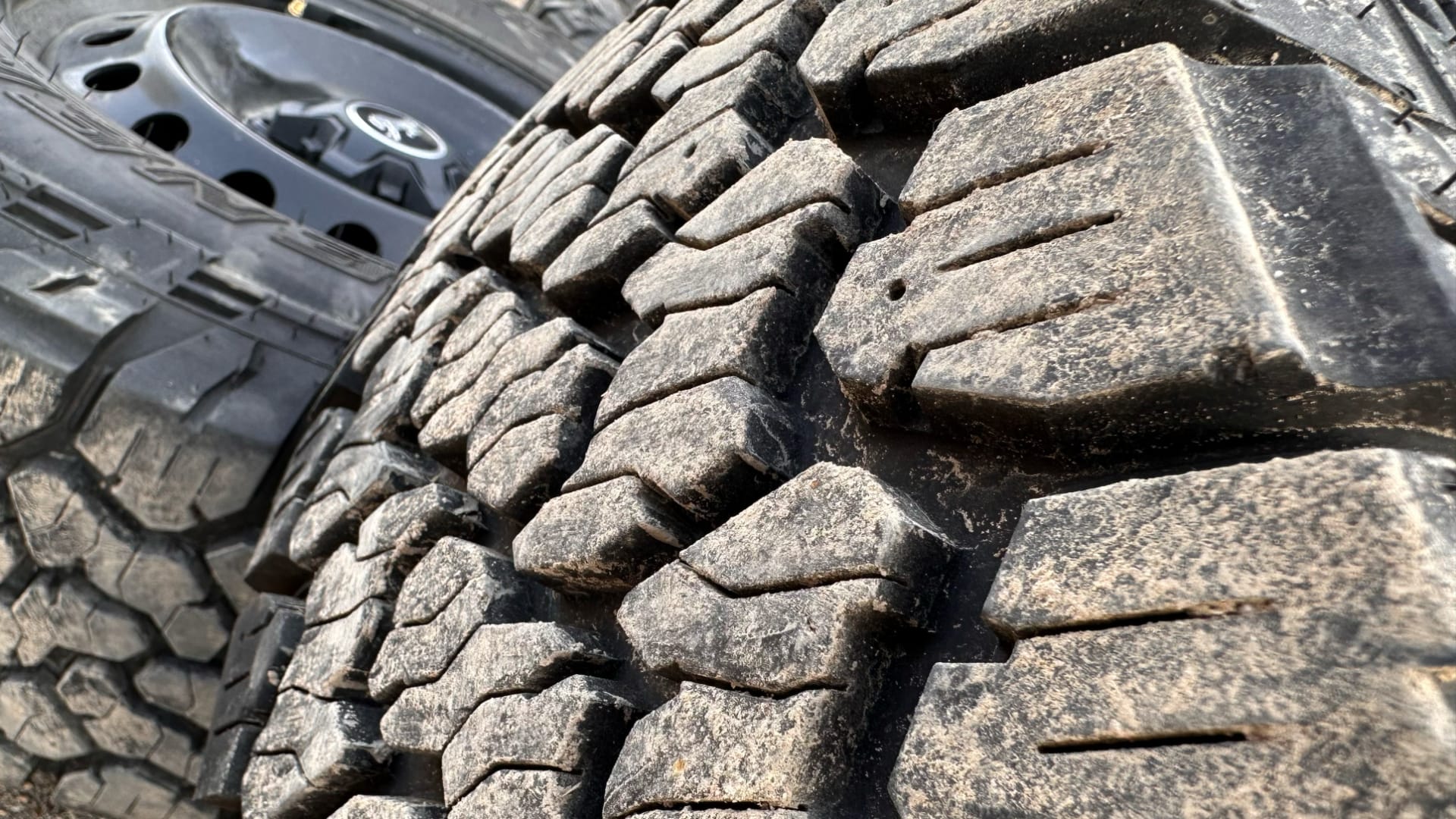
This photo shows a close-up view of a car tire's tread pattern—the deep grooves and bumpy texture on the rubber surface. The tread has many small channels and raised blocks that help the tire grip the road. You can also see a shiny car wheel rim in the background.
🔬 Scientific Phenomena
Anchoring Phenomenon: Why do tires have bumpy patterns with grooves instead of smooth rubber?
Scientific Explanation: Tire tread exists because of friction—the force that happens when two surfaces rub together. The bumpy, grooved pattern increases the tire's surface area and helps it grip the road better, especially on wet or slippery surfaces. The channels in the tread also move water away from the tire, preventing slipping. Without this special pattern, tires would slide too easily, making it dangerous for cars to stop or turn safely.
📚 Core Science Concepts
- Friction: A force that slows down or stops objects from sliding past each other. The textured tread on tires creates more friction with the road surface.
- Surface Texture and Function: Objects are designed with specific textures (rough, smooth, bumpy) to help them do their job better. A tire's tread pattern is designed to work well with different road conditions.
- Material Properties: Rubber is flexible and grippy, which makes it perfect for tires. The material choice affects how well the tire works.
- Wear and Maintenance: Over time, friction and use cause the tread to wear down, reducing the tire's ability to grip the road safely. Tires eventually need replacement.
Pedagogical Tip:
Build prior knowledge by having students touch various textured objects (sandpaper, smooth plastic, bumpy rubber) before discussing tires. This tactile experience helps Third Graders understand how texture connects to friction in a concrete way. You can also ask students to recall times they've slipped on ice or wet floors—this personal connection makes the concept memorable.
UDL Suggestions:
Multiple Means of Representation: Provide both the tire image and a simple diagram showing tread patterns and friction. Use tactile objects (textured fabric, rubber samples) so students can feel differences. Multiple Means of Engagement: Let students handle toy cars with different wheel designs. Multiple Means of Expression: Allow students to draw tire designs, build models with clay, or explain tread function through pictures and labels rather than written paragraphs alone.
🎓 NGSS Connections
Performance Expectation: 3-PS2-1
Plan and conduct an investigation to provide evidence that balanced and unbalanced forces on an object change its speed or direction of motion.
Relevant Disciplinary Core Ideas:
- Forces and Motion
- Developing Possible Solutions
Crosscutting Concepts:
- (tread patterns repeat and serve a function)
- (tire design relates to how it performs)
- (tread design causes better grip and safety)
💬 Discussion Questions
- What would happen to a car if its tires were completely smooth instead of bumpy? (Bloom's: Analyze | DOK: 2)
- Why do you think the tire tread has channels or grooves running through it? (Bloom's: Understand | DOK: 2)
- How is the tread on a tire similar to the pattern on your shoe soles? (Bloom's: Analyze | DOK: 3)
- If you rub your hand across sandpaper versus a smooth plastic table, which creates more friction? How is this like a tire? (Bloom's: Evaluate | DOK: 3)
📖 Vocabulary
- Tread: The bumpy, textured part of a tire that touches the road and helps it grip.
- Friction: A force that happens when two things rub together and makes them slow down or stick.
- Groove: A long, narrow cut or channel in the tire's surface that helps water drain away.
- Grip: The ability of a tire to hold firmly to the road without sliding.
- Texture: How something feels when you touch it—rough, smooth, bumpy, or ridged.
🌡️ Extension Activities
- Tire Tread Experiment: Provide toy cars with different wheels (some smooth, some textured). Students race them down an inclined ramp and measure how far they travel. Discuss why textured wheels might perform differently and relate findings back to real tires.
- Design Your Own Tire: Give students clay or play dough and ask them to create a tire with a tread pattern they think would work well on rainy roads. Have them test it by "rolling" it across a wet paper towel and observing what happens. Share designs and explain their thinking.
- Friction Exploration Station: Set up a station with different materials (rubber bands, sandpaper, plastic wrap, cloth) and have students test each material's friction by sliding it across different surfaces (wood, tile, carpet). Create a chart showing which combinations created the most and least friction, then connect findings to why tires need good texture.
🔍 Zoom In / Zoom Out Concepts
Zoom In: Molecular Level – Rubber and Grip
When you zoom in super close to the tire tread (almost like looking through a microscope), you'd see that rubber is made of tiny molecules linked together in long chains. These chains are slightly "sticky" to the road surface because they can bend and grip into the tiny bumps and cracks on pavement. The grooves in the tire tread let these rubber molecules get close to more of the road's surface, creating better grip. Without the tread pattern, fewer rubber molecules would touch the road, and the tire would slip more easily—like trying to hold onto a smooth ball versus a bumpy one!
Zoom Out: Transportation and Road Safety Systems
A single tire's tread pattern is just one small part of a much bigger transportation safety system. This system includes road design (with texture and drainage), weather conditions (rain, snow, ice), vehicle speed limits, and driver behavior. Engineers and city planners work together to make sure tire tread patterns match road conditions. In winter, people use special "snow tires" with deeper tread. Highways are designed with grooves to drain water. Traffic laws require tire safety checks. When you zoom out, you see that tire design connects to keeping entire communities safe on the roads!
🤔 Potential Student Misconceptions
Misconception 1: "The grooves in the tire are just for looks or decoration."
Clarification: The grooves aren't decorative—they have an important job! The channels push water and mud away from the tire so it can grip the road better. Without grooves, water would get trapped between the tire and road, and the car would slide. It's like the difference between walking on a dry floor versus a wet, slippery one.
Misconception 2: "Tires wear out because they get old, not because of use."
Clarification: Tires don't wear down just because time passes. They wear down because of friction—every time a tire rolls on the road, the rubber rubs against the pavement. The more you drive, the more the tread wears away. That's why old tires on cars that don't drive much still have good tread, while newer tires on cars that drive a lot might be worn down.
Misconception 3: "A bumpy tire will always be better than a smooth tire."
Clarification: While bumpy tread is great for grip on regular roads and in wet conditions, the tread pattern has to be just right. Scientists and engineers test many different patterns to find the best design. A tire that's too bumpy or has the wrong pattern might not work well on highways or in certain conditions. Tire designers carefully choose the best pattern for each type of driving!
🔗 Cross-Curricular Ideas
Mathematics Connection: Measuring and Patterns
Have students use rulers or measuring tapes to measure the depth of tire tread grooves (you can bring in a worn tire and a new tire to compare). Create a simple bar graph showing the difference in tread depth between the two. Students can also count how many grooves run around the tire or sketch the repeating pattern and describe it using math language (parallel lines, angles, regular shapes).
English Language Arts Connection: Descriptive Writing and Sequencing
Read a picture book about how cars work (such as Cars by Seymour Simon), then ask students to write or dictate a simple paragraph describing what a tire does and why it needs tread. Students can also create a "How a Tire Works" comic strip with 4–6 panels showing the sequence: tire rolls, tread grips road, water drains through grooves, car stays safe. This builds narrative sequencing skills while reinforcing the science concept.
Social Studies Connection: Community Safety and Jobs
Invite discussion about why tire safety is important for the community (safe driving keeps families safe, prevents accidents). Connect this to community helpers: mechanics check tires, truck drivers depend on good tires, road workers maintain pavement so tires can grip well. Students can draw a picture of a community helper who works with tires or wheels and write a sentence about their job. This builds understanding of how science connects to real jobs and community well-being.
Art and Design Connection: Engineering and Creative Problem-Solving
Show students several different tire tread patterns (images from different tire brands or types—all-terrain, racing slicks, snow tires). Discuss how each pattern looks different and is designed for different purposes. Challenge students to design their own tire tread pattern using paper, markers, and stickers. Have them explain: "What road or weather condition is your tire designed for? Why did you choose that pattern?" This builds creative thinking and helps them understand that good design solves real problems.
🚀 STEM Career Connection
- Materials Scientist — Invents and tests new materials — stronger, lighter, or able to do something the old ones could not.
- Try it: Test how different amounts of water affect the grip between a smooth rubber block and a textured surface by seeing how far it slides when pushed. (Practice: Constructing Explanations and Designing Solutions)
- Tools: electron microscopes, stress testers, furnaces, X-ray diffractometers
- Where they work: research laboratories, manufacturing companies, national labs, universities
- Meet one: Ainissa Ramirez — How to make metal stick to glass and ceramics — she invented a solder that does it.
- Median pay: /year — "Materials scientists"
- Environmental Scientist — Measures how healthy the air, water and land are, and finds out what is harming them.
- Try it: Investigate how different road surfaces (like pavement, gravel, or grass) affect the friction when you try to slide a toy car with different types of 'tires'. (Practice: Constructing Explanations and Designing Solutions)
- Tools: water test kits, air sensors, sample jars, data loggers
- Where they work: rivers and lakes, city environmental offices, testing labs, consulting firms
- Meet one: Tierra Curry — Which plants and animals are closest to disappearing, and what it takes to save them.
- Median pay: /year — "Environmental scientists and specialists, including health"
Wage figures are median annual wages for the U.S. occupation named after each one, from the U.S. Bureau of Labor Statistics, Occupational Employment and Wage Statistics (OEWS), national, May 2025. Several careers share one occupation, so their figures match.
---
Teacher Tip: This lesson naturally connects to transportation, community helpers (mechanics), and road safety. Consider inviting a mechanic or tire shop worker to your classroom virtually or in person to deepen student understanding!