📸 Photo Description
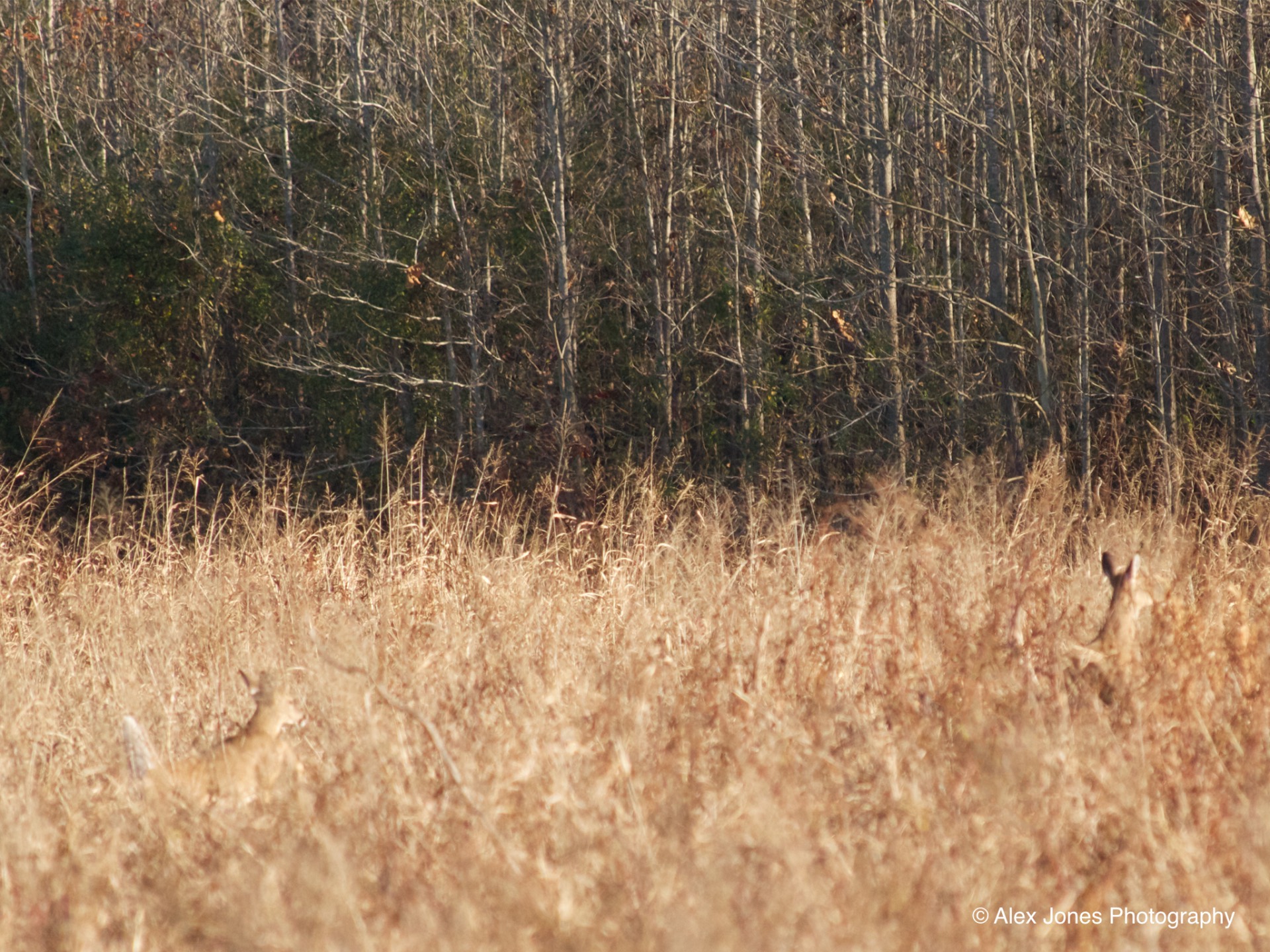
In this picture, you can see deer hiding in tall, golden grass near some trees. The deer's brown fur matches the color of the dried grass so well that they are hard to spot. This is called camouflage, and it helps animals blend in with their surroundings.
🔬 Scientific Phenomena
The anchoring phenomenon shown here is animal camouflage - specifically how deer use their natural coloration to blend into their environment. This occurs because over many generations, deer with fur colors that better matched their surroundings were more likely to survive and reproduce. Their brown and tan coloration helps them avoid predators by making them nearly invisible against dried grasses, fallen leaves, and tree bark. This is an example of how animals have special traits that help them survive in their habitats.
📚 Core Science Concepts
- Camouflage and Survival: Animals have physical features like color and patterns that help them hide from predators or hunt for food.
- Habitat Adaptations: Living things have special traits that help them survive in specific environments, like forests or grasslands.
- Predator-Prey Relationships: Animals use different strategies to avoid being eaten, including blending in with their surroundings.
- Inherited Traits: Animals are born with certain characteristics, like fur color, that are passed down from their parents.
Pedagogical Tip: When teaching camouflage, have students close their eyes while you hide toy animals around the classroom using different colored backgrounds. This hands-on experience helps them understand how camouflage works better than just looking at pictures.
UDL Suggestions: Provide multiple ways for students to demonstrate understanding of camouflage by offering choices: drawing animals in their habitats, creating camouflage patterns with art materials, or acting out predator-prey scenarios during movement breaks.
🔍 Zoom In / Zoom Out Concepts
- Zoom In: The microscopic structures in deer fur contain pigments (tiny colored particles) that create the brown and tan colors. These pigments are made inside special cells and determine what color the fur will be.
- Zoom Out: This camouflage strategy is part of a larger ecosystem where many animals use similar survival techniques. The grassland ecosystem depends on these predator-prey relationships to maintain balance - if all prey animals were easily seen, predator populations would grow too large and disturb the entire food web.
🤔 Potential Student Misconceptions
- Misconception: Animals choose their camouflage colors or can change them at will.
Reality: Most animals are born with their camouflage colors and cannot change them. These traits are inherited from their parents.
- Misconception: Camouflage always makes animals completely invisible.
Reality: Camouflage helps animals blend in but doesn't make them disappear. Predators can still find them using other senses like smell or hearing.
- Misconception: Only prey animals use camouflage.
Reality: Both predators and prey use camouflage - predators use it to sneak up on their food, while prey use it to hide.
🎓 NGSS Connections
Performance Expectation: 3-LS4-3 - Construct an argument with evidence that in a particular habitat some organisms can survive well, some survive less well, and some cannot survive at all.
Disciplinary Core Ideas:
- - Environmental changes affect organisms and habitats
- - Variation of traits over time
Crosscutting Concepts:
- - Students can identify how camouflage traits cause better survival outcomes
💬 Discussion Questions
- Why do you think these deer have brown and tan fur instead of bright colors like red or blue? (Bloom's: Analyze | DOK: 2)
- What might happen to a deer with bright white fur living in this grassy area? (Bloom's: Evaluate | DOK: 3)
- How does the deer's camouflage help it survive in this habitat? (Bloom's: Apply | DOK: 2)
- What other animals do you know that use camouflage, and how does their camouflage match their homes? (Bloom's: Apply | DOK: 2)
📖 Science Vocabulary
- Camouflage: When an animal's colors or patterns help it blend in with its surroundings.
- Habitat: The natural home where an animal lives and finds everything it needs to survive.
- Predator: An animal that hunts and eats other animals.
- Prey: An animal that is hunted and eaten by other animals.
- Adaptation: A special trait that helps an animal survive in its environment.
- Inherited trait: A characteristic that baby animals get from their parents.
🔗 Cross-Curricular Ideas
- Math + Science: Create a "Camouflage Counting" activity where students count how many deer they can spot in the photo within 30 seconds. Then, have them graph the class results showing "Found" vs. "Not Found" to discuss why camouflage makes counting harder. This connects to data collection and graphing skills.
- ELA + Science: Have students write a short story from the perspective of a deer using camouflage to hide from a predator. They can illustrate their stories and create a class book titled "Deer Tales: Survival Stories." This builds narrative writing skills while reinforcing camouflage concepts.
- Art + Science: Students create their own camouflage animals using collage materials, paint, and natural items (leaves, twigs, grass). They design an animal and its matching habitat environment, then display both together to see how well the camouflage works. This develops fine motor skills and artistic creativity.
- Social Studies + Science: Research and discuss how indigenous peoples used knowledge of animal camouflage and habitats for hunting and survival. Students can learn about traditional hunting practices that depended on understanding animal behavior and environments.
🚀 STEM Career Connection
- Animal Behaviourist — Watches what animals do and works out why they do it.
- Try it: Imagine you are a deer predator and explain how a deer's camouflage would make it hard to find your food. (Practice: Constructing explanations and designing solutions)
- Tools: observation blinds, video recorders, stopwatches, behaviour checklists
- Where they work: zoos, field research stations, farms, universities
- Meet one: Rae Wynn-Grant — Where black bears and people run into each other, and how to keep both safe.
- Median pay: /year — "Zoologists and wildlife biologists"
- Wildlife Biologist — Studies wild animals — what they eat, where they go, and what they need to survive.
- Try it: Design a camouflage pattern for a deer that would help it hide in a snowy environment. (Practice: Constructing explanations and designing solutions)
- Tools: binoculars, radio collars, trail cameras, a field notebook
- Where they work: national parks, wildlife refuges, state wildlife agencies, universities
- Meet one: Rae Wynn-Grant — Where black bears and people run into each other, and how to keep both safe.
- Median pay: /year — "Zoologists and wildlife biologists"
Wage figures are median annual wages for the U.S. occupation named after each one, from the U.S. Bureau of Labor Statistics, Occupational Employment and Wage Statistics (OEWS), national, May 2025. Several careers share one occupation, so their figures match.