📸 Photo Description
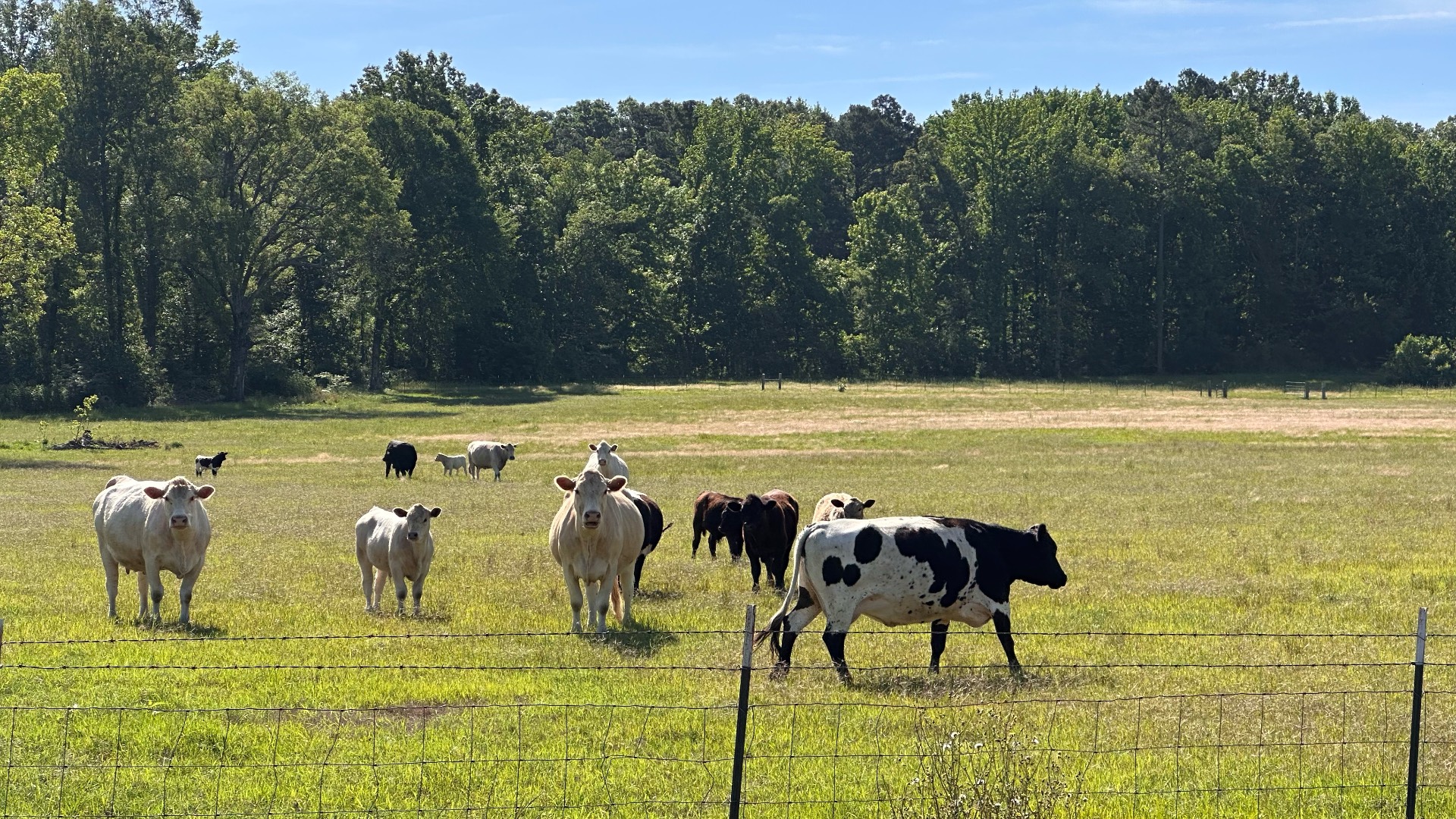
A herd of cows grazes in a green pasture surrounded by trees and blue sky. The cows have different colors - some are white, some are black, and some have black and white spots. They are eating grass in a field with a fence around it.
🔬 Scientific Phenomena
The anchoring phenomenon shown here is animal adaptation for herbivorous feeding. Cows are grazing, which demonstrates how animals have specialized body parts (flat teeth for grinding, multi-chambered stomachs for digesting plant material, and strong legs for walking while feeding) that help them survive by eating plants. This behavior also shows how animals meet their basic needs for food and energy from their environment.
📚 Core Science Concepts
- Animal Needs and Survival: Cows demonstrate how animals meet their basic need for food by eating grass and plants in their habitat.
- Inherited Traits: The different coat colors and patterns (solid black, white, spotted) show how animals inherit characteristics from their parents.
- Animal Behaviors: Grazing is a learned and instinctive behavior that helps cows survive by obtaining nutrition from their environment.
- Habitat Requirements: The pasture provides everything cows need - food (grass), water access, shelter from trees, and space to move around.
Pedagogical Tip: Use this image to have students practice making observations versus inferences. Have them list what they can directly see (observations) versus what they think might be happening (inferences) to build scientific thinking skills.
UDL Suggestions: Provide multiple ways for students to share their observations - through drawing, verbal descriptions, or acting out cow behaviors. This supports different learning styles and communication preferences.
🔍 Zoom In / Zoom Out Concepts
Zoom In: Inside a cow's stomach, there are actually four different chambers that work together to break down tough grass and plants. Special bacteria help digest the plant material that humans cannot digest.
Zoom Out: This pasture is part of a larger ecosystem where cows, grass, soil, insects, birds, and decomposers all depend on each other. The cows help fertilize the soil, which helps grass grow, creating a cycle of life.
🤔 Potential Student Misconceptions
- Misconception: All cows are the same and produce the same things.
Clarification: Different breeds of cows have different traits - some are raised for milk, others for meat, and they can have different colors, sizes, and characteristics.
- Misconception: Cows can eat any type of food like humans do.
Clarification: Cows are herbivores with special body parts designed only for eating plants and grass, not meat or processed foods.
- Misconception: Animals choose their traits like color or size.
Clarification: Animals inherit their physical traits from their parents and cannot change these characteristics.
🎓 NGSS Connections
Performance Expectation: 3-LS4-2 - Use evidence to construct an explanation for how the variations in characteristics among individuals of the same species may provide advantages in surviving, finding mates, and reproducing.
Disciplinary Core Ideas:
- - Environmental changes affect organisms
- - Growth and development of organisms
Crosscutting Concepts:
- - Observable patterns in nature
- - Animal structures serve specific functions
💬 Discussion Questions
- What do you notice about how the cows' body parts help them eat grass? (Bloom's: Analyze | DOK: 2)
- Why might having different colored coats be helpful for different cows? (Bloom's: Evaluate | DOK: 3)
- How do you think these cows would survive if they were moved to a desert environment? (Bloom's: Apply | DOK: 2)
- What patterns do you observe in how the cows are behaving in the field? (Bloom's: Understand | DOK: 1)
📖 Science Vocabulary
- Herbivore: An animal that only eats plants and grass for food.
- Grazing: The behavior of animals eating grass and plants while walking around in a field.
- Inherited traits: Characteristics like color or size that animals get from their parents.
- Habitat: The natural place where an animal lives and finds everything it needs to survive.
- Adaptation: Special body parts or behaviors that help animals survive in their environment.
🔗 Cross-Curricular Ideas
- Math - Data Collection & Graphing: Have students count the cows by color (white, black, spotted) and create a bar graph showing how many of each type they see. This connects to measurement and data representation standards while practicing real-world data skills.
- ELA - Descriptive Writing: Students can write a short narrative or descriptive paragraph from the perspective of a cow spending a day in the pasture. This builds writing skills while deepening their understanding of animal behavior and habitat needs.
- Social Studies - Agriculture & Community: Discuss where milk, cheese, and other dairy products come from and how farmers care for cows. Students can learn about jobs in their community and how agriculture connects to their everyday lives (food they eat, clothes they wear).
- Art - Color & Pattern Recognition: Use the different cow coat colors and patterns as inspiration for mixed-media art projects. Students can create their own "cows" using paint, markers, and collage materials, exploring patterns, symmetry, and animal design.
🚀 STEM Career Connection
- Agricultural Scientist — Works out how to grow more food on the same land without wearing the soil out.
- Try it: If you wanted to grow more grass for cows, what is one experiment you could do? (Practice: Analyzing and Interpreting Data)
- Tools: test plots, soil kits, seed drills, yield monitors
- Where they work: research farms, seed companies, extension services, universities
- Meet one: Segenet Kelemu — How to protect African food crops from disease, and how insects themselves can become food.
- Median pay: /year — "Soil and plant scientists"
- Farmer — Grows crops or raises animals, and reads the weather and soil to decide what to do each week.
- Try it: Observe the cow and describe what it is eating and how it is eating it. (Practice: Analyzing and Interpreting Data)
- Tools: tractors, irrigation systems, soil tests, weather forecasts
- Where they work: farms and ranches, orchards, greenhouses, community gardens
- Meet one: Segenet Kelemu — How to protect African food crops from disease, and how insects themselves can become food.
- Median pay: /year — "Farmers, ranchers, and other agricultural managers"
Wage figures are median annual wages for the U.S. occupation named after each one, from the U.S. Bureau of Labor Statistics, Occupational Employment and Wage Statistics (OEWS), national, May 2025. Several careers share one occupation, so their figures match.