# Third Grade Science Lesson: Amphibians
📸 Photo Description
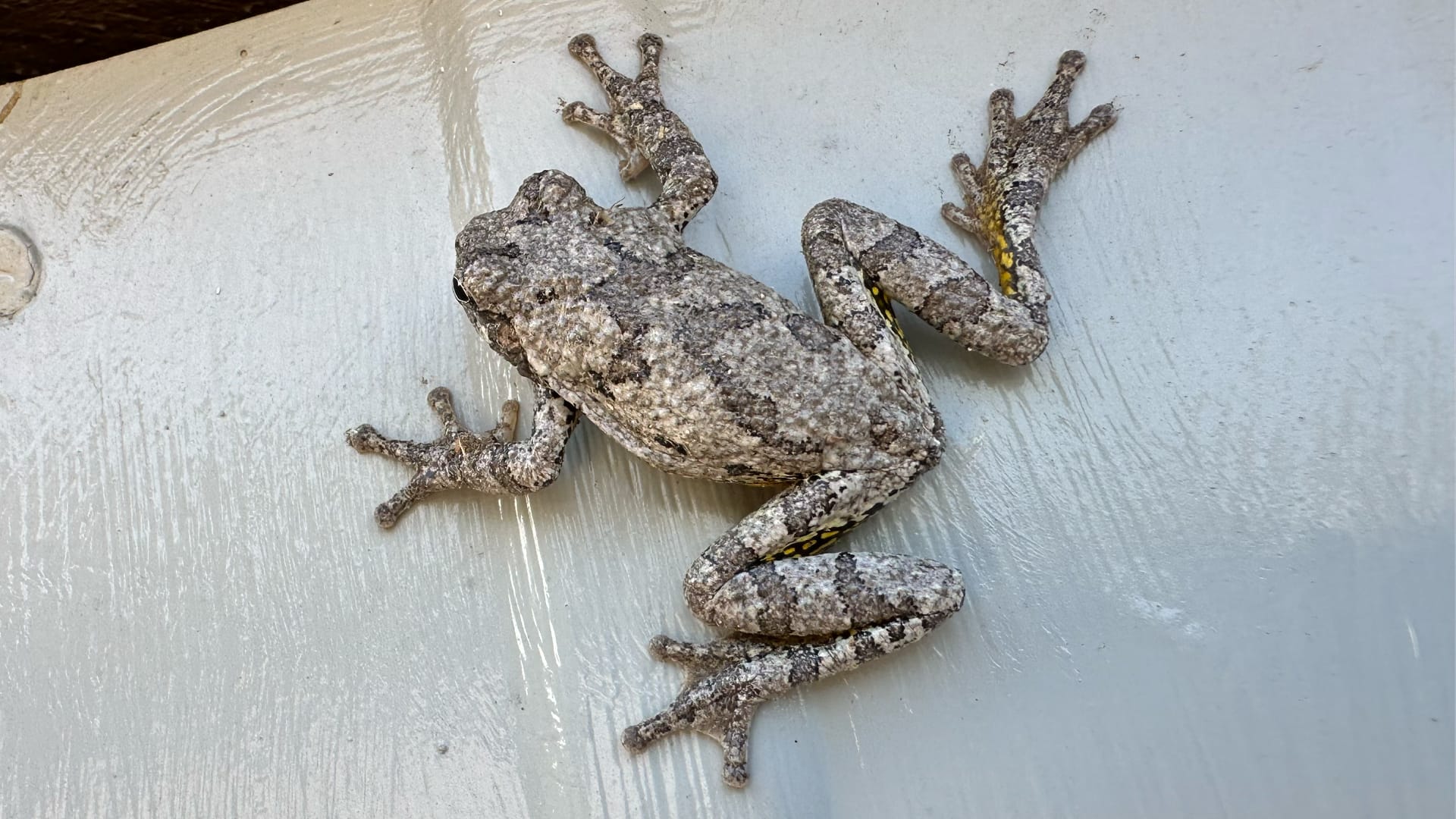
This image shows two gray tree frogs resting on a white wooden surface. You can see their bumpy skin, four legs with special toe pads, and their large bulging eyes. The frogs are camouflaged because their gray color blends in with the wood, helping them hide from predators in their natural environment.
🔬 Scientific Phenomena
Anchoring Phenomenon: Why do frogs have special sticky toe pads and bumpy skin?
These tree frogs are displaying two important adaptations. Their sticky toe pads (called adhesive discs) allow them to climb and cling to trees and smooth surfaces—this is a structural adaptation that helps them survive in their tree-dwelling habitat. Their bumpy, textured skin helps absorb moisture and provides camouflage through coloration. Scientifically, these features evolved over many generations because frogs with better climbing abilities and better camouflage survived longer and reproduced more successfully. The frogs' gray color also demonstrates cryptic coloration, a survival strategy where an organism's appearance helps it blend into its environment.
📚 Core Science Concepts
- Adaptations: Physical features or behaviors that help animals survive and thrive in their environment. Tree frogs have sticky toe pads to climb and bumpy skin for moisture and camouflage.
- Life Cycles & Metamorphosis: Frogs are amphibians that go through dramatic changes—they start as eggs in water, become tadpoles with tails, and transform into adult frogs with legs and lungs.
- Habitats & Environmental Fit: Different animals are suited to different environments. Tree frogs live in forests where they need to climb and hide, so their bodies are specially designed for those needs.
- Camouflage: The way an animal's color, pattern, or shape helps it blend into its surroundings to hide from predators or sneak up on prey.
Pedagogical Tip:
When teaching about frog adaptations, use a compare-and-contrast strategy: Show pictures of different frog types (bullfrogs, poison dart frogs, tree frogs) and ask students to notice how their bodies are different based on where they live. This concrete visual approach helps third graders understand that adaptations match habitats.
UDL Suggestions:
Multiple Means of Representation: Provide images of frogs in their natural habitats alongside close-up photos of their feet and skin. Create a visual anchor chart showing frog adaptations with labels and pictures. Multiple Means of Action & Expression: Allow students to demonstrate understanding through drawing, building models with craft materials, or acting out how a tree frog climbs and hides. Multiple Means of Engagement: Connect frogs to students' prior experiences (have they seen frogs at a pond?) and let them choose how to present their learning about one frog adaptation.
🎓 NGSS Connections
Performance Expectation:
3-LS1-1: Develop models to describe that organisms have unique and diverse life cycles but all have in common birth, growth, reproduction, and death.
Performance Expectation:
3-LS3-2: Use information to classify animals into groups based on a variety of physical attributes and based on common ancestry. Fossils provide evidence about the types of organisms that lived long ago and also about the nature of their environments.
Disciplinary Core Ideas:
- Growth and Development of Organisms
- Variation of Traits
- Adaptation
Crosscutting Concepts:
- (How do a frog's toe pads and skin help it survive?)
- (Why do tree frogs have adaptations different from pond frogs?)
💬 Discussion Questions
- What do you notice about this frog's feet and skin? Why do you think they look this way?
(Bloom's: Understand | DOK: 1)
- How does this frog's gray color help it survive in nature?
(Bloom's: Apply | DOK: 2)
- If this tree frog lived in a bright green forest instead of gray trees, how might its body be different, and why?
(Bloom's: Analyze | DOK: 3)
- Compare this tree frog to a bullfrog that lives in ponds. What adaptations would be different and why?
(Bloom's: Evaluate | DOK: 3)
📖 Vocabulary
- Adaptation: A special body part or behavior that helps an animal survive in its home.
- Amphibian: An animal that lives part of its life in water and part on land, like frogs, salamanders, and newts.
- Camouflage: Colors or patterns on an animal's body that help it blend in and hide.
- Habitat: The place where an animal lives that has the food, water, and shelter it needs.
- Metamorphosis: A big change in how an animal looks as it grows from a baby to an adult (like a tadpole becoming a frog).
- Sticky toe pads: Special discs on a tree frog's feet that help it grip and climb smooth surfaces.
🌡️ Extension Activities
- Frog Adaptation Stations: Set up three learning stations where students explore different frog adaptations: (1) A "climbing challenge" where they try to stick tape circles to various surfaces to understand toe pad stickiness, (2) A "color matching" game where they match frog pictures to habitat backgrounds, and (3) A "life cycle sequencing" station where they arrange pictures of eggs, tadpoles, and adult frogs in order.
- Build a Tree Frog Habitat: In small groups, students create a miniature forest habitat using a shoebox, branches, leaves, and a small water container. They place a toy or drawn frog in the habitat and explain how each part (water, plants, hiding spots) helps the frog survive. Have them hide their frog and challenge other groups to find it—reinforcing camouflage concepts.
- Frog Research Presentations: Assign each student or pair a different frog species (tree frog, bullfrog, poison dart frog, leopard frog). They research one key adaptation and create a simple poster or digital presentation showing how that frog's body helps it survive. Present findings to the class, emphasizing how different habitats require different adaptations.
🔍 Zoom In / Zoom Out Concepts
Zoom In: The Sticky Toe Pads (Microscopic Level)
If we could shrink down really tiny and look at a tree frog's toe pads under a microscope, we'd see millions of super small bumps and special structures called lamellae. These microscopic bumps release a thin, sticky liquid that acts like natural glue. The stickiness comes from special cells in the frog's skin that produce this liquid. This is why the frog can cling to smooth surfaces—it's not using suction cups like we might think, but actual sticky chemistry happening at a size too small to see with our eyes! Scientists study these toe pads to design new sticky materials that could help humans grip things better.
Zoom Out: The Forest Ecosystem
Tree frogs are just one tiny part of a much larger forest system. In the ecosystem, frogs eat insects (helping control bug populations), and larger animals like snakes, birds, and raccoons eat frogs (which is food for them). Trees provide the habitat where frogs live and hunt. When it rains, water flows through the forest into streams and ponds where frog eggs are laid. If forests get cut down or polluted, the whole system breaks down—fewer trees mean fewer insects, fewer places to hide, and frogs disappear. This shows how every living thing is connected in nature, and when we protect forests, we're protecting frogs and all the animals that depend on them.
🤔 Potential Student Misconceptions
Misconception 1: "Frogs are just little slimy creatures with no special body parts."
Clarification: Every part of a frog's body has a job! Their bumpy skin keeps them moist, their toe pads help them climb, their big eyes see insects moving, and their powerful back legs help them jump. Frogs are actually super-designed for their habitats. Invite students to look closely at the photo and name three special features they notice—this concrete observation helps them see that frogs aren't "just slimy" but are wonderfully adapted.
Misconception 2: "All frogs look the same and live in the same places."
Clarification: There are thousands of different frog species, and they look very different! Some are tiny (smaller than your fingernail), some are huge (bigger than a dinner plate), some are bright poisonous colors, and some are gray like these tree frogs. Bullfrogs live in ponds, tree frogs live in forests, and some frogs even live in deserts. Show students 3-4 pictures of different frog types and have them describe the differences. This helps them understand that adaptations match habitats.
Misconception 3: "Frogs are born looking like tiny adult frogs."
Clarification: Frogs go through an amazing change called metamorphosis. They start as tiny eggs in jelly in the water, hatch into tadpoles (which look like fish with tails!), and slowly grow legs and lose their tails until they become adult frogs. This takes several weeks or months. Use a simple diagram or animation to show this transformation so students understand it's not magic—it's a real biological process.
🔗 Cross-Curricular Ideas
ELA Connection: Descriptive Writing & Vocabulary Building
Have students write a "frog descriptive paragraph" where they use sensory words to describe what they observe in the photo: "The tree frog's bumpy skin feels rough like tree bark. Its sticky toe pads are shaped like tiny round discs. Its big round eyes bulge out of its head." This builds descriptive vocabulary and helps students practice using adjectives. Students could also read simple frog books and create a "Frog Vocabulary Word Wall" with pictures and definitions.
Math Connection: Measurement & Data
Bring in pictures or information about different frog sizes. Have students measure and compare: "A tree frog is about 2 inches long. A bullfrog is about 8 inches long. How much longer is a bullfrog?" Create bar graphs showing frog sizes, or use a number line to practice addition and subtraction with frog measurements. Students could also count tadpoles in photos and practice skip-counting by fives or tens.
Art Connection: Camouflage & Color Mixing
Provide students with gray, brown, and green paint or colored pencils. Have them paint or color a picture of a tree frog on a tree bark background, mixing colors to make the frog blend in realistically. Then have them paint the same frog on a bright green leaf background and observe how the color needs to change for camouflage to work. Display both versions side-by-side to show how color adaptation matches habitat. This reinforces the concept that camouflage is about matching your surroundings.
Social Studies Connection: Habitats & Conservation
Discuss where tree frogs live (tropical rainforests, forests near students' homes). Look at a map and locate different frog habitats around the world. Talk about why we need to protect forests: "Frogs need trees to live. When we cut down forests, frogs lose their homes." Connect this to local conservation efforts—do any parks or nature centers near your school protect frog habitats? Invite a local park ranger or nature educator to visit and talk about protecting animals in your community.
🚀 STEM Career Connection
Wildlife Biologist / Herpetologist
A herpetologist is a scientist who studies reptiles and amphibians like frogs, snakes, and salamanders. These scientists might observe frogs in the rainforest, study how their adaptations help them survive, or investigate why frog populations are declining in certain areas. They work in nature, in laboratories, and sometimes at zoos. Herpetologists help protect endangered frogs by understanding their needs and sharing that knowledge with others. Average Annual Salary: $63,000–$75,000 USD
Material Scientist / Biomimicry Engineer
These scientists study nature—especially amazing adaptations like sticky frog toe pads—to invent new materials that help humans. For example, they studied how tree frogs stick to smooth surfaces and created new super-sticky tapes that don't leave residue (like the sticky notes you use in class!). These engineers ask questions like, "How can we use nature's designs to solve human problems?" They work in laboratories designing and testing new materials. Average Annual Salary: $68,000–$85,000 USD
Zoo Keeper / Animal Care Specialist
Zoo keepers work with frogs and other animals every day, creating habitats that match what the animals need in nature. They feed the frogs, keep their habitats clean and moist, monitor their health, and help visitors learn about frogs through educational programs. Zoo keepers are part detective (noticing if an animal is sick), part builder (creating habitats), and part teacher. If you love animals and want to help them thrive, this could be your job! Average Annual Salary: $28,000–$38,000 USD
📚 External Resources
Children's Books:
- From Tadpole to Frog by Witold Bledsoe (Simple life cycle exploration)
- National Geographic Little Kids First Big Book of Bugs by Kathryn Otoshi (Includes amphibians with stunning photography)
- Frogs by Nic Bishop (Beautiful images of frog adaptations and habitats)
---
Implementation Note: This lesson works best as a 2-3 day unit. Day 1 focuses on observable features and adaptations using the photo; Day 2 explores life cycles; Day 3 includes hands-on extension activities. Use formative assessment through observation during discussions and extension activities to gauge student understanding of adaptations and habitat connections.