📸 Photo Description
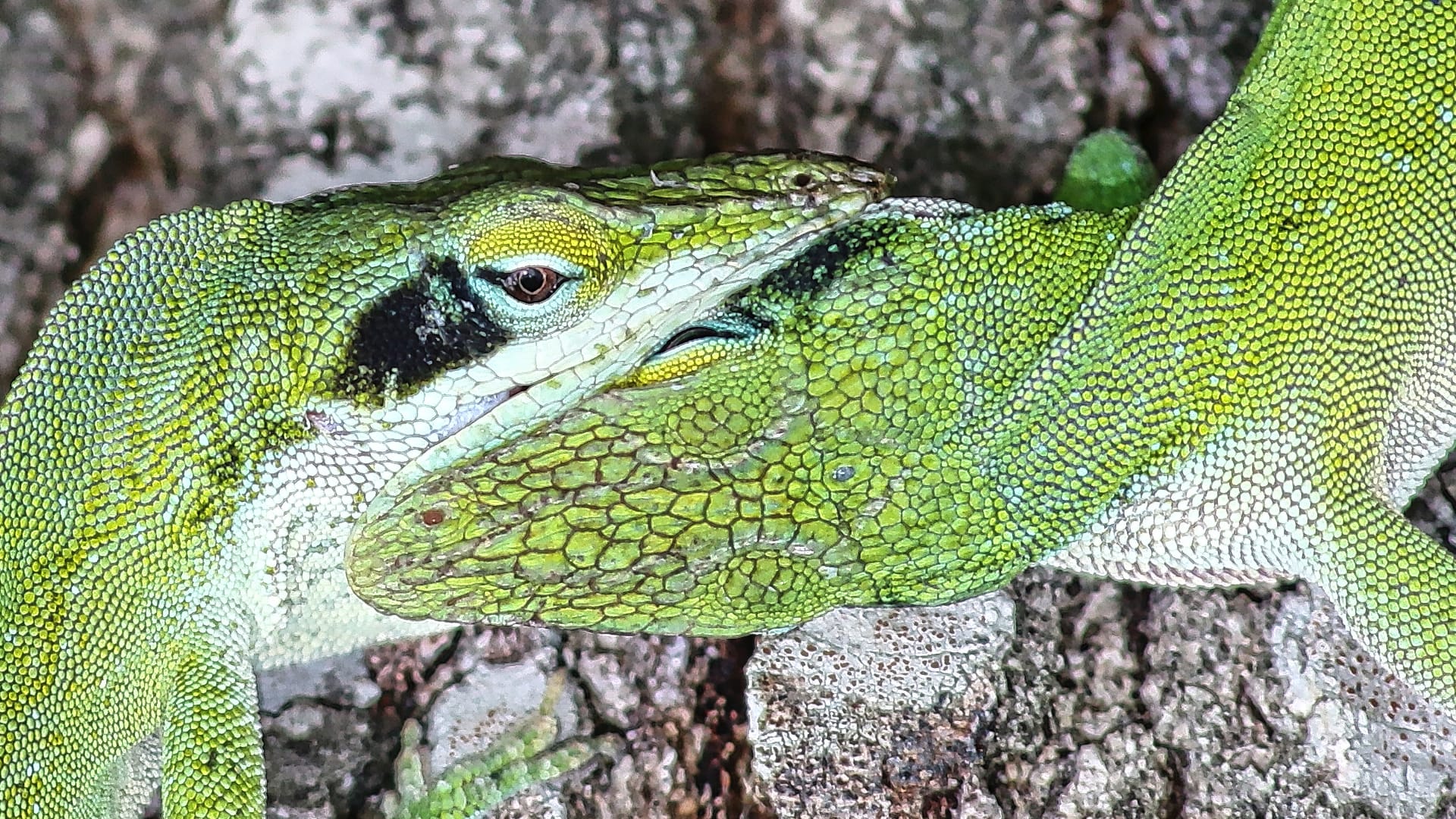
This close-up image shows two green anoles, a type of lizard, interacting. Their scales are detailed, and their eyes are visible. They appear to be on a textured surface, possibly tree bark or rocks, in their natural habitat.
🔬 Scientific Phenomena
The image captures an interaction between two anoles, which can be related to animal behavior, communication, and survival strategies. These interactions might involve territorial displays, mating rituals, or social hierarchies. Lizards use a variety of signals, including body posture, color changes, and vocalizations, to communicate with each other and their environment.
📚 Core Science Concepts
- Animal Behavior: Animals exhibit a wide range of behaviors that are important for their survival, such as finding food, reproducing, and avoiding predators.
- Adaptation: The physical characteristics and behaviors of animals are often adaptations that help them survive in their specific environments. For example, the green coloration of these anoles helps them camouflage.
- Life Cycles: All organisms, including anoles, go through a life cycle that includes birth, growth, reproduction, and death.
Pedagogical Tip: Encourage students to use descriptive words to explain what they observe in the image, focusing on observable characteristics and behaviors of the animals.
UDL Suggestions: Provide students with varied opportunities to engage with the content, such as through drawing their observations, writing descriptive sentences, or verbally explaining what they see.
🔍 Zoom In / Zoom Out Concepts
- Zoom In: At a microscopic level, the scales of the anole are made of keratin, a tough protein, which provides protection and helps prevent water loss. The intricate patterns on the scales are a result of how these cells develop.
- Zoom Out: These anoles are part of a larger ecosystem, likely a forest or grassland. They interact with plants for shelter and camouflage, and with insects and other small animals, which they prey upon. Their presence contributes to the balance of the food web within their habitat.
🤔 Potential Student Misconceptions
- Misconception: Students might think animals only interact when they are fighting or playing.
Clarification: Animals interact for many reasons, including mating, communication, warning each other of danger, or simply resting near each other. The interaction shown could be any of these.
- Misconception: Students might believe all animals of the same type look exactly alike.
Clarification: While animals of the same species share many traits, there are often variations. This includes differences in size, color patterns, and subtle physical features, as seen even in these two similar-looking anoles.
🎓 NGSS Connections
3-LS2-1: Construct an argument that some animals form groups that help members survive.
1-LS1-2 (Grade 1 — foundational connection): Read texts and use media to determine patterns in behavior of parents and offspring that help offspring survive.
3-LS4-2: Use evidence to construct an explanation for how the variations in characteristics among individuals of the same species may provide advantages in surviving, finding mates, and reproducing.
💬 Discussion Questions
- What do you observe the anoles doing in the picture? (Bloom's: Remember | DOK: 1 | SEP: Obtaining Evaluating and Communicating Information)
- Why might these anoles be positioned so close together? (Bloom's: Analyze | DOK: 2 | SEP: Constructing Explanations and Designing Solutions)
- How might the anoles' green color help them in their environment? (Bloom's: Apply | DOK: 2 | SEP: Constructing Explanations and Designing Solutions)
- Based on what you see, what might an anole eat? (Bloom's: Analyze | DOK: 2 | SEP: Constructing Explanations and Designing Solutions)
📖 Vocabulary
- Anole: A type of small lizard known for its ability to change color.
- Scales: Small, overlapping plates that cover the skin of reptiles like lizards, offering protection.
- Habitat: The natural home or environment where an animal or plant lives.
- Behavior: The way an animal acts in response to a particular situation or stimulus.
- Camouflage: The ability to blend in with one's surroundings to avoid being seen.
🌡️ Extension Activities
- Lizard Habitat Diorama: Students can create dioramas of a lizard's habitat, including plants, rocks, and other features that help the lizard survive.
- Animal Behavior Observation Journal: Have students observe and record the behaviors of pets or animals in a zoo or nature center, noting patterns and reasons for their actions.
- Scale Rubbings: Students can explore the texture of scales by using crayons to make rubbings over textured surfaces, similar to the scales on a lizard.
🔗 Cross-Curricular Ideas
- ELA: Students can write a short story or a descriptive paragraph about the anoles in the picture, using vivid adjectives.
- Art: Students can draw or paint the anoles, focusing on their colors and patterns, or create textured art using different materials to mimic scales.
- Math: Students can count the number of scales visible in a small section of the image or compare the lengths of the two anoles if they were more fully visible.
- Social Studies: Research the habitats of anoles in different parts of the world and discuss how their environments influence their lives.
🚀 STEM Career Connection
- Animal Behaviourist — Watches what animals do and works out why they do it.
- Try it: Design a simple experiment to see if a pet prefers one type of food over another, and explain how you would collect your results. (Practice: Constructing explanations and designing solutions)
- Tools: observation blinds, video recorders, stopwatches, behaviour checklists
- Where they work: zoos, field research stations, farms, universities
- Meet one: Rae Wynn-Grant — Where black bears and people run into each other, and how to keep both safe.
- Median pay: /year — "Zoologists and wildlife biologists"
- Conservation Biologist — Works out which plants and animals are in trouble, and what would help them recover.
- Try it: Imagine a local animal is losing its habitat; propose one solution to help it survive and explain why it might work. (Practice: Constructing explanations and designing solutions)
- Tools: population surveys, GPS trackers, habitat maps, trail cameras
- Where they work: nature reserves, conservation charities, government agencies, universities
- Meet one: Tierra Curry — Which plants and animals are closest to disappearing, and what it takes to save them.
- Median pay: /year — "Zoologists and wildlife biologists"
Wage figures are median annual wages for the U.S. occupation named after each one, from the U.S. Bureau of Labor Statistics, Occupational Employment and Wage Statistics (OEWS), national, May 2025. Several careers share one occupation, so their figures match.